
A satisfying end to the 2024 potato year in Ireland

The recent 2024 Bord Bia/Teagasc potato conference was an uplifting event with one clear outcome: growers can look forward to a buoyant year ahead, writes Richard Halleron.
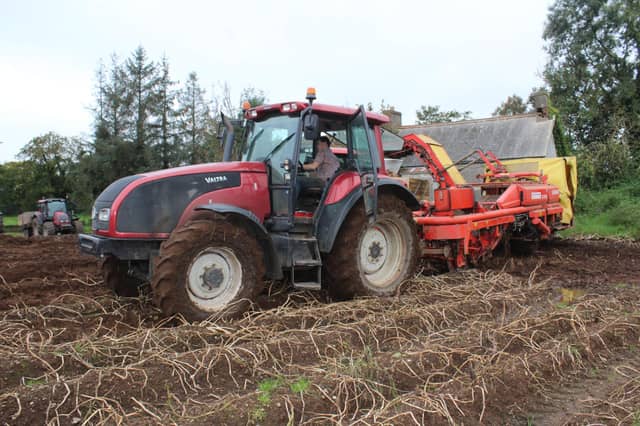
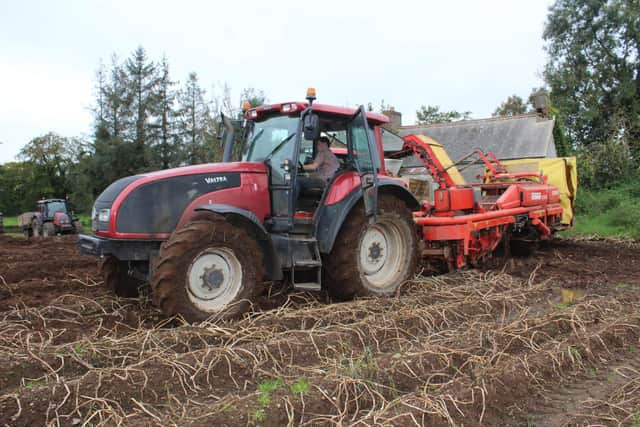
The maincrop harvest is now complete.
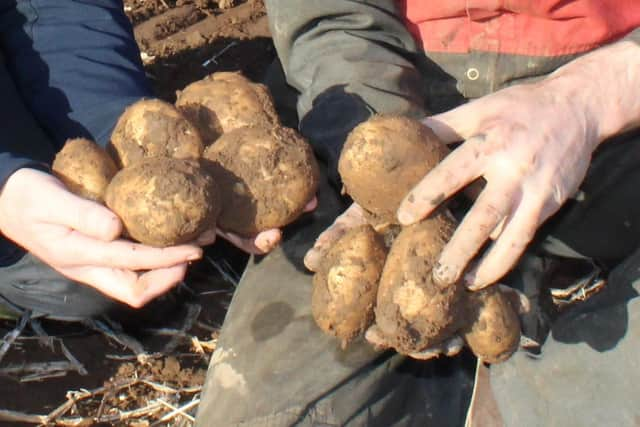
Yields are down across the island of Ireland by approximately 1t/ac. However, potato quality is excellent and prices continue to hold up well.
Meanwhile, potato consumption levels continue to rise.
This is the polar opposite scenario that was confronting the potato sector a mere decade ago: consumption levels falling and prices equally challenging.
So why the improvement in the fortunes of our favourite and most traditional vegetable?
First off, companies like Wilson’s Country here in Northern Ireland must be given full credit for the marketing work it has carried out on behalf of the local potato sector over the past decade and more.
Wilson’s Country, based in Co Armagh, describes itself as the leading potato brand in Ireland.
Central to this work has been the effective targeting of young consumers.
And it is a strategy that has paid off in spades.
In tandem with this has been the more general effort put in, telling consumers about the real truth of potatoes as a healthy and versatile food source.
And, as is always the case, money really talks at the end of the day.
The fact is that potatoes represent tremendous value-for-money.
But there are other issues coming into play.
First-off, Ireland’s population continued to increase.
By the end of the current decade there may well by 8M people ling on this island.
This brings us back to pre-Famine levels.
At this level of population the home market becomes a real dynamic for the potato sector and all the other industries that make up production agriculture in this part of the world
But, it seems that by far the greatest influence on local potato consumption levels can be attributed to the advent of the air fryer.
This one piece of technology has totally transformed the way that consumers cook the ‘humble spud’.
For the record, two-thirds of local households were using an air fryer at the end of 2023.
But the Irish potato sector cannot afford to sit on its laurels. Change is coming.
A case in point is the significant restriction in the range of crop chemistries potato growers will be allowed to use when it comes to meeting the challenge of blight.
Linked to this is the decision to totally restrict the availability of blight chemistries to amateur growers: effective from next year.
Integrated pest management is the future in this regard for all potato growers. And the time to get on board with these practices is now.
Potato agronomy is changing
The evolving challenge associated with crop agronomy was one of the key themes discussed at the 2024 National Potato Conference.
Courtesy of his presentation, Teagasc’s head of crop knowledge transfer, Michael Hennessy, confirmed that growers would have to adapt to a future within which the range of crop protection chemistries available to them would be significantly reduced.
He commented:
“There is a huge role for potatoes within Irish agriculture.
"The past 12 months have seen numerous challenges and opportunities determining the sustainability of potato farming business.
“This time last year growers were coping with exceptional weather, in terms of just how wet it was. This meant that the harvest was a real struggle.
“On the opposite side of that, potato stocks were short across the UK, Ireland and Europe. This led to a resurgence in market prices, the likes of which had been seen for many years.”
According to the Teagasc representative, these prices continued well into the 2023/24 selling season, providing much needed relief for potato growers.
He added:
“Prices have continued to hold up well, certainly above historic levels, which is a positive sign.
“In tandem with this, potato consumption levels have continued to increase, another positive indicator for the sector.”
But many challenges are still confronting Irish potato growers. And, as Michael Hennessy pointed out, getting access to suitable land is one of these.
He commented:
“The evolving blight story is another issue that concerns all of us.
"The loss of some of our most of effective chemistries, in terms of crop protection, will add an extra layer of complexity when it comes to controlling blight over the coming years.
“It will be very difficult for farmers not to change, certainly in terms of their blight management strategies. But this will have to happen during the period ahead.
Michael Hennessy confirmed that the 2024 potato harvest was more or less complete on most farms.
Growers had taken full advantage of the excellent weather and ground conditions that had so characterised the autumn of 2024.
“It has been a long time since the potato harvest has been completed in such a straightforward manner,“ said Hennessey.
“And this is something that we should all celebrate.”
He concluded:
“As we look to the future it is clear that events, such as the national potato conference and technical work shops, give potato growers an opportunity to stay up to date.
“Knowledge sharing in tandem with the introduction of new innovations will allow the potato sector to look ahead with a significant degree of confidence.”
Long term supply deals
A food retail analyst has proposed that the potato sector should seek to agree long term supply contracts with supermarkets as a way of delivering increased resilience at farm level.
Malachy O’Connor addressed the recent potato conference
He confirmed that supermarkets in the UK had already agreed this approach with elements of the dairy and beef sectors, adding that retailers want long term stability in the way they deal with suppliers.
Moreover, such arrangements would be designed to give comparable stability at primary producer level. Delivering on this objective would allow farmers to invest in the future of their businesses in a sustainable manner
O’Connor also pointed out that producer prices would be built into these agreements. He also indicated that the impact of unforeseen sudden input costs shocks, such as those that impacted across all Irish farming businesses would be on the table as part of an envisaged supply agreement.
The retail analyst inferred that it would be up to the Irish potato sector to work through the logistics of its actual negotiations with retailers.
But he was strongly of the view that the fewer the number of people around the table, the more attractive the option of securing a supply arrangement would become for the food retail sector.
According to O’Connor, the potato, fruit and vegetable sectors are in a very strong bargaining position when it comes to dealing with the Irish supermarkets.
He told the conference that fresh produce accounts for approximately 15% of retailer throughput on a weekly basis. Adding to the significance of these products is the fact that they have a very short shelf life.
Referencing potatoes, specifically, O’Connor pointed out that adding value has got to be a key priority for the future.
His own research has confirmed that value added products are 3.4 times the price of fresh potatoes on shop shelves.
Currently, 35% of the potato products sold in Irish supermarkets fall within the ‘added value’ category.
O’Connor confirmed that consumers are always looking for new taste experiences. Other drivers for consumer choice include the health attributes of the food they eat and the growing attraction of plant-based options.
The reality is that locally grown potatoes tick all the boxes.
Current market research confirms that potatoes remain Ireland’s most popular vegetable and carbohydrate source. They account for 51% of all vegetable sales.
New technology
Meanwhile, the advancement of technology is helping potato growers to enhance their decision making processes, where both crop management and harvesting are concerned.
A case in point is the development of a new integrated camera and software-based crop analysis system.
It has the potential to allow farmers and packers comprehensively assess the yield and range of potato sizes produced by a specific crop while the harvester is still in the field.
Driving these developments is the UK-based business: HarvestEye
The benefits offered by the new harvest analysis technology could be extremely significant for the Irish potato sector.
With this in mind, the system is currently being assessed under commercial harvesting conditions by the Wilson’s Country potato packing operation.
Company agronomist, Stuart Meredith, explains:
“HarvestEye comprises a camera, which is placed above the picking table on the harvester, and a computer tablet, located in the cab of the harvester.
“Every potato coming across the picking table is photographed with the associated software delivering a same day report which confirms the yield generated at each location across a field plus the range of tuber sizes and shapes that are harvested.
“All this information is then made automatically available to the grower, packer or processor.”
According to the Wilson’s Country representative, the data capturing power of HarvestEye will allow both growers and packers make much more efficient decisions regarding the management of their respective businesses.
He added:
“As a yield mapping tool, the technology will allow growers to future plan their crop management activities more effectively.
“From a packer’s perspective, it provides real time information on the potatoes that are going into cold store.”
Stuart was first introduced to HarvestEye at a trade event in England a number of years ago.
“After seeing some good reviews in the press, regarding the system, I decided to give it a go to see how it fits into our situation,” he said.
“Irish potato farms are quite different to English and Scottish businesses, given that many of them have little, if any, cold storage facilities to cover the volume of potatoes they are growing.
“We at Wilsons Country grow and store our own crops. However, we also buy potatoes from 25 preferred growers across the island of Ireland.
“The bulk of these potatoes are purchased at harvest time and loaded into our cold store facility in Co Armagh.
“This carries a lot of the risk for the business as we could find ourselves storing these potatoes for up to 8 months.
“So we need to get as much information as possible about the crops that we are purchasing.”
The agronomist continued:
“HarvestEye generates a daily report from the harvester to allow use see our marketable yield.
“This is achieved by measuring the size of reach potato passing over the picking table on the harvester.
“Our marketable size band within the business is 45mm to 85mm. The use of HarvestEye will allow us to percentage a specific day’s digging that falls outside this specification.
“This, in turn, allows us to agree a more accurate potato prices with growers.
“Another feature of the system is its ability to generate a yield map, using GPS, to allow us see areas of fields that have performed better than others. This will allow us to make more effective decisions when it comes to the future management of crops grown in the field. Issues coming into play here include soil nutrition and problems linked to compaction.”