
AFBI warns of Autumn deaths in livestock due to Acorn toxicity
This year has been a mast year for oak trees in which there has been a very abundant crop of acorns.
Other trees such as beech, hazel and chestnut have also had a mast year this year. This survival strategy occurs every three to five years when trees of these species in coordination produce massive amounts of seed, many times more than in an average season. This autumn, for the first time in many years, AFBI has recorded deaths in sheep due to oak toxicity following ingestion of large numbers of acorns. While recent reports of oak toxicity diagnosed at AFBI relate to sheep, worldwide oak toxicity has been naturally recorded in other animal species including cattle, goats, horses and llamas. Pigs are much more resistant to the toxic properties of oak.
Not all parts of the oak tree are equally toxic. Young green leaves and green acorns are the most toxic parts of the tree, as they contain the highest concentrations of the toxic tannins and phenols which are harmful to ruminants when metabolized in the rumen. Cases of toxicity are more common in autumn when large numbers of acorns fall from trees or after autumn storms which bring boughs to ground.
In recent cases diagnosed at AFBI two- to three-year-old ewes were affected although all ages of grazing ruminants can be affected. In these recent cases the ewes were found dead. Animals which present with clinical signs usually do so three to seven days after access to acorns. Clinical signs may include dullness, anorexia, abdominal pain, initial constipation progressing to tarry or haemorrhagic diarrhoea, jaundice, blood in the urine, increased frequency of passing urine, and thirst. Sufficient exposure to oak leaves or acorns may result in sudden deaths. Renal and liver failure may subsequently develop in animals which survive initially leading to thirst, jaundice and a failure to thrive.
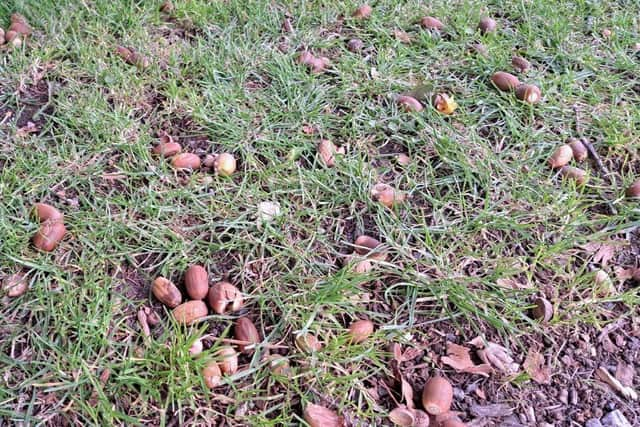

Diagnosis may be based on clinical presentation, checking blood samples for an increase in enzymes indicating liver or kidney pathology, and in cases of death on postmortem examination. Treatment of clinical cases is generally unproductive. Where cases of acorn toxicity are suspected sheep or cattle should be removed from affected pastures or access to acorns should be prevented by fencing off. Easy access to water should be provided and stress should be minimized. If alternate pastures are not available provision of supplementary feedstuffs may reduce the intake of acorns or immature oak leaves. Prevention of exposure is a better strategy, and pastures should be carefully monitored particularly in mast years. If oak toxicity is suspected in livestock farmers are encouraged to contact their local veterinary surgeon or AFBI vets for advice and testing options.