
AHDB publishes updated cereal supply and demand figures for the UK market
The Agricultural and Horticultural Development Board (AHDB) has just published its second cereal supply and demand estimates for 2025/26.
They reflect all aspects of UK cereal production, in tandem with import and export activity for the trading year: July 2025 to June 2026.
Significantly, the latest AHDB estimates include the official production figures for wheat, barley and oats published by the Department of the Environment, Food and Rural Affairs (DEFRA).
They follow-on from the publication of the first 2025/2026 estimates at the end of November last.
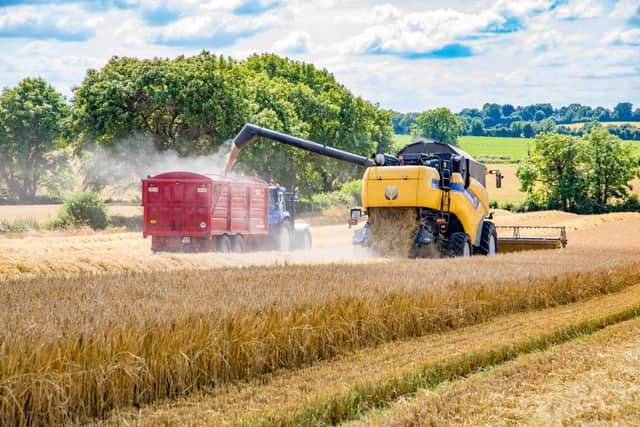

The balance between supply and demand sets the overall tone of the domestic UK market for cereals.
AHDB publish forecasts of cereal supply and demand, split into the areas of availability, consumption, exports and stocks.
Significantly, the publication of the latest estimates comes at a time when international dairy markets have come under sustained pressure.
According to AHDB, total cereals demand for animal feed in 2025/26 is estimated at 13.313 Mt, relatively unchanged (-9 Kt) from November’s estimate and just 19 Kt lower than levels recorded in 2024/25.
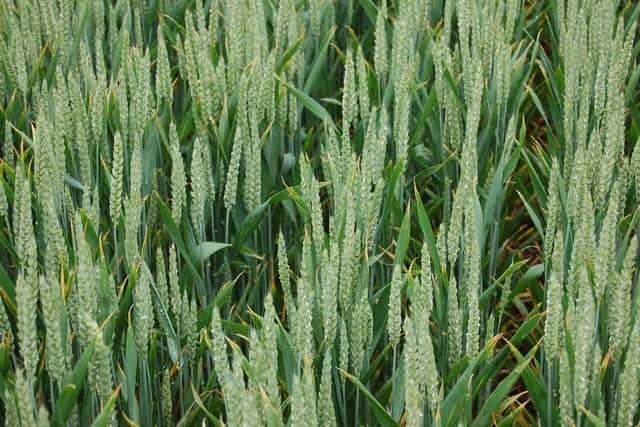
While total usage is relatively unchanged from the previous forecast, there have been some shifts in usage amongst the categories and cereals used. Compound feed demand in Great Britain (GB) for cereals is in fact lower than November’s estimates with pig and poultry feed demand expected to be lower than initially expected.
This follows the trend in usage data to date up to November 2025. However, GB integrated poultry unit (IPU) demand is expected to be higher than previously estimated as well as compound feed usage in Northern Ireland being slightly up.
Cattle feed demand has continued to grow during the first five months of the season. However, despite feed prices remaining relatively low for producers, milk prices have come down considerably.
But with grass turn out approaching, it is expected that cattle feed demand will fall during the latter part of the season.
For 2025/26, total cereals demand by human and industrial (H&I) sectors is estimated at 9.169 Mt, 139 Kt lower than November’s estimate and 1.315 Mt down from 2024/25 levels.
If realised, this would be the lowest level of total H&I consumption recorded in 20 years. While bioethanol usage remains unchanged from previous estimates, a further drop in brewing, malting and distilling (BMD) demand and flour millers’ usage is expected compared with November 2025’s estimates.
The decline on the year is largely driven by the drop in bioethanol demand and BMD demand, with usage by flour millers also expected to be lower compared with 2024/25 levels.
UK barley production continues to decline
In 2025/26 total availability of barley is estimated at 7.855 Mt, down 72 Kt from November’s estimate and 631 Kt lower than 2024/25 levels.
The final estimate for barley production in 2025 is 72 Kt lower than the provisional estimate and 724 Kt lower year on year at 6.367 Mt. Full season barley imports are estimated at 210 Kt, unchanged from November’s estimate, but 23 Kt lower year on year.
At 1.584 Mt, barley H&I usage in 2025/26 is 84 Kt lower than the previous estimate and 214 Kt down on the year. The drop from November’s forecast comes as BMD demand has trended even lower than originally anticipated. If realised, 2025/26 H&I barley demand will be the lowest on records going back to 1990/91.
The current cost of living crisis is having a major impact on the BMD sector (both domestically and globally), with several distilleries being moth balled this season.
Usage of barley in animal feed in 2025/26 is estimated at 4.347 Mt, up 51 Kt from November’s estimate, but down 147 Kt from levels recorded in 2024/25.
While barley has featured heavily in rations during the first half of the season, inclusion rates are expected to come down slightly going forward given its relative price to wheat. The amount of barley fed on farm is expected to be higher than the November estimate, but lower than levels estimated in 2024/25.
Despite the smaller domestic crop this season, the mixed quality of the 2025 crop, along with further reductions to H&I demand is partly behind the increase in barley fed on farm usage in comparison with November.
Meanwhile, The barley supply and demand balance in 2025/26 is 40 Kt down from the previous estimate and 267 Kt lower year on year. Taking into account the export pace to date (Jul-Nov), full season barley exports are estimated at 450 Kt. Closing stocks of barley are pegged at 1.268 Mt, 10 Kt lower than 2024/25 levels.
Availability of wheat in the UK is down: year-on-year
According to AHDB the total availability of wheat in the UK for 2025/26 is estimated at 16.138 Mt.
This is estimated to be 122 Kt higher than November’s estimate but 835 Kt lower on the year with lower opening stocks and imports, outweighing a rise in production.
Following the release of the DEFRA Cereals and Oilseed Rape Production survey in December past, the final estimate for wheat production in 2025 is 122 Kt higher than AHDB’s provisional estimate and 812 Kt higher year on year, at 11.958 Mt.
Imports are estimated at 2.200 Mt, unchanged from the previous estimate, but 868 Kt lower than 2024/25 levels.
From July to November 2025, the UK had imported 1.063 Mt of wheat, nearly 400 Kt lower than the same point in 2024/25.
While 2025/26 milling wheat imports are expected to return to more typical levels, demand for imported feed wheat, mainly into Northern Ireland, is expected to be relatively strong.
This trend has driven by an increase in poultry feed demand. Imported wheat into Northern Ireland is expected to displace some imported maize.
The amount of wheat used in animal feed in 2025/26 is estimated at 7.085 Mt, 43 Kt higher than November’s estimate and 277 Kt up year on year.
Despite a drop in usage by compounders in Great Britain (GB), due to a fall in feed production, the rise from the previous estimate is driven by increased demand from integrated poultry units (IPUs) and compounders in Northern Ireland.
During the first three months of the season – July to September 2025 –feed compounders in Northern Ireland used 19% more wheat than the previous season, displacing some maize from rations.
With its relative price and with poultry feed demand in Northern Ireland remaining strong, wheat is expected to be a firm favourite in rations this season.
The increase on the year is driven by stronger total feed demand as well as higher inclusions, with wheat stealing some demand back off maize across the United Kingdom. The amount of wheat fed on farm is unchanged from previous estimates.
Meanwhile, in 2025/26, human and industrial (H&I) demand for wheat is estimated at 6.516 Mt, down 54 Kt from November’s estimate and 613 Kt down from 2024/25 levels.
The fall from the previous estimate is largely driven by a drop in flour millers’ usage. While flour production is only estimated to be slightly lower than previously expected, extraction rates are higher than originally anticipated, leading to the overall decline.
The drop from year earlier levels is largely driven by a fall in demand from the bioethanol sector, with neither UK bioethanol plant currently in operation.
Wheat demand by flour millers is also expected to be lower on the year, driven by changing consumer habits and improved extraction rates.
With a very functional milling wheat crop this season, the proportion of home-grown wheat included in the grist is expected to come back down to nearer more typical levels.
Demand for wheat by distillers remains down, while demand by starch manufacturers is expected to be somewhat buoyant.
Global wheat markets start to tighten
Meanwhile, AHDB has confirmed a slight strengthening in global wheat markets over recent days.
Markets were mainly supported by weather risks for winter crops in the USA and Ukraine. Recent weather in Ukraine has been extremely cold, and some regions have experienced low levels of snow cover or ice crusts on the snow, which could affect winter crop conditions.
In addition, competition between the main wheat exporters (the USA, Canada, Argentina, the EU, Australia and the Black Sea region) remains strong, and the influence of currencies is once again apparent. The stronger euro against the US dollar, which reached its highest level since June 2021 on Tuesday, will make EU wheat less competitive than that of other exporters.
Meanwhile, the EU Commission's January forecast increased EU common wheat ending stocks by 1.3 Mt to 13.0 Mt for the 2025/26 season, compared to December's figures.
This is primarily due to a reduction in common wheat exports, which are now estimated at 29.5 Mt, down from 31.0 Mt.
SovEcon, an agricultural consultancy, updated its forecast for Russian wheat exports in the 2025/26 season, increasing it by 1.1 Mt to 45.7 Mt, due to the strong pace of shipments and higher-than-expected crop figures. SovEcon also set its initial forecast for wheat exports in the 2026/27 season at 39.6 Mt.
In the short term, the pace of maize exports from the USA and the weather in Argentina and Brazil are important factors to consider. More rain is needed to support maize crop development in parts of Argentina after below-normal rainfall in January.
Meanwhile, UK rapeseed production remains in the doldrums. Last autumn (2025) saw a forty-year low in the estimated crop area planted out.
However, year-on-year yield increased were recorded on most farms for the 20204/25 season.
As a consequence, an increase in UK rapeseed production in 2025 may lead to fewer imports during the 2025/26 season.
However, global demand has put pressure on rapeseed prices since the beginning of the 2025/26 season.
From July 2024 to June 2025, the UK imported 942 Kt of rapeseed, up by 27% from the previous season. Almost 57% of this came from the EU. The main origins were the Netherlands (175 Kt), France (104 Kt), Latvia (77 Kt), Romania (62 Kt), Lithuania (57 Kt) and Ireland (46 Kt).
From non-EU counties, the main origins were Ukraine (343 Kt) and Uruguay (64 Kt).
ABOUT AHDB
The Agriculture and Horticulture Development Board (AHDB) is an independent, impartial public body that unlocks success in British agriculture
Funded by more than 100,000 British producers across the beef, lamb, pork, dairy and cereals sectors, AHDB delivers unrivalled, evidence-based research, expert support, powerful marketing campaigns and global export development.
As UK farming faces constant change, from weather threats and market volatility to shifting policies and uninformed consumer perceptions the AHDB helps UK farmers and processors remain competitive, sustainable and profitable.