
Allister warns of threat from Brazilian beef imports
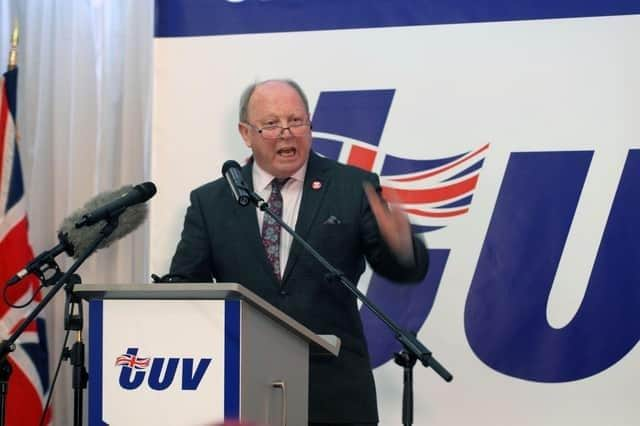
TUV leader Jim Allister has warned that the UK beef market could be impacted by an increase in imports of Brazilian beef, which are currently suspended by the European Union.
The North Antrim MP has written to the Rt Hon Dame Angela Eagle DBE MP, Secretary of State for Environment, Food and Rural Affairs, raising his fears of trade diversion while the UK still allows beef from Brazil to enter the country
He said: “With the EU market effectively closed, there is a clear possibility that Brazilian beef previously destined for Europe will instead be redirected into Great Britain. The EU imported more than 83,000 tonnes of Brazilian beef in 2025, compared with approximately 12,000 tonnes imported by the UK. Consequently, even a relatively small proportion of displaced product entering the GB market could have a material impact on supply and prices.
"Given that Great Britain is the primary market for Northern Ireland beef, any increase in Brazilian imports would be felt particularly acutely by Northern Ireland producers. Additional volumes entering the GB market would place downward pressure on cattle prices, reduce returns to farmers and further weaken market confidence at a time when many producers are already facing falling beef prices.”

Mr Allister pointed out that Northern Ireland beef sector is of considerable economic importance, supporting thousands of jobs across farming, processing and the wider agri-food industry.
He added: “It is therefore essential that the Government fully considers the implications of any trade diversion arising from the EU's decision.
"There are also legitimate concerns regarding regulatory standards. Northern Ireland farmers operate to high standards of traceability, animal welfare and food safety and are entitled to expect a level playing field. The European Commission's decision to act on concerns relating to regulatory assurances and antimicrobial controls inevitably raises questions as to whether the UK should adopt a similar precautionary approach.
"I therefore urge the Government to undertake an immediate assessment of the potential impact of trade diversion on the GB market and, in particular, on Northern Ireland producers. I would also ask what consideration is being given to restrictions until satisfactory assurances have been secured regarding compliance with the standards expected of products entering the UK market.
“Failure to act risks market disruption, further pressure on farm incomes and significant harm to an industry of strategic importance to Northern Ireland's rural economy. I should be grateful to receive an early response setting out what measures the Government intends to take to safeguard Northern Ireland's beef sector from these risks,” Mr Allister added.
TUV Agriculture spokesperson Councillor Allister Kyle said his party lead had rightly highlighted the serious implications of the EU's decision for Northern Ireland's beef industry.
Mr Kyle added: “With Great Britain being the principal market for Northern Ireland beef, there is a genuine risk that Brazilian beef displaced from the EU market could be redirected into GB, placing unnecessary downward pressure on prices and further squeezing farm incomes.
"As a beef farmer myself, I have seen first-hand the impact that reduced demand for local produce has had on the market. When I purchased my store cattle last November, factory beef prices were being quoted at around 660p/kg.
"More recently, quotes have fallen as low as 587p/kg, a significant drop that equates to a substantial financial loss on heavy finished cattle.
"Our farmers produce to some of the highest standards of animal welfare, traceability and food safety in the world, and they should not be expected to compete against imports where there are legitimate questions over regulatory compliance.
"I fully support Jim Allister's call for the Government to assess the risks of trade diversion and to take whatever action is necessary to protect Northern Ireland's beef sector and ensure a fair and level playing field for our producers."