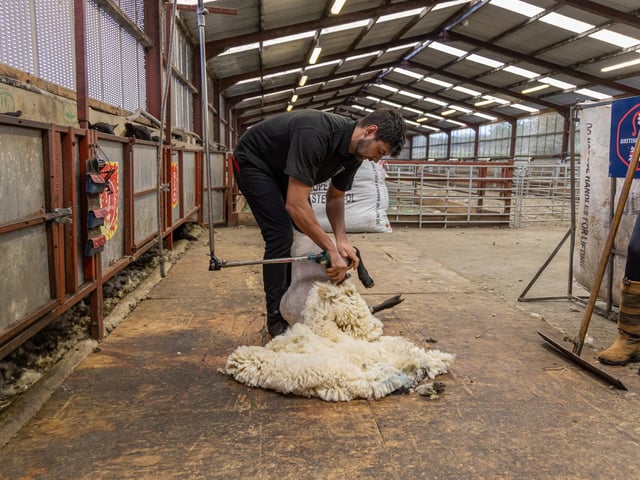

And it doesn’t stop there. He has represented Northern Ireland four times at the World Shearing Championships and holds the honour of being the youngest person to ever be in the World Shearing Champs final.
But Jack isn’t just a competition shearer, with a shearing run of 30,000 ewes followed by 35,000 ewe lambs in and around his area of Co Londonderry. He has also completed seven seasons shearing across Europe and New Zealand, alongside Cornwall-based Kiwi Matt Smith.
Jack learnt to shear on his own sheep at 16 years of age before attending Greenmount College and then heading off around the world to New Zealand. Jack explains he went on an Ulster Wool course to learn to shear but mainly learnt on the shearing board alongside Davy O’Neil and Trevor Clarke.
Nowadays, every year Jack runs a Young Farmers’ course the week before Balmoral Show for Ulster Wool with Willy Jones.
Jack says: “It’s a great course because it is early in the season and gets the young shearers going in good time. It is also good for anyone who is shearing at Balmoral so we can tweak a few things before they compete at the show
“Without shearing courses like these, there wouldn’t be a next generation of shearers. I am passionate about passing these skills on.”
Jack also has his own farm behind him. The lowland farm is 90 acres with a further 200 acres rented. Everything is down to grass and includes 60 to 70 acres of hill ground.
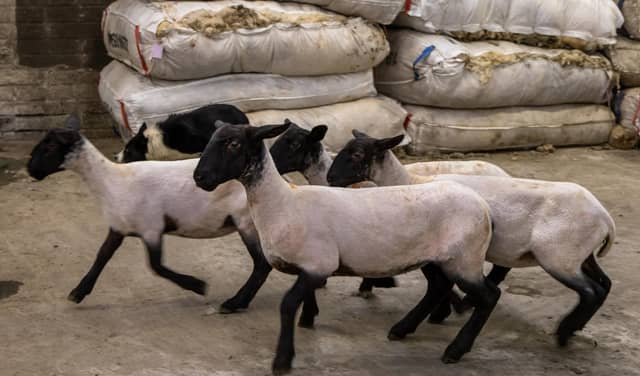
Here they run a closed flock of 750 ewes and 150 ewe lambs, comprising of Scotch mules, Suffolk mules and 100 pure Scottish Blackfaces. Everything is lambed inside by Jack alone who says it’s easier for him to manage if it is carried out over a longer period.
He says: “This year’s lambing was easy as the weather was on our side. However if it is a wet year, I don’t want any more than 15 or 20 ewes lambing a day.”
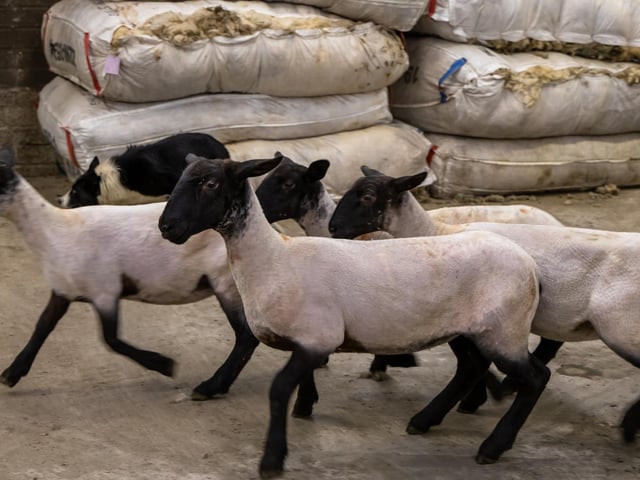
Lambing starts on 12 February with the Suffolk mules before the mules begin around 5 March, followed by the Blackies and ewe lambs.
Jack says he benefits from having good sheds and also purchases store lambs and buys and sells 500 to 600 lambs through local markets from October to January.
Store lambs are fed haylage and a 16% protein lamb pellet. In all, Jack sells 1,500-1,600 lambs annually.
Aiming to produce a 50kg plus lamb, heavy lambs have witnessed a strong trade in recent times. Jack also sells 250 to 260 Texel mule ewe lambs annually.
He says: "The breeding trade has been good recently and having another avenue of sales is helpful.”
He takes his first draw of lambs around the first week of May and a second draw two weeks later and then every week following that. The first 400 lambs born off the Suffolk mule ewes go to creep feeders to get them away before weaning.
Jack says: “I run my stock quite heavily, but this eases once I can get some lambs away.”
Alongside his farming business and competitive shearing, Jack has been able to establish an innovative shearing business.
Jack has built a slatted shed at home which people can take sheep to be shorn and is also used as a collection centre for Ulster Wool.
He explains: “There are a lot of small flocks and part time farmers in Northern Ireland. Farmers can bring their sheep to me meaning a lot of the work is taken out of their hands. They don’t need to handle the wool, or take it to a collection centre. It all happens here.”
Jack could see he could more efficiently shear in this way and has also started taking on wool handlers. He can shear 10,000 sheep through the shed each summer while also gathering a good quantity of wool, without having to travel around farms. The shed is regularly washed and disinfected.
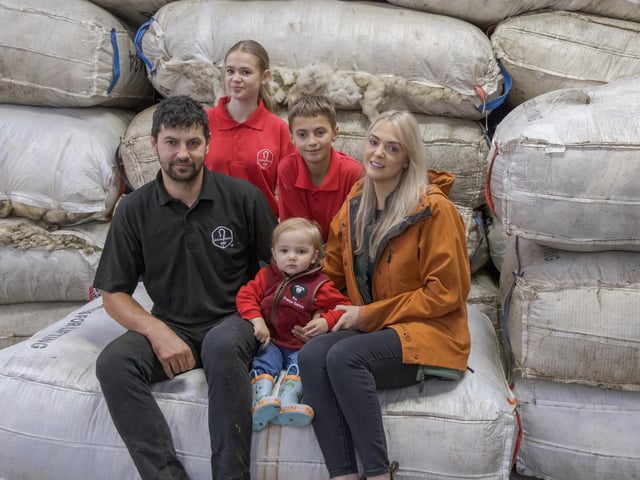
Last year Jack was enlisted as an Ulster Wool ambassador, working to represent the organisation at a grass roots level.
He says: “As an ambassador as well as a member, I want to work to maximise the value of wool and what Ulster Wool can provide. There is more competition in Northern Ireland when it comes to wool buyers compared to any other part of the United Kingdom. Ulster Wool provides the training and via British Wool, the promotional work in the marketplace.”
He continues: “Ulster Wool helped him get into the shearing industry. They are the only organisation supporting the next generation, whereas wool merchants are just buying wool and do nothing further for the industry. If we aren’t actively training shearers in Northern Ireland, we will have to import them, which no one wants.
“Without Ulster Wool, the wool industry would be weaker than it would be. A lot of people don’t understand the work which goes into grading wool.”
1. Suffolk mules are the first of the sheep to lamb.jpg
Suffolk mules are the first of the sheep to lamb Photo: freelance
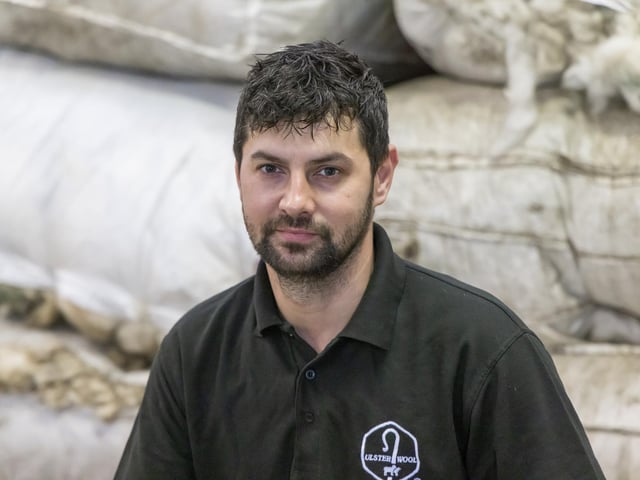
2. Jack is an Ulster Wool ambassador.jpg
Jack is an Ulster Wool ambassador. Photo: freelance