
Finnebrogue Farm - A farm shaped by trust and long-term vision
At Finnebrogue Farm in Co Down, farm manager Mark Sandford has spent more than a decade proving that productive livestock farming and nature recovery can go hand in hand — made possible by the freedom, trust and long-term investment of the Lynn family.
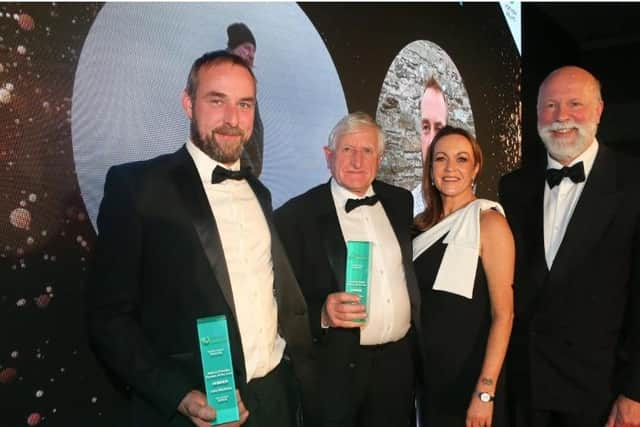
When Mark Sandford was jointly named Nature Friendly Farmer of the Year at the Northern Ireland Farming Awards 2025 alongside John McAuley from Glendun, it marked far more than a personal accolade. It was recognition of more than a decade of quiet, determined work at Finnebrogue Farm, proving that productive farming and nature recovery can go hand in hand when vision is matched with trust.
Over the past decade, Mark has overseen the planting of more than 90,000 native trees
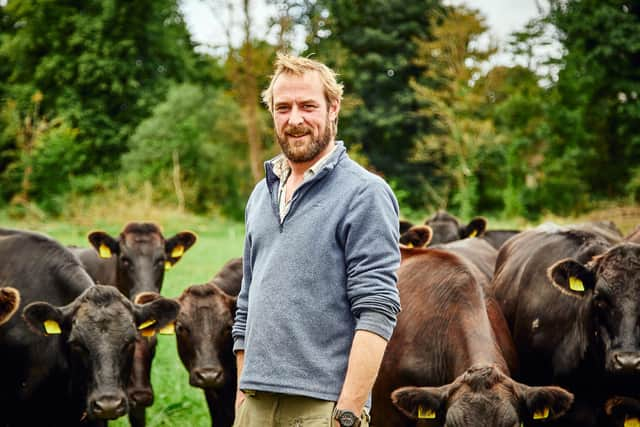

Situated along the banks of the River Quoile outside Downpatrick, the 230-hectare estate supports Wagyu and Aberdeen Angus cattle alongside red deer and extensive woodland. Today, the farm is widely regarded as a leading example of nature-friendly farming, but its transformation has been deliberate, strategic and deeply rooted in Mark’s lifelong commitment to conservation.
Operating a 100 per cent grass-fed system, the farm incorporates seaweed supplements into livestock diets to reduce methane emissions. Soil organic matter and carbon are tested annually, with results showing approximately 44–50 tonnes of carbon sequestered each year. What makes the system stand out, however, is the scale at which biodiversity has been restored without compromising commercial viability.
Over the past decade, Mark has overseen the planting of more than 90,000 native trees, including oak, the creation of 12 new wetlands, and the establishment of around one mile of new hedgerows. Approximately 300 acres of land is now managed specifically for habitat and species restoration, supported by riparian buffer strips, wildlife ponds, rough grass margins and the sensitive management of existing hedges.
Practical measures to support wildlife are visible across the farm: 32 owl boxes, 250 bird boxes, 50 bat boxes and 20 bee hotels have been installed. Work to improve woodland quality includes removing invasive plant and tree species and excluding wild deer to allow natural regeneration.
These efforts are delivering measurable results. An RSPB farmland bird survey in 2024 recorded 50 breeding bird species, including threatened species such as linnet, reed bunting and meadow pipit. Barn owls have successfully bred on the farm for several consecutive years — a strong indicator of a healthy ecosystem.
Mark’s approach extends beyond habitats. He is an active member of the Nature Friendly Farming Network and participates in agri-environment schemes, including the County Down Farmland Bird Initiative facilitated by RSPB Northern Ireland.
Yet Mark is quick to acknowledge that the success at Finnebrogue Farm is not his alone. Appointed farm manager 12 years ago by the late Denis Lynn, founder of Finnebrogue, Mark was given something rarely afforded in modern agriculture – freedom.
Practical measures to support wildlife are visible across the farm – 32 owl boxes, 250 bird boxes, 50 bat boxes and 20 bee hotels have been installed.
“Denis was an inspiration,” Mark says. “I would not have achieved this without him. He gave me the freedom, and crucially the financial backing, to manage the land in a way that benefited wildlife most. We kept the best land for livestock and returned the lesser land to nature, where it belonged.”
That trust has created a lasting legacy. Today, Finnebrogue Farm, shaped by the Lynn family’s belief in Mark Sandford and sustained by long-term investment, stands as a powerful example of what is possible when farmers are given the freedom to think beyond short-term returns. It demonstrates that agriculture can be productive, profitable and nature-positive, producing food that doesn’t cost the Earth while leaving the land healthier, more resilient and richer for generations to come.