
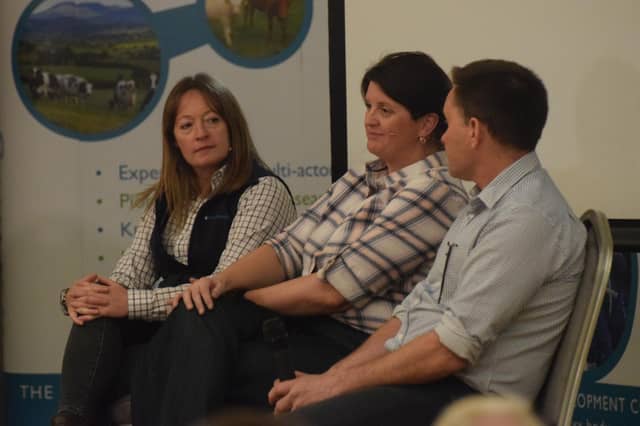

Independent sheep consultant Nerys Wright, sheep vet Phillipa Page and Scottish Texel and Lleyn breeder Neil McGowan joined AgriSearch project farmers for an evening covering ewe management, disease prevention and breeding decisions.
A central message was the importance of maintaining ewe body condition throughout the production cycle. Regular condition scoring helps farmers identify problems early and make informed feeding and management decisions ahead of tupping and lambing.
Nerys Wright highlighted the relationship between ewe condition, reproductive performance and lamb survival. She encouraged farmers to monitor condition throughout the year, allowing sufficient time to improve condition and manage thinner ewes separately where needed.
Phillipa Page, of Flock Health Ltd, discussed the role of underlying disease in poor ewe performance. She highlighted the importance of investigating persistent condition loss and working with a vet to identify the cause. She also gave practical advice on bluetongue preparedness, encouraging farmers to vaccinate their stock in good time ahead of the seasonal risk period.
Nerys illustrated the potential impact of bluetongue through a Devon farm case study, where 600 of 1,300 sheep were treated within two weeks and the veterinary bill for August reached £10,000. Four of the farm’s 30 rams were infertile ten weeks after the outbreak, highlighting the potential disruption to tupping. The example also showed differences in disease severity and recovery time between ewe condition groups, reinforcing the importance of monitoring and managing body condition.
Foot health and parasite control also featured prominently. Farmers were encouraged to take a planned approach to tackling lameness, supported by appropriate treatment and measures to reduce the spread of infection. Changing parasite patterns reinforced the need to use monitoring and veterinary advice to inform worming decisions.
GrassCheck farmers Paraic McNeil, John Martin and Roger Bell shared their experiences of putting research into practice during the AgriSearch farmer roundtable. Alongside their involvement in GrassCheck, they discussed projects covering red clover silage production without chemical nitrogen fertiliser, multispecies swards and targeted selective treatment for parasite control. This included using weighing and recording technology to monitor lamb daily liveweight gain and inform decisions on whether individual lambs needed anthelmintic treatment.
Neil McGowan, of Incheoch Farm in Perthshire, shared his experience of developing a profitable sheep enterprise over 25 years, drawing on lessons from his Nuffield Scholarship and time in New Zealand. He encouraged farmers to start by identifying what their farm does well, choosing a market and developing a system and breeding objectives suited to both.
For his self-replacing maternal flock, the aim is straightforward: ewes that conceive, lamb and rear twins with minimal assistance, and continue doing so for many years. He explained how recording lambing assistance, lambs reared and ewe longevity helps identify maternal lines that consistently perform.
His terminal sire objectives focus on producing lambs that finish sooner and meet market specifications, while selecting hardy, active rams that last. Throughout, he emphasised using genetics to address weaknesses in the flock and reduce the workload.
One message that particularly resonated with attendees was: “Breed the ram your client needs, but make him look like the one he wants.”
An audience question-and-answer session provided further opportunities to explore the speakers’ advice and discuss how it could be applied on farm.
Flock Focus followed AgriSearch’s successful dairy and beef conferences, bringing total attendance across the three events to more than 700 over the past 18 months. During the same period, more than 12 on-farm events attracted 600 attendees across the beef, sheep and dairy sectors, giving farmers the opportunity to see research first-hand and hear directly from those putting it into practice.
John Morrow, Agriculture Manager at AgriSearch, said: “We have been overwhelmed by the support for our conferences and on-farm events, and I want to thank everyone who has attended. That turnout shows the appetite among farmers for practical information and opportunities to learn from each other.
“A clear theme throughout Flock Focus was ‘measure to manage’. Whether through body condition scoring, monitoring flock health or performance recording, gathering and using information helps farmers make informed decisions about their own flocks.
“Bringing specialist advice together with farmers’ experiences helps turn that information into practical action to improve productivity and profitability.”
Watch the Flock Focus 2026 conference presentations on AgriSearch’s YouTube channel.
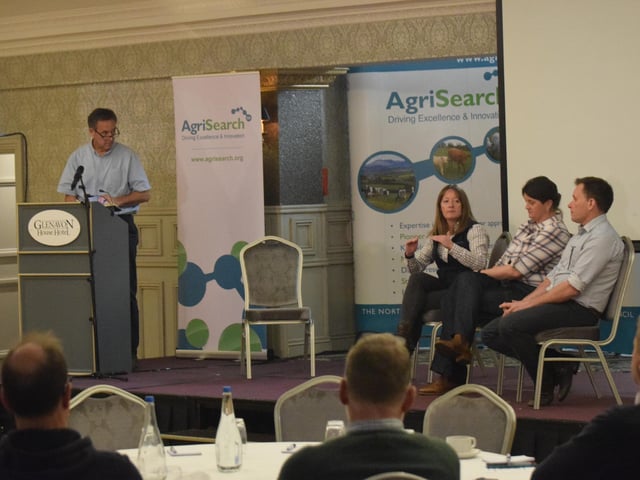
1. AgriSearch_Flock_Focus_2026_QA_Panel.jpg
Guest speakers take questions from the audience at AgriSearch’s Flock Focus 2026 conference. Photo: freelance
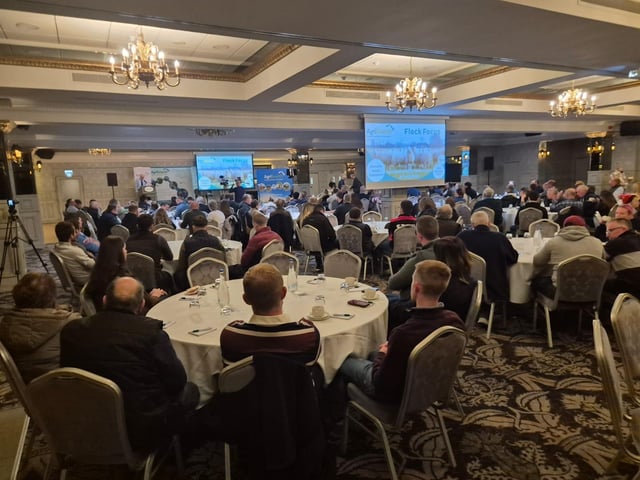
2. AgriSearch_Flock_Focus_2026_Conference_Audience.jpeg
A full house at the Glenavon House Hotel in Cookstown, where 200 farmers attended AgriSearch’s Flock Focus 2026 conference. Photo: freelance
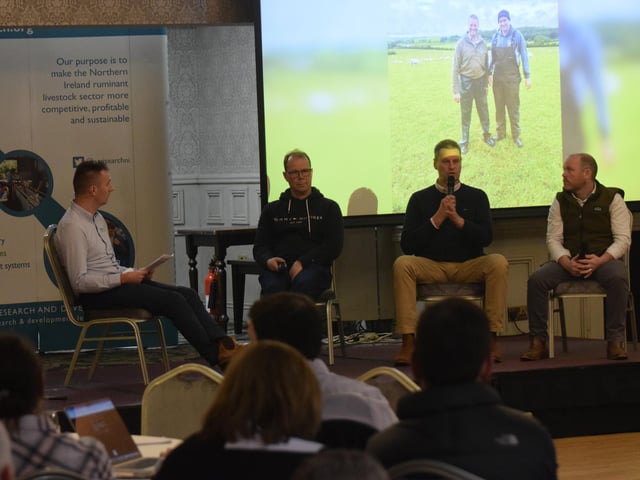
3. AgriSearch_Flock_Focus_2026_Farmer_Roundtable.jpg
GrassCheck farmers Paraic McNeil, John Martin and Roger Bell share their experiences during the farmer roundtable at AgriSearch’s Flock Focus 2026 conference. Photo: freelance