
Granulated Lime vs. Bulk Lime: What’s the Difference?
Understanding the type of lime required for your soil can significantly impact your crop yield and overall soil health.
Two common options in the market are granulated lime and bulk lime, yet many farmers remain unaware of the fundamental differences between them.
Over the past 50 years, the liming landscape has changed; with many farmers unwittingly applying low-quality bulk lime that may not effectively enhance soil conditions. Many consumers still assume they are using premium ground lime when, in reality, the quality on the market often falls short of required specifications. This is a critical point to consider, especially as subpar liming materials can hinder soil pH optimization and nutrient availability that directly affects crop performance.
The reactivity of lime is vital for optimizing soil pH, and this is where the differences between granulated and bulk lime become apparent.
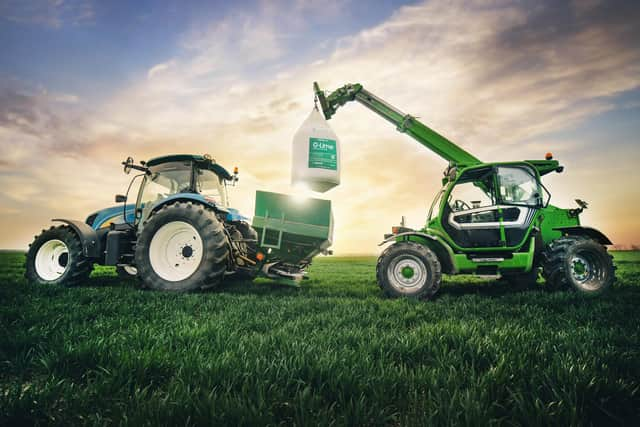

Granulated lime is produced from high-quality calcium carbonate and features a uniform particle size that ensures consistent performance. With a reactivity of almost 100 per cent, the granules break down quickly upon contact with moisture, providing immediate benefits to the soil. In contrast, bulk lime often contains larger particles that may exhibit significantly lower reactivity –often below 40 per cent – resulting in slow breakdown and delayed impact on soil health.
Common bulk typically contains only 20 per cent small powder particles (below 160um). Smaller particles react better, have a higher impact on pH and get into the soil faster. So, the higher the percentage of small particles, the faster you will be able to correct your pH and the sooner you’ll get a return on your yield. Granulated lime contains almost 100 per cent small powder particles, therefore requiring a much smaller volume (typically one-sixth) to achieve the same pH increase.
Another significant advantage of granulated lime lies in its ease of application. Unlike bulk lime, which can be cumbersome and challenging to spread evenly, G-Lime’s granulated form allows for precise application through standard fertiliser spreaders. This means farmers can achieve their desired results with less hassle and less material applied per hectare. For instance, applying just 160 kg of granulated lime can achieve the same pH increase as 2 tonnes of bulk lime, depending on soil type
The implications of reactivity extend beyond just pH. The enhancements that granulated lime offers to nutrient availability are substantial. When soil pH is optimized through the use of high-quality granulated lime, essential nutrients become more accessible to plants, fostering better root development and robust crop growth. By prioritizing G-Lime, farmers can ensure that their crops thrive with fewer needs for additional fertilizers, ultimately leading to improved profitability.
In an era of challenging environmental conditions and fluctuating market prices, the choice of liming material should not be based on previously-held assumptions about quality. By opting for granulated lime—specifically G-Lime—farmers are making a move towards sustainability and maximizing productivity. Investing in a quality lime is an essential step for those looking to improve crop yields and maintain soil health.
For more information about how G-Lime can optimise your soil health and nutrient management practices call Kilwaughter Lime on 028 2826 0766.