
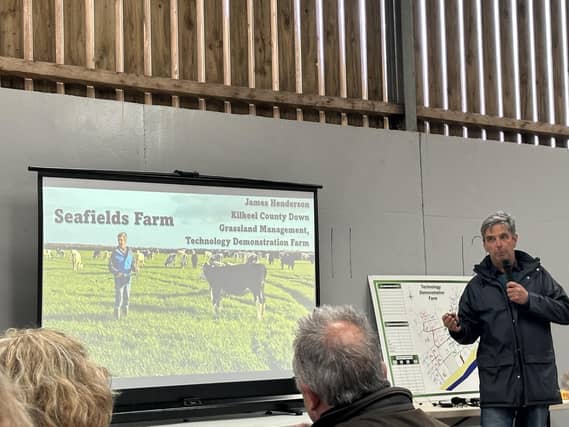

Seafields Farm is a fourth-generation family enterprise run by James Henderson, his wife Brenda and their eldest son Scott, who has recently joined the business as a partner.
The farm extends to 60 hectares and has a unique history with much of the land having been requisitioned during the Second World War for the construction of an airfield. Following the war the Henderson family were able to gradually repurchase the original land and neighbouring farms. A major undertaking by James’s father involved removing almost 12 hectares of concrete runways and taxiways with the recovered material repurposed to create approximately 11 kilometres of field boundaries that remain a feature of the farm today.
Following a welcome from UGS President Ivor Lowry and Tom Goatman, BGS CEO visitors were given an overview of the farm’s integrated beef and sheep enterprises by James Henderson.
The beef system is based on purchasing 85–90 British Blue, Aberdeen Angus and Hereford cross dairy-bred calves annually which are reared using a forage-focused system centred around high-quality red clover silage and home-grown feeds. Alongside this beef enterprise the farm runs a flock of 250 ewes and 60 home-bred replacements currently transitioning towards Aberfield-Belclare genetics to improve efficiency and performance.
A key focus of the visit was the farm’s successful adoption of multi-species swards. Introduced as part of a drive to improve sustainability and reduce input costs these swards have transformed the sheep enterprise. Lambs are now finished entirely from grass without supplementary feeding, significantly reducing fertiliser use and improving profitability. James explained how carbon benchmarking helped identify opportunities to lower costs and improve efficiency, with multi-species swards proving to be a “game changer” for the business.
The rotational grazing system allows surplus grass from multi-species paddocks to be harvested as silage for cattle, providing valuable flexibility while maintaining high-quality grazing conditions for sheep. Strategic paddock management also enables grazing pressure to be controlled effectively and prevent overgrazing.
Grassland management is central to the success of the farm. Since 2018, grass growth has been measured regularly using a rising plate meter and AgriNet software, enabling informed grazing decisions throughout the season. Surplus grass is harvested as round bale silage, ensuring stock always have access to leafy, high-quality pasture while also providing reserves for periods of reduced summer growth on the farm’s drought-prone soils.
Visitors also heard about the farm’s proactive reseeding programme. Fields are typically reseeded every ten years, with organic manures, including farmyard manure and locally sourced seaweed, used to enhance soil fertility before establishment. Soil testing is undertaken every two to three years to guide nutrient management and ensure efficient fertiliser use.
At the calf management stop, James outlined how careful nutrition and health planning helps maximise growth while minimising feed costs. Calves are selected for their strong genetic potential, with AI-sired British Blue and Aberdeen Angus crosses delivering excellent performance. Red clover silage plays a key role in the diet, reducing the need for expensive purchased protein and supporting targeted growth rates during the first winter.
The benefits of the farm’s paddock grazing system were highlighted through benchmarking results which have shown improvements in stocking rate and gross margin alongside significant reductions in concentrate use. Notably, no concentrates are fed to cattle at grass, with the entire system designed around maximising forage utilisation.
The final stop focused on cattle finishing and grazing management. James demonstrated how cattle are managed in rotational grazing mobs, moving through two-day paddocks to optimise grass utilisation. Native breeds are finished entirely from grass, while continental-cross cattle receive a short finishing period indoors before sale at approximately 20–24 months of age. Strong performance is reflected in excellent carcase results, with the majority grading within the desirable R conformation and fat class 3 categories.
A particularly innovative aspect of the system is the use of pre-mowing ahead of grazing. By mowing grass before cattle enter each paddock, pasture quality and utilisation are significantly improved, while eliminating the need for topping later in the season. Visitors also saw the farm’s mobile water infrastructure, which allows water troughs to be positioned anywhere within a paddock, facilitating flexible grazing management and reducing soil damage around fixed drinking points.
Throughout the visit there was ample opportunity from visitors most of whom had travelled from Great Britain to view the Hendersons award-winning farm. The visit concluded with a meal on-farm with plenty of discussion continuing as visitors enjoyed the meal prepared by Simply Irresistible.
The farm visit provided a valuable opportunity for attendees to see first-hand how a combination of grassland measurement, rotational grazing, multi-species swards, targeted genetics and efficient forage utilisation can deliver profitable and sustainable livestock production. James Henderson’s willingness to share his experiences and practical insights offered visitors a clear demonstration of how innovation and careful management can enhance both farm performance and environmental sustainability.
The British Grassland Society is grateful to their long-term Grassland Farmer of the Year competition sponsors Germinal; nufarm and YARA and thank them for their continued support.
Reminder
Ulster Grassland Society members are reminded that entries for this year’s Grassland Farmer of the Year Competition will close soon so entries should be submitted to UGS as soon as possible. The UGS competition with valuable cash prizes is again generously sponsored by Danske Bank.
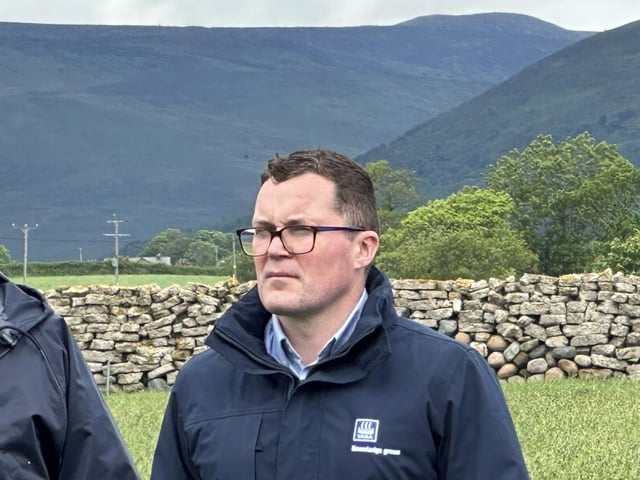
1. image2 (54).jpeg
UGS Secretary Andrew Morrison pictured during the British Grassland Society farm walk at Kilkeel Photo: freelance
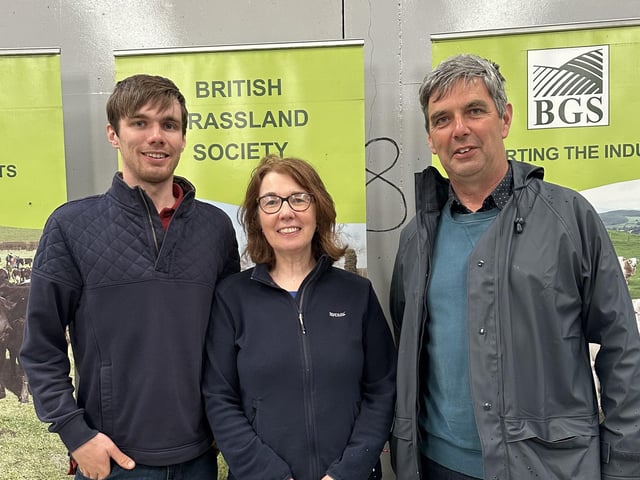
2. image0 - 2026-06-04T083945.421.jpeg
Host farmers James, Brenda and Scott Henderson pictured during the BGS Farm Walk on their Grassland Farmer of the Year winning farm at Kilkeel Photo: freelance
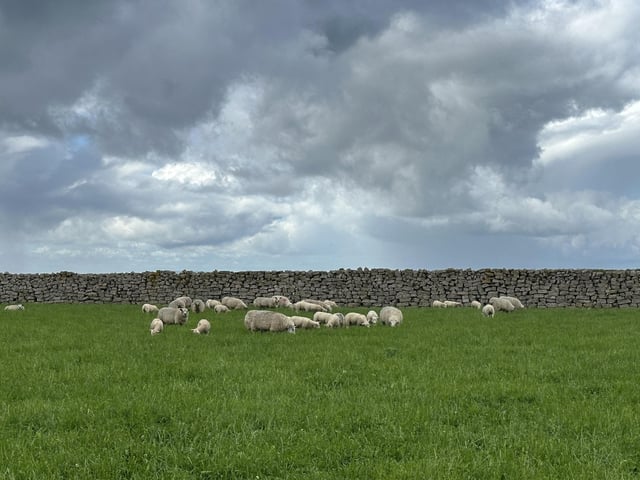
3. image1 (73).jpeg
Some of the sheep flock on view during the BGS farm walk at Kilkeel Photo: freelance
4. image1 (74).jpeg
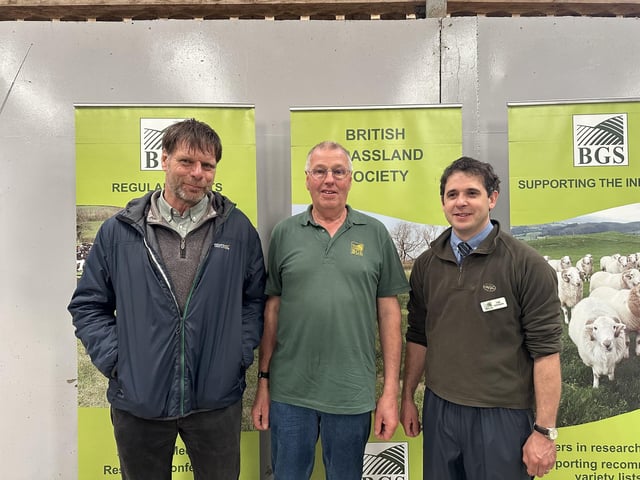
BGS President Elect Luppo Diepenbroek pictured at the Society’s farm walk in Kilkeel with Graham Parks, Past President and Tom Goatman, CEO Photo: freelance