
Ireland’s hybrid rye area continues to increase
While rye has been grown as a wholecrop option across the island of Ireland for some time, ongoing trial work at Teagasc Oakpark in Co Carlow is pointing to the cereal’s potential for grain production.
The cereal can be put to a number of uses, chief among them being: whiskey production, flour production and its inclusion in mongastric and ruminant feeds.
“Rye’s suitability for inclusion in pig diets has already been well proven,” confirmed Teagasc’s Ritchie Hackett.
Given its growth profile rye, grown for grain is an attractive option for arable farmers in Northern Ireland. Significantly, it fits well within all crop rotations.
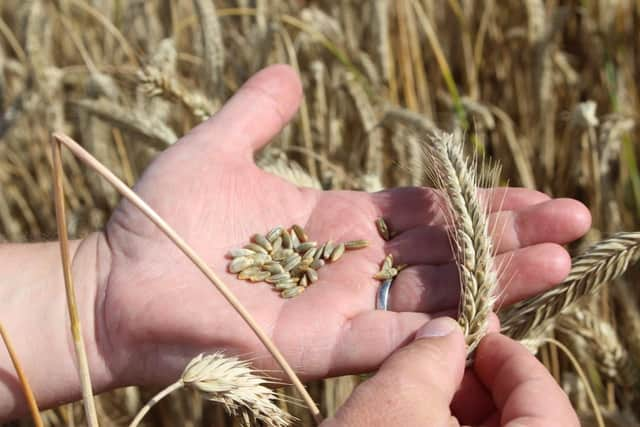

Last year just under 5,000ha of the crop were grown in the Republic of Ireland alone. Back in 2021 the equivalent figure was just 500ha. Driving this process has been the greater availability of seed and that merchants are now willing to purchase the gain that is delivered into them.
Hackett has spoken at a number of recent tillage/arable events, confirming that from an agronomic perspective rye offers a number of advantages. It is a very high yielding cereal crop, relative to wheat and barley.
The Teagasc representative further explained: “It is also very resistant to Take All. This makes it a very attractive option with a cereal rotation. Rye is also an extremely strong rooting crop, which makes it very drought resistant.”
The ongoing Teagasc trials are also confirming that rye produces very high yields of straw.
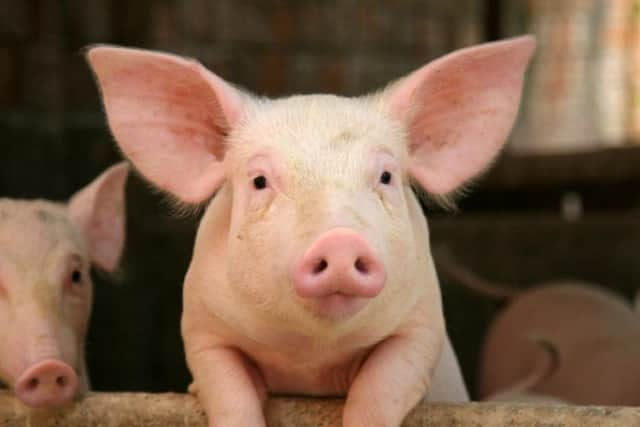
“This is because the cereal is so much taller than either wheat or barley. Straw yields of between an extra one and two 4x4 bales can be expected, relative to wheat and barley,” said Hackett.
“But the additional height of the crop can also be perceived to be a weakness. It is very prone to bending, as opposed to lodging. Preventing this from happening will require a combination of precise nitrogen application and the very controlled use of growth regulators."
Hackett emphasised the difference between a crop bending and one that lodges. He explained: “In the case of rye, crops will always try to come back up to the vertical. As a result, it should always be possible to harvest crops with minimal amounts of grain loss.
“From an overall crop management perspective, rye crops will be ready for harvest after winter barley but before winter wheat.
“This will allow growers to spread the time of their harvesting operations and the field work required during the growing season.”
Hackett concluded: “Rye has tremendous potential as a grain crop with Irish cereal rotations. More work needs to be done in securing additional markets for the grain.
“Ongoing trials at Teagasc Oakpark will help identify the agronomy required to maximise crop yields under Irish conditions.”
Building on the potential that now exists
Seedtech technical director, Tim O’Donovan, believes that hybrid rye ticks many boxes from a combinabke cropping perspective
He said: “Rye offers many agronomic advantages to tillage farmers: it is virtually resistant to Take All while it can deliver high yields of both grain and straw on land that is marginal for both wheat and barley.
“But there is a key constraint within all of this. We need to see a bigger buy-in to rye from animal feed merchants and the compound animal feed sector. If this can be achieved, the scope to drive the production of rye is significant. One of the key advantages the crop offers, is that of allowing tillage farmers to drill a winter cereal during the second half of September.”
Hybrid rye growing guide
Hybrid rye has a wide sowing window from mid-September through to late autumn. It is a particularly good crop for later sowing as it has a strong tillering capacity, with vigorous early spring growth.
Seed rates should be based on time of drilling, along with seedbed, soil and moisture conditions; the below seed rates are a guide only. Seed is sold in unit packs of 12 million viable seeds per bag (approximately 0.5T). Sowing early at 200 seeds/m² equates to 2 million seeds/ha meaning a bag sows 6ha.
October sowing at 240 seeds/m² uses 2.4million seeds/ha meaning a bag sows 5ha and late sowing at 260 seeds/m² uses 2.6 million seeds/ha so one bag sows around 4.5ha.
Hybrid rye is an excellent crop for drought-prone or lighter soils, as the crop has a deep root system and is a good scavenger for nutrients and water. Modern hybrid varieties are shorter and stiffer than older conventional varieties and therefore, with an appropriate PGR programme, are suitable for a far wider range of soil types. Hybrid rye suffers less from eyespot than wheat.
It is also useful in the control of blackgrass because, with much greater height than wheat, far fewer blackgrass seeds are produced (viability is very low). Furthermore, an early July whole crop harvest means the majority of blackgrass seeds will not have shed.
Hybrid rye is a crop with good foliar disease resistance with the exception of brown rust. The vigorous crop growth gives excellent competition for weeds, resulting in much-reduced herbicide use. Nitrogen levels will be approximately 150 kg/ha in addition to P and K, a single PGR application on lighter soils and usually a maximum of a single fungicide. For heavier land, a robust PGR programme is more appropriate, together with a 2nd or 3rd fungicide in situations of high disease pressure.
Rye for Biogas Production
Hybrid rye is an excellent crop to balance other high production substrates, such as beet or maize in the production of biogas in AD plants. The addition of hybrid rye to beet or maize provides a different nutrient source for the bacteria in the digester.
This has a two-pronged synergistic effect; the hybrid rye increases methane yield due to a better balance of trace elements and a reduction in retention time in the digester. The usual ratio is 25% rye to 75% maize. Hybrid rye is also an excellent alternative to maize where the geography or soil types are not suitable for maize production. In such situations, hybrid rye and beet would make a good combination. Hybrid rye gives higher DM yields than triticale or wheat particularly on poor soils or in colder conditions.
Hybrid rye in pig feeds
In Denmark, Germany, Russia, Poland and Spain, rye is already rapidly becoming an established component of pig rations. Pig production is one of the main users of Irish cereals and the pig manure resulting from this feed can be an important nutrient source for arable crops.
According to Teagasc, opportunities for greater co- operation between the two sectors can lead to a stronger bio-circular economy, with resultant economic benefits for both parties. One of these ‘potential opportunities’ is to increase the amount of rye being grown and used in Irish pig diets.
Winter rye has a number of advantages for a tillage farmer as it gives growers the option of lengthening the rotation before returning to a break crop. Rye can produce high yields in a first cereal slot and also fits well into the second cereal slot to give a higher yield than winter barley. In this rotational position farmers can take advantage of rye’s take-all tolerance. Production costs of winter rye are comparable to those of winter barley but output is higher due to higher grain and straw yields.
Recent research on using rye in pig finisher diets in Ireland carried out by Teagasc concluded that growth rates were excellent and that rye can be considered a safe ingredient for use in finisher pig diets.
Based on the chemical analysis, the forecast value of rye in the diet is 94% of the value of wheat. With home milling accounting for half of the pig industry, rye offers real potential. A diet inclusion rate of up to 60% gives excellent performance and can be considered comparable to barley.”