
Lockhart calls for a fair and parallel approach to water pollution in NI
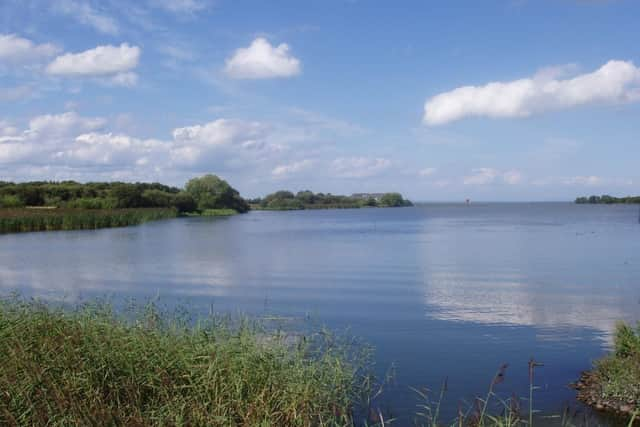
The water quality crisis affecting Lough Neagh, the River Bann and waterways across Northern Ireland was top of the agenda for Carla Lockhart MP, during this week’s meeting with DAERA Minister, Andrew Muir, at Stormont.
During the meeting with the Minister and DAERA officials, the Upper Bann MP made it clear that while farmers fully recognise the seriousness of the environmental challenges and want to be part of the solution, they must not be scapegoated.
Ms Lockhart stressed: “There were flaws within the initial Nutrients Action Programme, and any further NAP proposals must be fair, honest and run in parallel across all sectors. NI Water and other contributors to pollution cannot be allowed to ‘disappear into the smoke’ while farmers are left shouldering the bulk of the blame.
“There is a growing and deeply felt frustration within the farming community that agriculture is being singled out as the main culprit, while other significant sources of pollution go largely unchallenged. This perception of victimisation is intensifying with every public statement and news bulletin that focuses solely on farming.”


Highlighting evidence, the MP referred to recent independent water sampling results shared with her by a Lurgan farmer. Samples taken upstream of Lurgan, in an intensive dairy farming area, showed good water quality with no elevated phosphate levels. However, downstream of the town, the river water was described as “putrid”.
She added: “This strongly suggests that urban and municipal sources of pollution are a key factor, and the facts cannot be ignored any longer.”
The DUP Agriculture, Environmental and Rural Affairs spokesperson added: “Official figures reinforce this position. NISRA data for 2024 shows that farming accounted for 32% of substantiated water pollution incidents, while 68% were attributed to NI Water, industry, domestic sources and others. Despite this, the narrative continues to focus almost exclusively on agriculture.”
Ms Lockhart also referred to DAERA statistics showing that the agricultural phosphorus surplus has fallen by 29% over the past five years, alongside a significant long-term reduction in livestock numbers.
“These facts demonstrate that farmers are taking their responsibilities seriously,” added Ms Lockhart “Yet the public messaging, reinforced by DAERA, continues to give the impression that farming practices are the root of the problem. This is damaging, unjust, and cannot continue,” she added.
The MP warned that unless there is urgent recognition of the wider causes of water pollution throughout Northern Ireland, including sewage discharges, leaking septic tanks, household detergents and industrial waste, trust between government and the agricultural community will continue to erode at pace.
“Farmers want to work with government to improve water quality,” she explained. “But this must be based on a fair, evidence-led approach that does not single out one sector while letting others off the hook.
“Minister Muir has reversed the cap on monetary penalties inflicted on those who breach environmental regulations. The 15% cap on fines was introduced by my party colleague and former DAERA Minister, Edwin Poots, in October 2022.
“The Alliance Party claims the incoming penalty matrix approach is designed to support the committed custodians of our countryside, offering a fair, balanced system where guidance and improvement come first; while those who consistently neglect their responsibilities will face stronger consequences.”
The MP added: “We are constantly reading about court fines imposed on farmers for pollution, but there are no news headlines about the multiple breaches relating to 20m tonnes of raw sewage dumped annually NI Water.
“Full transparency is needed, and all rule breakers must be held accountable for their actions, and that includes NI Water. We can’t have one rule for farming, and another for the public sector,” she concluded.