
Milk from forage: Mitchell family focus on grass and silage to drive dairy performance
Gordon Mitchell and his family farm 140 acres and milk 90 autumn-calving Holstein Friesian cows near Banbridge, Co. Down.
United Feeds ruminant nutrition adviser Andrew McMordie recently visited to review winter performance and plan for the grazing and silage season ahead.
For the Mitchells more milk from forage starts with the soil: the farm is sampled every four years, with lime and P & K applied as required, and 92 per cent of ground now sits above pH 6.1.
Silage fields receive around 2,000 gallons slurry/acre, are treated for weeds, then get foliar nutrition and 2.5 cwt of 27 per centN + Sulphur /acre to drive yield and quality.
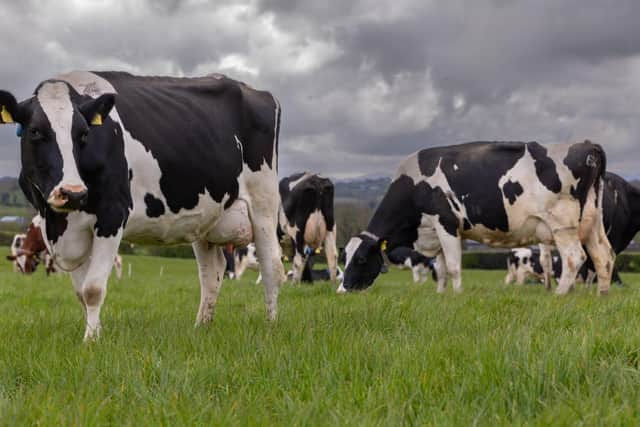

Because the herd calves from September to March, the in-house diet is critical. Andrew McMordie says the winter aim was to match a high spec energy rich ration to high-quality silage, while keeping rumen health and fertility on track.
Cows were managed as one group with a TMR consisting of grass silage plus 5kg of a customised blend and 0.5kg chopped straw, this TMR supported a M+ off 18 litres for cows and 16 litres for heifers, Cream Maker 16 nuts are fed to yield in the parlour.
Andrew highlighted the Mitchell’s focus on consistent intakes, adequate feed space and effective transition cow management as key performance drivers.
Gordon reports cows came through winter in good order. Rolling performance stands at 9,300 litres sold/cow at 4.55 per cent butterfat and 3.43 per cent protein (749kg milk solids/cow), including around 2,300 litres from forage. Fertility also held up, with a 47 per cent conception rate, a projected 375-day calving interval and a rolling culling rate of 20 per cent.
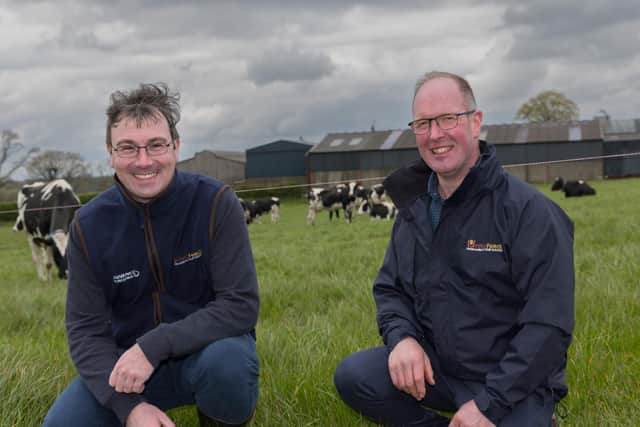
Turnout was later than normal, with half the herd going out in mid-April as conditions allowed. Cows yielding below 33 litres of milk and safely back in calf were prioritised first, with concentrate levels adjusted to suit grass intake.
The remainder of the herd are expected to move out once first-cut silage is harvested and regrowth is available.
At grass, the focus stays on intake and utilisation. The farm uses strip grazing on a typical 21-day rotation. Grass is measured weekly and recorded on Agrinet to guide paddock management and reseeding. Targets are pre-grazing covers of 3,000–3,300kg DM/ha, grazing out to about 1,900kg DM/ha, with pre-mowing used in recent seasons to improve clean-outs.
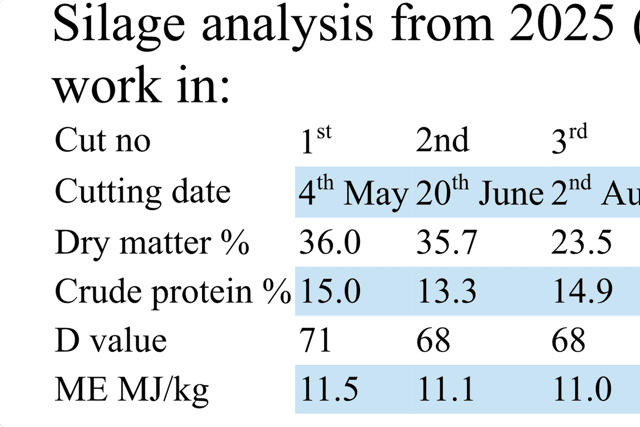
For the Mitchells more milk from forage starts with the soil
As the season gathers pace, the Mitchells’ message is straightforward: protect soil fertility, cut silage on time, and measure grass so decisions are based on what is in front of you. Small improvements in forage quality and utilisation quickly show up in milk from forage and overall margin.
For advice, contact your local United Feeds Ruminant Nutrition Advisor or call 028 90759000.