
Minister Muir launches public consultation on stakeholder group’s NAP proposals
DAERA Minister Andrew Muir has today launched a public consultation based on a stakeholder group’s proposals to reduce nutrient pollution from farming and improve water quality.
The proposals for the revised Nutrients Action Programme (NAP) for 2027-2030 were co-designed by the NAP Stakeholder Task and Finish Group which includes stakeholders drawn from a broad range of expertise, including farming, environmental organisations, agri-food industry and DAERA.
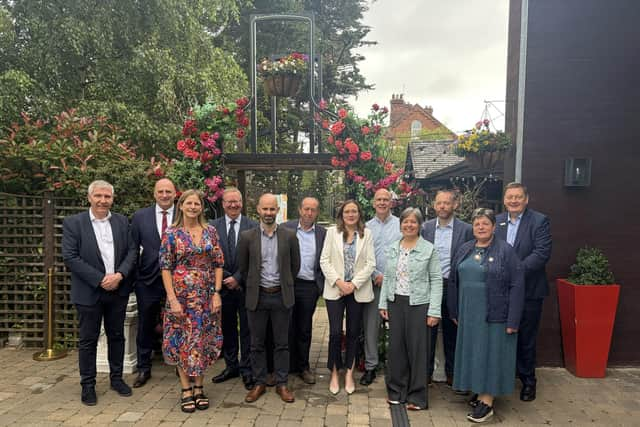

Following their public launch earlier today, a 10-week consultation has now begun on the proposals to improve water quality, so that further feedback can be obtained.
DAERA is also addressing other significant sources of pollution, such as wastewater and urban drainage, through separate programmes and legislation within its remit.
Welcoming the NAP Stakeholder Task and Finish Group’s proposals, DAERA Minister Andrew Muir said: “The revised NAP is critical to securing our shared vision for a thriving, resilient and environmentally sustainable future for our agricultural sector. I want to put on record my appreciation for the many hours Karen Brosnan and the entire group invested to reach an agreed solution. Their efforts have been instrumental in delivering proposals that will deliver improved water quality, whilst working for the farms on the ground.
“I am pleased to now launch a public consultation on the Task and Finish Group’s NAP proposals and encourage everyone with an interest to read the proposals in full and take part in the public consultation. All measures have been carefully considered and are firmly embedded in science and evidence.
“Through this process, our agricultural sector has again shown its willingness to work with environmental organisations and rise to the challenges posed by poor water quality. I know that the majority of our farmers are already taking positive steps to manage nutrients more efficiently and to protect the environment.
“However, if we are to address the issues at Lough Neagh and elsewhere, we need to tackle all sources of nutrient pollution. I will not be found wanting in terms of regulation of wastewater, but we need collective endeavour across government to deliver good water quality.”
The NAP Task and Finish Group was supported by a number of subgroups with the aim of ensuring that the proposals were informed by scientific evidence, will meet legal obligations but were also workable at farm level.
The 3,400 responses received by DAERA in the Department’s 2025 public consultation on NAP were also considered by Task and Finish Group, with the feedback helping shape the new proposals.
The NAP Task and Finish group’s proposals and all consultation documents can be accessed at - www.daera-ni.gov.uk/consultations/public-consultation-proposed-nutrients-action-programme-2027-2030
The deadline for submissions in the public consultation will be 23.59 hours on Monday 7 September 2026.
Following consideration of the consultation responses, the Minister intends to seek Executive approval for the revised NAP proposals and complete the necessary Committee and Assembly processes so that they can be implemented within this mandate.
Meanwhile, The Ulster Farmers’ Union (UFU) is encouraging farmers to engage with the consultation on the revised Nutrients Action Programme (NAP), which has now been published following 9 months of work by the Stakeholder Task and Finish Group (STGF).
The independently chaired process brought together representatives from farming, agri-food processing, environmental organisations and government to review and refine proposals aimed at improving water quality while supporting a sustainable and productive agri-food sector, with discussions informed by technical assessment, scientific evidence, practical experience and stakeholder expertise.
UFU President John McLenaghan said: “The publication of these proposals marks the completion of a significant piece of work involving a wide range of stakeholders from across the agri-food and environmental sectors. This follows the original proposals published in May 2025, which would have had severe consequences for many family farms across Northern Ireland if they had gone ahead in that form. The UFU challenged the proposals.”
Highlighting the significant changes secured through the stakeholder process, Mr McLenaghan said: “Over the past year, UFU representatives have been at the centre of every meeting, attending sub‑groups, and every negotiation. We have worked relentlessly to remove unworkable measures, secure practical alternatives, and protect the future of farming in Northern Ireland."
The Union noted that the work of the Stakeholder Task and Finish Group has been underpinned by a commitment to collaboration and a recognition that achieving environmental improvements and maintaining productive agriculture must go hand in hand.
“Everyone involved recognises the importance of improving water quality. Equally, there is a need to ensure that any measures introduced are practical, proportionate, and capable of supporting a sustainable farming industry. That balance for our members has been at the heart of our discussions throughout this process.”
Mr McLenaghan added: “The revised Nutrients Action Programme reflected the need to actively engage in the negotiating process, particularly in the face of ongoing legal challenges from external bodies, ensuring that the Stakeholder group tried to find more workable solutions rather than leaving outcomes to be dictated through the courts.
“Due to that work, the package now out for consultation is a significant improvement on last year’s. It is not perfect, no regulatory package ever is, but it is a world away from where we started. The most damaging proposals have been removed or rewritten, and the focus is now on workable, targeted and phased measures that keep farmers farming while delivering environmental improvements.”
The UFU is encouraging members to familiarise themselves with the proposals and submit their views before the consultation closes.
“Over the coming weeks, the UFU will be engaging intensively with members across all sectors. We will provide guidance, host meetings, and help you understand the proposals," the president added. The Nature Friendly Farming Network (NFFN) Northern Ireland has welcomed the launch of the consultation on the latest version of rules aimed at improving water quality.
NFFN NI says reducing the use of costly inputs such as fertilisers, while tackling water pollution, is vital if Northern Ireland’s farms are to remain viable into the future and resilient to the threat of climate change.
NFFN NI manager Cormac Dolan said: “The latest NAP is a step in the right direction for the long-term future of farming in Northern Ireland. It provides an opportunity for targeted action on specific problem areas, such as phosphates, and also offers the chance to promote systems based on working with nature and healthy soil.
“We would encourage all farmers in Northern Ireland to respond to the consultation and have their say. This is their opportunity to help shape what the next few years, which are so crucial given difficult market conditions and climate change, are going to look like for our sector.”
Although the latest NAP proposal does set out an array of proposed measures, the stakeholders are keen to emphasise that these are still subject to discussion and people should give their feedback, whether positive or negative, through the consultation process.
NFFN NI’s farmer members are already using a wide range of nature-based solutions to tackle some of the issues addressed in the NAP. Changes to grazing and pasture management, or the use of swales or reedbed soakaways to deal with dirty water, can be relatively inexpensive, straightforward to implement and deliver both financial and environmental benefits for farmers.
NFFN NI chair Louise Skelly, who runs a sheep farm in County Down, said: “I am very pleased that everyone who cares about the future of Northern Ireland, its landscapes and its people has come together to find the best way forward.
“Farmers want to be good stewards of the land, and we are ready to move forward positively with this. We need to bring people on board to find the right balance that protects both food security and nature, while keeping farm businesses viable.”
The Northern Ireland Environment Link (NIEL) has welcomee the launch of the Nutrients Action Programme (NAP) consultation.
Max Bryant, CEO of NIEL said that environmental groups across Northern Ireland were pleased to be involved, through NIEL, in the collaborative and evidence-based approach taken by the Stakeholder Task & Finish Group to address the challenges posed by excess nutrients.
He said: “This unique approach recognised our shared need for clean water and healthy ecosystems – for health, nature and food production – and the role we all have in improving it.”
Adding that: “Agriculture is not the only pressure on water quality, and the need for action on wastewater, septic tanks, development, industry and wider catchment pressures is well documented; nevertheless, the NAP is a critical part of the response.
“The Stakeholder Task and Finish Group agreed that environment and agriculture are intrinsically linked and mutually reliant if they are to thrive for generations, and this enabled the development of targeted actions to support better environmental outcomes through practical, evidence-led changes in land and nutrient management.
“Critically, this approach acknowledges that this is a reset of the NAP process. In ensuring provision for ongoing review, tracking and revision of the measures outlined in the NAP, we will have accountability and will be able to measure real impacts and improvement in our water quality on an ongoing basis.
“This has been made possible by the knowledge, understanding and trust built up over the nine-month review by the Stakeholder Task and Finish Group and the acceptance that the environmental challenges we all face can only be resolved by working together.”
Peter McEvoy, Chair of the NIEL Sustainable Agriculture Policy Steering Group and Vice Chair of NIEL, said the process had shown that progress is made when agriculture and environment work as partners.
“The challenge now is delivery,” he emphasised. “The final NAP is collaborative, evidence-led, and fair but ambitious, with enough support for farmers and enough accountability to produce real improvements in water quality.
“Clean water is fundamental to nature, communities and the wider economy. Agriculture is not the only pressure, but it is a critical part of the solution. This consultation is now an important opportunity to shape measures that are effective, evidence-led and capable of delivering real change.”
NIEL would encourage members and all of those with an interest in the environment, sustainable agricultural practices and water quality to respond to the consultation process, which can be found at Citizen Space Hub, or via the Stakeholder Group web pages at napfactsni.org.