
MP urges farmers to make safety a number one priority
Upper Bann MP Carla Lockhart is urging the farming community to make safety a number one priority as she pledges her support for Farm Safety Week 2026, which runs from 20th to 24th July.
Organised by the Farm Safety Foundation (Yellow Wellies), the annual campaign has become one of the most important dates in the agricultural calendar. Now in its 14th year, Farm Safety Week focuses not on just on statistics, but on the people, families and communities whose lives have been changed forever by farm accidents.
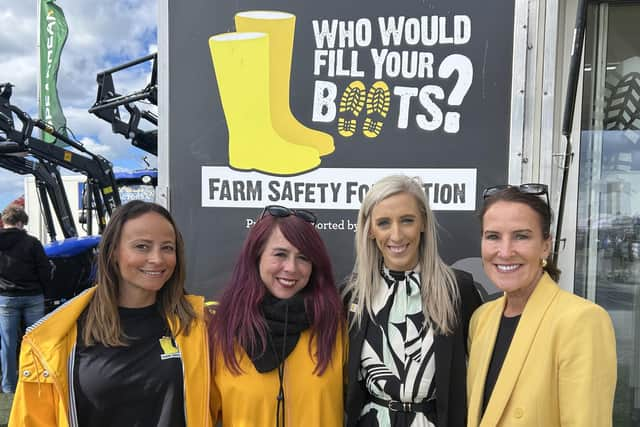

The DUP Agriculture, Environment and Rural Affairs spokesperson said: "Farm Safety Week is an opportunity for everyone involved in agriculture to pause and reflect on the importance of working safely every single day.
“This year’s campaign reminds us that behind every statistic is a person, a family and a community living with the consequences of a life-changing or fatal accident.
“Yellow Wellies continues to do outstanding work with young farmers across the United Kingdom, promoting not only farm safety but also mental wellbeing through initiatives such as its ‘Mind Your Head’ campaign which takes place annually in February. Their message is simple but powerful – physical and mental self-care are essential building blocks for a safer farming industry.”
The MP added: “Farming remains one of the most rewarding occupations, but it is also one of the most dangerous. Although agriculture employs only a small proportion of the UK’s working population, it continues to account for a disproportionate number (19%) of workplace fatalities every year. The reality is that many of these tragic incidents could have been prevented.
“Here in Northern Ireland, the figures are particularly sobering, with over 50 fatalities in ten years. Tractors and farm machinery were involved in all three farm fatalities recorded during 2025, while two of those who lost their lives were over the age of 60. Those tragic incidents are a reminder that no one is immune from risk and that experience alone cannot protect us from complacency.”
Carla Lockhart said she welcomed HSE NI’s renewed focus on supporting older farmers through its ‘farm wiser to farm longer’ awareness campaign. “The majority of farmers continue working well into later life, bringing decades of invaluable knowledge and experience to the industry. Adapting working practices and recognising changing physical abilities can make all the difference in preventing accidents.
"Farmers lead incredibly busy lives. Every day they make countless decisions, operate powerful machinery, handle livestock, work with slurry and carry out tasks at height. It is understandable that routine jobs can become second nature, but it only takes one moment of distraction or one shortcut for routine tasks to become a tragedy.”
“HSENI continues to remind us of the key farm safety risks through its SAFE message – Slurry, Animals, Falls and Equipment,” she said. “These remain the hazards most commonly associated with serious and fatal accidents. Every job should be properly planned, machinery and equipment should be well maintained, and unnecessary risks should never be taken.”
Ms Lockhart continued: “While we cannot eliminate every risk associated with farming, we can all take practical steps to reduce them. Whether that means wearing the correct protective clothing, maintaining machinery, taking extra care around livestock, ensuring children are kept away from hazardous work areas or simply taking the time to think through a task before starting, every precaution matters.
“The Farm Safety Foundation has also produced its excellent Little Book of Farm Safety, which provides practical advice on everything from machinery and ATVs to livestock handling, slurry safety, overhead power lines, falls from height and child safety. I would encourage every farming family to make use of this valuable resource.”
The MP encouraged farmers, contractors, agricultural organisations and rural communities across Northern Ireland to support Farm Safety Week by sharing its messages, starting conversations about safety and wellbeing, and reinforcing the importance of making safe farming a daily habit rather than an annual reminder.