
Northern Ireland’s poultry sector comes under pressure
The Ulster Farmers’ Union (UFU) is initiating a study to examine the return poultry meat farmers in Northern Ireland (NI) are receiving for their produce compared to their counterparts in Britain.
An independent consultancy will be appointed to carry out the work required with the results to be made available within a number of months
According to the UFU, should NI chicken prices be lacking in comparison, not only would this reflect unfair treatment of local producers, but it would put them at a significant disadvantage.
Union deputy president Glenn Cuddy further explained: "Concerns have been raised with the UFU about potential price differences between what farmers are receiving for chicken in NI and in Britain.
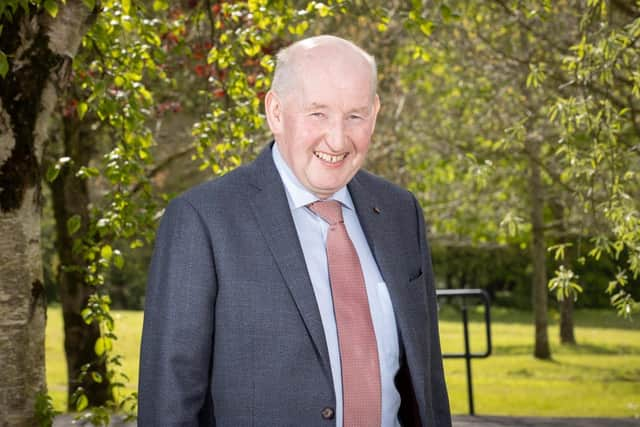

“Over the past 24 months, a number of poultry meat growers have left the sector which is concerning, and our members deserve an independent review to provide clarity on the situation. NI producers adhere to the same high standards as poultry farmers in Britain and any price gap cannot be justified.”
He added: “To secure a sustainable future for the NI poultry sector it’s critical that prices align with Britain, enabling farmers to receive a comparable income and comply with increasing environmental regulations.
“This study is the first step to addressing any potential issues and the UFU is fully committed to the investigation.”
Glenn Cuddy concluded: “If NI prices are lagging behind Britain, solutions will need to be found urgently. The UFU will push for appropriate action to support NI poultry farmers, ensuring they receive a fair price for their produce and can compete on a level playing field with their counterparts.”
Meanwhile, the UFU is urging policymakers to immediately extend the existing feed composition derogation for organic egg producers, which ends on April 7th, to prevent increased production costsand maintain the sector’s viability.
While the NI organic egg sector still operates under EU regulations, their counterparts in GB produce to the UK’s existing and less costly standards.
Currently, the derogation allows NI organic egg producers to use 95% organic feed instead of the EU-mandated 100%.
However, if this is not extended, NI organic eggs will become uncompetitive against GB-produced organic eggs, amounting to an industry wide burden across Northern Ireland of £420,000 - £470,000 annually.
According to the Union, this translates to an unsustainable average increase of £16,800 – £18,800 per farm.
Glenn Cuddy again: “The vast majority of NI’s organic eggs are sold in GB. So, failure to extend the existing feed composition derogation will undermine our NI producers and disrupt trade within the UK’s internal market.
Due to NI still operating under EU regulations, these frames are being placed on the back foot as the standards which GB adhere to are less costly.
“The UK government assured us that the Windsor Framework would not undermine NI businesses, yet our industry has been left in the dark. Despite repeated requests, we have received no clear response from ministers."
Alongside feed regulations, organic certification bodies are moving to enforce stringent EU housing standards in NI, adding further costs and making new entrants to the sector unviable. This will exacerbate the cost disparity between NI and GB producers and could threaten the sustainability of the sector.
The UFU deputy president commented: “To ensure local producers can remain viable, the logical approach would be for NI to follow GB organic legislation as it evolves.
“It’s unacceptable that GB-produced organic eggs could be sold in NI at a lower cost while NI farmers selling into GB have additional expenses due to EU legislation: it’s not sustainable."
He concluded: “The UK government must act now to uphold the principles of the internal market and protect our farmers by ensuring a level playing field between GB and NI.”