
Producer wool payments could double in 2026
Ulster Wool is confirming that producer payments in 2026 could well double relative to the value of those paid out to its suppliers 12 months previous.
The organisation’s chairman, Brendan Kelly, explained: “Prices paid at recent British Wool auctions have increased significantly. This has been a consistent trend over recent months.
“The February sale saw prices rose by 7%, relative to the January event. Of particular note was the fact that wool from hill breeds increased at a higher rate again.
“This reflects the very strong demnd for woollen carpets around the world at the present time.”
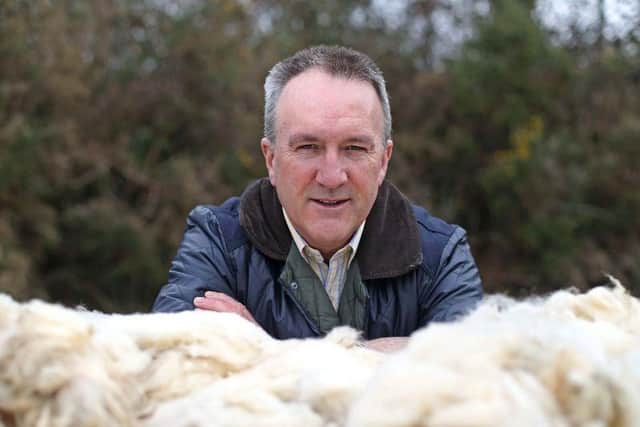

According to Brendan Kelly, international wool markets look set to remain strong during the period ahead.
He further explained: “Sheep numbers have decreased considerably around the world over the past couple of years. And wool supplies have been impacted accordingly.
“Now we are seeing supply:demand factors kicking in, where wool markets are concerned.
“This year will see Ulster Wool paying producer prices that are probably 50% higher than those available from other buyers.
“So, I would encourage all sheep farmers in Northern Ireland to contact the Ulster Wool depot at Muckamore before selling their wool in 2026.”
The new wool season kicks-in at the beginning of May.
Ulster Wool Group collects and grades 70% plus of the fleeces produced across Northern Ireland. And the co-op is committed to growing this figure.
Brendan Kelly again: “Wool is increasingly regarded as an elite quality, natural product with an intrinsically high value.
“And Ulster Wool Group’s unique relationship with British Wool is helping to make this a positive reality for local sheep farmers.”
Meanwhile, payments for 2025 wool deliveries are being made to sheep producers directly following receipt of their 2026 clips.
According to the Ulster wool representative, the quality of fleeces presented in 20206 wil have been impacted by the consistently wet weather that has impacted all of Northern Ireland since the beginning of January.
Turn to page 9
“Belly wool may well be quite dirty, given the deterioration in ground conditions that we have seen over recent weeks.
“There is also a possibility that the tight fleeces, which characterise a number of lowland breed types, may have become discoloured to a degree. Again, this is an impact of the heavy rains of late.”
Turning to the issue of additional support measures for the sheep sector, Brendan Kelly has welcomed the establishment of a new Sheep Support Working Group.
It comprises representatives from all the main stakeholder organisations operating within the sheep sector, including the Department of Agriculture, Environment and Rural Affairs (DAERA).
Kelly commented: “The first task is to find the finances required to find new support measures. And this is a job for DAERA.
“It must always be remembered that the sheep sector has consistently lost out when changes were introduced to the support schemes made available to agriculture as a whole over recent years.
“This trend must be reversed.”
Currently flock owners in the Republic of Ireland can avail of separate Sheep Welfare and Sheep Sustainability payments.
This year will see both schemes deliver a total payment per breeding ewe of around €30.
If the equivalent level of commitment was made available to the sheep industry in Northern Ireland it would equate to an annual support budget of around £24M.