
Sheep worrying remains a key challenge for the farming sector
March has arrived and with the onset of spring comes the expectation of ewes and lambs making such a wonderful addition to the splendour of our countryside.
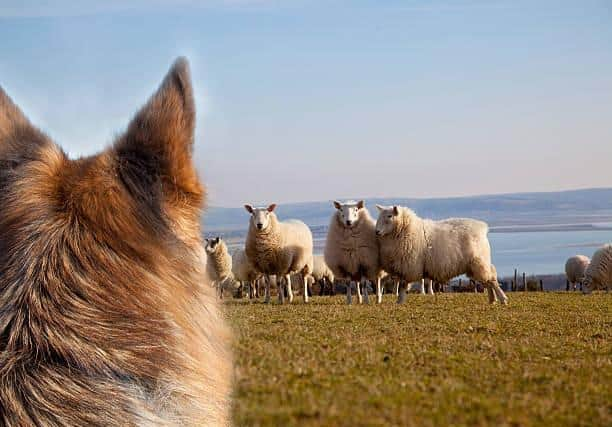
However, this is also a time of year when sheep are most exposed to the impact of dog attacks. Unfortunately, the financial losses for farmers, as a direct result of these incidents, remain very significant.
Sheep worrying can be prevented. But making this happen will require all dog owners to always have full control of their pets.
Insurance to cover the direct losses associated with a sheep worrying incident can be obtained. Additional business interruption cover can be added, which recognises the lost income generated for a farming operation in the event of a sheep worrying incident.

Specific sheep worrying insurance can be taken out by farmers at any time of the year.
However, the policy will have a full 12-month, not a seasonal, duration. The cover extends to all locations at which the flock in question is grazed or housed throughout the year, provided they are within the UK. These include the home farm and areas of winter keep.
Policies will insure against all fatalities incurred by a flock owner courtesy of a worrying incident. The farmer’s public liability will also cover claims made against a working dog owned by the insured farmer, where attacks on other flocks are concerned. Documentary evidence of the attack having occurred must be available. It is also important that the police or local dog warden are notified of any sheep worrying incident having taken place.
Meanwhile, the spring months also take-in the main calving season on suckler farms across Northern Ireland. A freshly calved cow is, potentially, the most dangerous animal on any farm. Her sole priority is to protect the safety of the calf she has just given birth to - and she will act accordingly.
So, farmers must fully recognise these realities. Given this backdrop, there is a duty of care on the part of farmers to have the appropriate calving facilities in place. The overarching requirement is to guarantee the safety of everyone involved - humans and animals, as well as giving the new mother the space she needs to bond with her calf.
And of course, we are all busy people. For lots of reasons, farmers may not be at home to attend to a specific calving case. And, in such instances, friends or neighbours may be asked to step into the breach.
But all of this brings with it a specific insurance dimension. In the event of an accident involving workers or helpers, the farm must have employers’ liability cover in place. Having both public and employers liability cover protects the farm business if the injured party takes a personal case for damages against the farming business.
Given the continuing rain of recent weeks, very little slurry was spread during the month of February. This means that both farmers and contractors will want to make up for this over the coming days. Rushing any job of work, by the very nature of the process, heightens the safety risks involved. And this is particularly so where slurry mixing and spreading are concerned. The reality is that each step in the slurry management chain involves an element of risk or danger.
AbbeyAutoline is a longstanding member of Northern Ireland’s Farm Safety Partnership. Our commitment to encouraging the attainment of the highest possible health and safety standards on farms is unwavering. The starting point to any project is the planning that goes into making it all happen and working with slurry is no different. So, it is imperative that all stock and human should be outside a slatted shed in which a slurry tank is being mixed.
According to current Health and Safety Executive Northern Ireland (HSENI) guidelines, the first 30 minutes – after mixing has commenced - are the most dangerous. As mixing continues, the quantity of slurry gas released falls off. However, each time the pump is repositioned to mix another part of the tank, gas concentration rises again. So, it’s a case of remaining outside the shed for at least another 30 minutes or longer, depending on the size of the tank.
It is also incumbent on farmers and contractors to ensure that all tractors and slurry equipment are fully serviced and fit-for-purpose, prior to use. Transporting slurry by road brings with it several inherent risks. Tractors turning right with a slurry tanker attached represents a case in point. It is vitally important for all brake lights and indicators to be visible and fully operational, both on the tractor and the accompanying tractor.
If this is not the case, motorists may try to overtake, not being aware of the tractor driver’s intention to turn right. It is so easy for accidents to happen. The fundamental reality within all of this comes down to one very simple adage: think safe at all times.
At AbbeyAutoline, we have a dedicated agricultural team who are happy to discuss your farm insurance needs. Please contact us on 08000 66 55 44, email [email protected] or visit www.abbeyautoline.co.uk/farm-insurance/