
The role of social media as an information platform

Social media has long established itself as an important source of news, current affairs and general information for vast swathes of the UK population – 79%, in fact, as of 2025.
Crucially, the technology and range of social platforms have evolved to allow users to voice their opinions on the widest possible range of subjects.
Indeed, use among political leaders is practically universal. According to Statista, 100% of UK cabinet ministers now maintain official accounts on at least one platform, with three primary use cases: communicating policy, engaging constituents and countering misinformation.
Social media has become a fluid, fast-moving landscape where conventional news outlets are sourcing information on world leaders from the outlets these politicians use as their frontline communication tools.
And the demand is there: as of 2025, 42% of UK adults now look to social media as their primary source of news – a figure that runs close to 75% among younger audiences – cementing social as one of the leading news access points in this digital age.
With its reach and instant touchpoints, social is fast becoming the go-to platform for not only news, but engagement between companies and consumers. This presents a rich opportunity to tell the story of dairy, which can be brought to a worldwide audience using social as the vehicle.
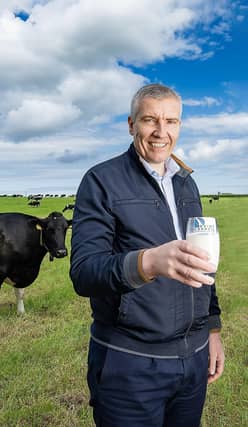
A pertinent example of the impact of social media can be seen in the increasing number of farmers who are seizing the opportunity to share their personal stories about their farms and families online. By doing so, these farmers provide an insightful glimpse into their daily lives and the operations behind their agricultural businesses.
And taking this approach means that the farmers in question can make contact with large numbers of people with passion and authenticity.
All it takes is a smartphone and an internet connection to deliver a true insight into the huge commitment made by milk producers as they milk their cows every day, while also dealing with the challenges of extreme weather and equipment breakdowns.
And then, of course, there are the myriad achievements notched up by farmers on a regular basis: the satisfaction of a successful harvest and the miracle of new life every time that a calf is born.
These real-life stories resonate strongly with the general public, with a recent SproutSocial report finding authentic and user-generated content gains up to 70% more engagement than traditional posts.
By taking such a proactive approach, social media can be used to de-bunk the many myths linked to modern farming and food production.
We now hear a lot of people referring to what they are finding out from farmers on social media. All of this is extremely positive.
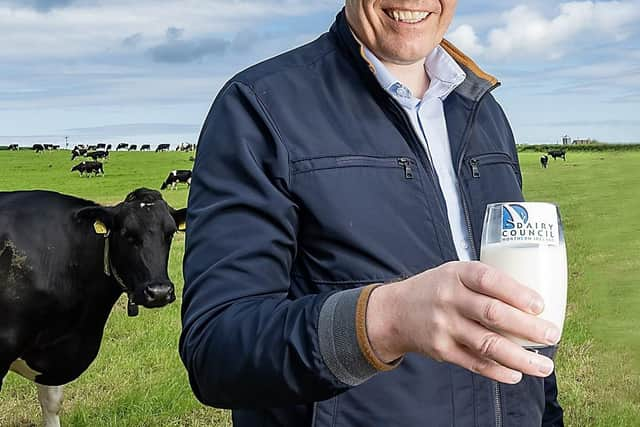
The Dairy Council uses social media for two main purposes. One centres on consumer engagement. And in this context, we use Instagram, for the most part, to communicate with the general public regarding the high quality of milk and dairy products produced here in Northern Ireland.
There is a tremendous and ongoing opportunity to showcase easy-to-prepare and dairy-rich recipes made with local products, while also communicating many of the facts and trends associated with the dairy industry, such as on-farm production and processing. And this is far from a one-way process. The hosting of regular competitions and promotions engenders a positive response from the public, sparking a long-termer interest as the follower count continues to grow.
Seasonal promotions timed with the likes of Christmas and Easter bring the Dairy Council to new audiences both at home and further afield.
Leveraging social as a dynamic platform, we also enter into collaborations with personalities: up-and-coming chefs and local sports’ stars being a case in point.
The reality is that hosting an advertisement campaign, in the traditional sense on TV, radio and print media has become cost intensive and is not likely to generate the same return on long-lasting engagement.
Conversely, we now find that using social media is a very cost-effective way of reaching a wide and engaged audience.
Of equal significance is the opportunity to accurately quantify the impact of promotional activities undertaken through the use of social media.
It is possible to closely monitor emerging trends within each platform’s analytics, providing a precise perspective on the demographics of the people engaging.
And we hope to build on all of this for the future.
For example, effectively targeting specific demographics can be achieved with the use of social media. It has long been recognised that making direct contact with young people is tremendously important in terms of education and raising awareness of the role that dairy nutrition plays in delivering a healthy lifestyle for us all. And the good news is that the use of Instagram, for example, gives the Dairy Council the opportunity of doing just that.
At a professional level, the Dairy Council also uses social platforms to engage on policy issues and to highlight what issues and events we are working on. The forum of choice in this regard is LinkedIn. By taking this approach, we find it is possible to gauge the views of policy professionals and experts across a wide range of subject areas that are of direct interest to the Dairy Council.
Among these is social media as a tool for food discovery and research, particularly in this age of the conscious consumer where a rising percentage of younger users are using platforms like Instagram and TikTok to decide not only what and where to eat, but how that food is produced as they trace its journey from farm to fork.
That’s not to say there is no longer a role for traditional news sources; newspapers, radio and television still play a key role in helping to inform farmers and consumers on a range of issues so that, when opportunities arise for the industry to shine a light on itself through farming programmes, editorial and consumer features, each of these pieces resonate because they are channelled through platforms with high levels of trust.
All told, the challenge of communicating the story of dairy in Northern Ireland becomes one of balance.
Yes, social media has a key role to play in this regard. Yet it’s massive research and instant interaction forms one part of the overall strategy employed by the Dairy Council in proactively communicating with consumers and relevant stakeholder groups on a continuing basis.