
UK harvest yields continue to disappoint
The Agricultural and Horticultural Development Board (AHDB) has just published its second update of UK harvest yields for 2026.
And it’s very much a case of the figures continuing to disappoint.
Harvest progress has continued to be quick and generally uncomplicated across most of England and Wales. Many farms in England have completed or are in the closing stages of harvesting.
But, as the harvest has moved further north, the speed of progress has slowed due to wet weather in Scotland and the North of England. This has coincided with a rise in crop moisture levels.
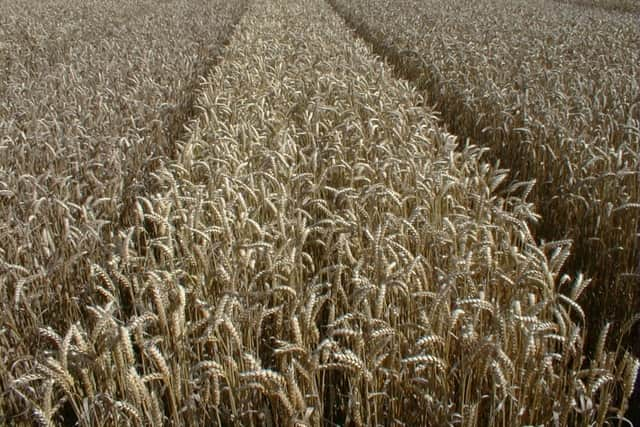

Yields remain disappointing and highly variable, reflecting another season in which rainfall has been limited since spring. Although average yields are lower than expected, there is considerable variation between farms. Several factors appear to be contributing to these differences, including: soil type and its ability to retain moisture; drilling date; the use of organic fertilisers, fields’ previous cropping history in tandem with varietal choice and seed type.
As a result, farm performance has varied significantly, with some growers achieving yields close to, or even above, their long-term average, while others have seen substantial reductions.
Average UK winter wheat yields are coming in at 6.7t/ha. The equivalent figures for winter barley, winter oilseed rape, oats and spring barley are: 6.8t; 3.9t; 4.2t and 4,1t. The only crop to out-perform its 2025 average figure is winter oilseed rape.
Winter barley
The winter barley harvest is nearing completion in the UK. However, harvest progression slowed over the past fortnight following wet weather in Scotland and the North of England. The average yield estimate is broadly in line with the five-year average, although results have varied considerably between farms and regions.
Winter oilseed rape
Harvesting of the crop is now complete in England and Wales for farms in the survey, with the remaining areas in Scotland and Northern Ireland.
Average yields are above the five-year average, though performance has varied significantly depending on local conditions and crop establishment.
Oats
Harvesting is now well advanced across most of England, but at an earlier stage in Scotland, where it is around one-third complete. As the harvest has progressed, there has been an increased area of spring oats cut, especially in the South of England, which has brought down the oats’ average yield.
Winter wheat
The winter wheat harvest remains the fastest in over 20 years, with an estimated 85% of the crop now harvested. Harvesting is in the early stages in Scotland. Yields are disappointing following prolonged dry conditions, although results vary significantly between farms, regions and soil types.
Spring barley
The spring barley harvest has progressed rapidly, with over half the crop now harvested across the UK. In Scotland, spring barley harvesting has made its earliest start in recent years.
The variability of this year’s spring barley crop so far cannot be overstated. While there are pockets of the crop which has performed okay, large areas have been significantly down on yield.
And it’s a similar story in Europe
The European Commission is reporting that repeated heat waves shortened the grain-filling phase of winter crops and brought forward the harvest, which has already been completed in the south and is progressing elsewhere.
EU yield forecasts for winter crops have been revised downwards by 1–4 %, leaving the outlook for total cereals at 1 % below the five-year average.
For summer crops, exceptional heat and limited rainfall across western and central Europe depleted soil moisture, constrained biomass accumulation and affected flowering. Yield forecasts have been reduced for all spring and summer crops, most notably for grain maize and sunflowers (6–7 %). Hot and dry conditions are forecast to persist in Western Europe, increasing the likelihood of further yield reductions.
In France, the EU’s largest producer of grains, drought conditions with record-high temperatures, combined with limited soil moisture, negatively affected the final phenological stages of winter crops and the development of summer crops, with the clearest impacts observed in western regions where heat stress coincided with limited water availability.
Meanwhile, across large swathes of Italy, maize growth has been suboptimal following heat stress during flowering, and early-flowering varieties may have experienced reduced fertility. The largest impacts are expected in non-irrigated fields.
And in Spain winter crops already having been affected by suboptimal conditions earlier in the season, experienced a shortened grain-filling phase due to high temperatures. Elsewhere, the very high temperatures have had only limited impacts on crops still in the field.
In total contrast above-average rainfall in some parts of Poland may delay harvesting, reduce grain quality and favour the development and spread of diseases. And in Turkey, cool conditions have further delayed winter crop development, and harvesting could be postponed by 20 to 30 days.
Across most of Central Europe low soil moisture was further depleted by exceptionally high temperatures, which increased water stress on summer crops and led to major concerns for their yield potential.
Winter and spring crops matured prematurely, requiring early harvesting and raising doubts about grain size and quality.
Winter oats a highlight of Harvest 2026 in Donegal
Cereal growers in East Donegal are confirming that winter oats have bucked the trend of poor yields recorded this year: where other combinable crops are concerned. The winter wheat harvest is now in full swing in the East of the county: two weeks ahead of what would be regarded as a normal cutting date. While winter oats averaged 3.5t/ac on some farms, the average wnter barley yield came in at below 3t. Accompanying straw output was also disappointing.
Early winter wheats are averaging 3.2t/ac with straw yields holding up well. Meanwhile, winter oilseed rape yields came in with an average yield of 1.7t/ac down form the 2t plus figure achieved in 2025.
It is hoped that two full days will allow Donegal tillage farmer to complete the winter wheat harvest.
Spring barley remains the main cereal crop grown in Donegal. Many were planted out late in 2026, a reflection of the poor weather in March and early. However, growers are confirming that spring barley yields look promising. The first crops are set to be harvested in around three weeks’ time.
A number of key trends have already been identified as impacting on 2025/26 grain yields in Donegal. Many crops established well in the autumn. However, the cold, wet spring conditions prevented winter wheat and winter barleys from thickening up as growers would have wanted.
Barley Yellow Dwarf Virus (BYDV) impacted to a degree on winter wheat and spring barley crops.
Meanwhile the drought conditions that impacted throughout the entire months of July brought crops forward much more quickly than would normally be the case. The subsequent curtailment of the growing season had a significant impact on final yields and grain quality.
The coming days will see cereal growers in Donegal concentrate on baling wheat straw. After that, farmers’ attention will switch to the drilling of winter oilseed crops.
The big issue here is soil moisture levels. However, it is anticipated that the significant rainfall expected in the North West next week will sufficiently reduce soil moisture deficits so as to allow the drilling of crops get underway. The area of oilseed rape sown out in Ireland has increased consistently over recent years. It is envisaged this trend will continue into 2026/27.
Grain prices starting to strengthen
Last week saw UK November 2026 wheat futures break through the £200/t threshold.
The contract period ended with prices at £203/t: up 1/8% from a week earlier. According to the Agricultural and Horticultural Development Board (AHDB), the November 26 contract’s highest price to date of £207.00/t, reached on July 22, could prove to be the next key level. Prices could face some resistance around this mark: this will depend on the market news this week.