
Ulster Farmers Union denies dictating Stormont policy in row with agriculture minister
The President of the Ulster Farmers’ Union (UFU) has denied it is “dictating” government policy amidst an ongoing row with Stormont’s agriculture minister.
UFU President John McLenaghan said Andrew Muir’s comments about the organisation were “unfair” and “somewhat disingenuous”.
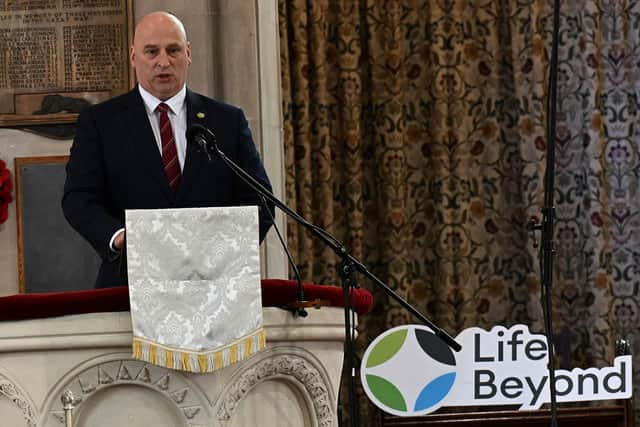

Last week Mr Muir said “no single interest” group will “dictate government policy” after the union called on him to resign in relation to controversy over the shooting of 51 cows in Co Tyrone.
Daera’s Humane Slaughter Team carried out the cull of 51 cattle on land near Fivemiletown in June, following a court order which disqualified the herd owner from keeping animals.
Concerns have been raised by some political representatives and farmers about the public nature of the incident and questions have been posed about whether all options were exhausted before the cows were shot.
The minister insisted there was “no reasonable alternative” but to comply with the court order by culling the animals on the site and appointed Dr Martin Blake, former chief veterinary officer for Ireland, to carry out an independent review into the cull.
Mr McLenaghan told BBC’s Good Morning Ulster programme: “(Mr Muir) said UFU dictating was over, I mean, this organisation’s 120 years’ history has worked with every government there has been, every competent authority there’s been, whether it’s Westminster or Stormont, any political party that has held the ministry.
“We’ve worked with them to help them to help our farmers, to help our industry, and to describe that as dictating is not only unfair on the Ulster Farmers’ Union it’s also actually somewhat disingenuous.
“What we do at Daera’s request, often, is participate in what’s known as co-design.
“So recognising that Daera does not have perhaps enough resources themselves to design future policy, they invite organisations like ourselves, but others as well, to sit down with them and look at how do we design policy in the future.
“And that includes stakeholders from environmental agencies, from industry representatives.
“So, somewhat disingenuous to all of them, and that whole process, which has been going on for years.”
He added that the days of the organisation dictating policy “never started”.
“We will sit down with any government, any government minister from whatever party, wherever they come, and with anybody for that matter, to do what we believe is in the best interests of our farming members and the farming industry generally, that’s what we do, and we will never stop doing that,” he said.
Mr McLenaghan said the review in to the cull being conducted by a single person rather than a panel was “the straw that broke the camel’s back” in calling the vote of no confidence against the minister.
“We were prepared to give this panel the opportunity to investigate this thoroughly, but we needed to know that it could be used thoroughly,” he said.
“And whenever we found out the terms of reference and the fact that it was going to be an individual, that made it clear to us that there was going to be no attempt for this to be fair and take into consideration those legal aspects and those also those animal cruelty and farmer welfare aspects, and that is not unreasonable to all to expect.”
He also denied that the union’s decision was a “stunt” related to grievances some members had with Mr Muir’s environmental policies, particularly in relation to Lough Neagh.
“This is not about personalities, this is about getting policies which can deliver for our industry and also for our environment,” he said.
“Because unfortunately, you can point towards failings in both, but it is not at the door of the Ulster Farmers’ Union or the agricultural or the farming industry because we are in good faith doing what we can.
“And there are many other issues which the minister has the opportunity to address, such as direct discharge of sewage into Loch Neagh, which he is not addressing, such as the zebra mussels in Loch Neagh, which he’s made no effort to control.
“So are many other factors that are under the control of the minister, and this is not personal at all.”