
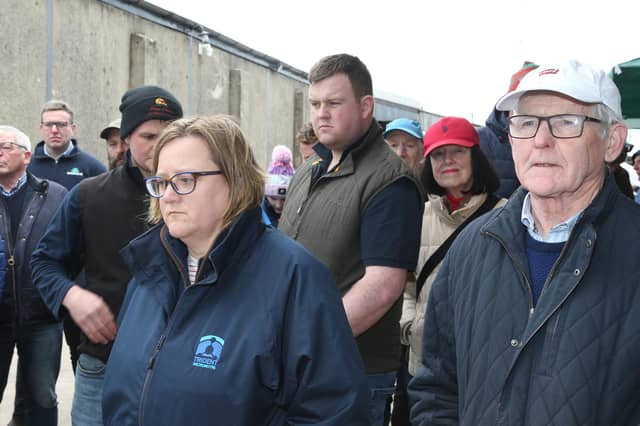

The event highlighted a progressive, third-generation dairy farming business focused on efficiency, sustainability and maximising output from a grass-based system.
Farming 140 acres, most of it owned and all devoted to grass, the Mitchell farm operates at approximately 100 metres above sea level. Their system centres on making the most of home-grown forage while maintaining strong performance from a 90-cow Holstein herd.
The herd is currently producing an average of 9,300 litres per cow, with 4.55% butterfat and 3.53% protein, achieved on 3,124kg of concentrates. This results in an impressive margin over concentrates of £3,066 per cow.
Ulster Grassland Society President Ivor Lowry welcomed attendees and introduced host farmer Gordon Mitchell, who outlined farm policy and led an in-depth tour of the farm. The tour covered calf rearing, dairy herd management, grassland policy and soil health with strong engagement and discussion throughout.
The farm operates with clear objectives: efficient use of labour, nutrients, concentrates, land and antibiotics, all underpinned by the overarching aim of maintaining a profitable and sustainable business.
Breeding policy focuses on bull selection using Profitable Lifetime Index (PLI), with particular emphasis also placed on improving legs and feet. Artificial insemination is used on selected cows, alongside a Hereford bull as a sweeper, while sexed semen is utilised for replacement heifers.
The herd calves from September through to March, with 70% usually calved by the end of December. It is a closed herd, vaccinated for BVD, IBR and leptospirosis. Heifers calve at under 24 months and the herd maintains a calving interval of 375 days.
Grassland management is central to the system. Cows are typically turned out in late March, with strip grazing used on a 21-day rotation. Target pre-grazing covers are between 3,000 and 3,300 kg Dry Matter per Hectare with pre-mowing used where necessary to improve utilisation.
Silage production typically involves three cuts, with the silage area reduced after each cut. Grass is usually cut and ensiled within 24 hours to preserve quality.
The herd is managed as a single feeding group, although divided into four milking groups based on stage and number of lactations. Concentrates are introduced gradually post-calving to encourage higher forage intakes.
Calf rearing is a key focus on the farm with calves reared individually for the first two weeks before moving to automatic feeders in group pens. They are weaned at approximately 70 days and normally manage to achieve a minimum daily liveweight gain of 1kg.
Throughout the farm visit those attending engaged in lively discussion with additional contributions from industry experts supporting the Mitchells across various aspects of farm management.
Following the farm walk attendees enjoyed an excellent lunch on-farm before a vote of thanks was delivered by President Elect George Reid. He expressed appreciation to hosts Gordon and Lynda Mitchell for hosting the event, and to sponsors AI Services (NI) Ltd and Dale Farm for their valuable support.
Those attending were also reminded that entries for the Society’s Grassland Farmer of the Year competition generously sponsored by Danske Bank will open shortly which was particularly timely as the host farmers had won the award in 2023.
29. UGS SPRING 2026 39.jpg
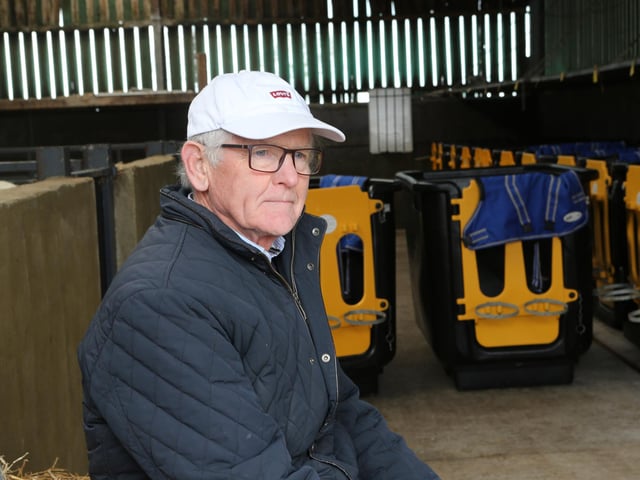
Harry Millar from Ballymena pictured during the UGS Spring Meeting in Co Down Photo: McAuley Multimedia
30. UGS SPRING 2026 13.jpg
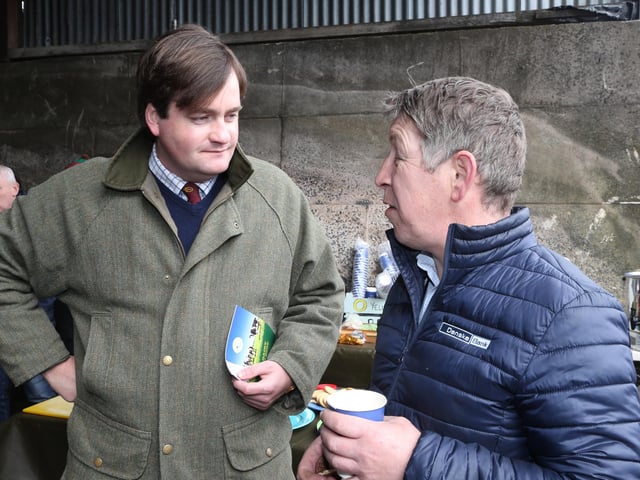
Rodney Brown from Danske Bank enjoying a cuppa and chat during the UGS Spring Meeting this week Photo: McAuley Multimedia