
Your letters: Rural communities deserve better than a one-sided debate on hunting with dogs
The recent opinion article published in Farming Life, arguing that farming communities want hunting with dogs banned in Northern Ireland, presents a very narrow and unsupported view of a much broader rural debate – writes Gary McCartney, Regional Director of Countryside Alliance Ireland.
While some farmers and rural residents may support a ban, it is simply inaccurate to suggest that the countryside speaks with one voice on this issue. Northern Ireland’s rural communities are diverse. They include livestock farmers, landowners, gamekeepers, conservationists, working dog handlers and people whose livelihoods depend on practical, evidence-based countryside management.
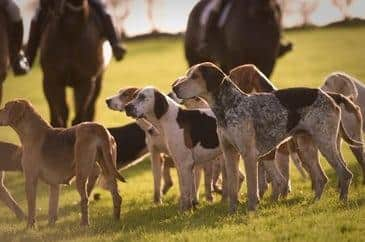

The suggestion that this is a straightforward battle between those who care about animals and those who do not is both unfair and misleading.
Countryside Alliance Ireland believes properly conducted hunting is a natural and humane form of wildlife management. We also believe animal welfare matters, and that any legislation must be proportionate, evidence-based and carefully drafted. Poorly designed law can create unintended problems for the rural communities it aims to help.
Farmers have never been united behind a ban. A central argument put forward by supporters of a ban is that farmers are demanding this legislation. That claim does not stand up to scrutiny.
During John Blair MLA’s previous attempt to introduce similar legislation in 2021, the Ulster Farmers’ Union challenged the suggestion that the farming community had been consulted or that there was widespread agricultural support for a ban. The UFU made clear that farmers had legitimate concerns about predator control and the practical impact of removing existing wildlife management methods without suitable alternatives.
The UFU’s position was not an endorsement of cruelty or illegal activity. Rather, it reflected the reality faced by farmers who must protect livestock from predators while managing the countryside responsibly. Fox control remains a practical concern for many livestock producers, particularly those involved in sheep farming.
The farming community deserves to have its views represented accurately and many farmers are very worried around the vicarious liability it places on farmers and removing a tool to help them protect their livestock and wider wildlife management.
A law must consider its wider consequences The debate has too often been reduced to a discussion about traditional hunting. However, the wording of legislation matters.
The current Hunting with Dogs Bill introduced by John Blair MLA proposes to prohibit hunting wild mammals with dogs, trail hunting and terrier work, while setting out certain exemptions. However, concerns have been raised about whether the drafting is sufficiently clear and whether it could unintentionally affect legitimate countryside activities involving dogs.
Former Attorney General for Northern Ireland John Larkin KC raised concerns about the breadth of the legislation, highlighting that the wording around “searching for and pursuing” and participation could create uncertainty. Questions were raised about scenarios involving activities such as shooting, drag hunting, dog walking, falconry or rescue work where a dog might unexpectedly pursue wildlife despite there being no intention to hunt. These are not arguments against animal welfare. They are arguments in favour of good law.
A criminal offence should be clear. People should know what conduct is prohibited before legislation is passed. It should not be left to ordinary countryside users to discover the limits of a new law through court interpretation.
Many people who work with the countryside every day are deeply committed to protecting wildlife and maintaining biodiversity. Farmers, keepers and land managers understand that a working landscape requires balance. Wildlife management is not always straightforward, and difficult decisions are often required to protect habitats, livestock and vulnerable species.
The countryside is not a museum; it is a living, working environment. Policies made without listening to those who manage it risk causing more harm than good.
The wider implications of this Bill also need to be understood. Hunts are not isolated social activities; they are part of a wider rural and equine economy. They purchase feed from local farmers and merchants, use farriers, vets, transport providers and rural suppliers, and in many cases maintain long-standing arrangements with farmers and landowners over access to land and countryside management. At grassroots level, the implications could be felt by young riders, volunteers, pony clubs, hunt rides, hound exercise and the wider equine community. Legislation that is presented as targeting one activity may, if poorly drafted, unsettle many lawful and valuable rural activities that depend on working relationships, land access and practical countryside knowledge.
Northern Ireland needs practical, enforceable and evidence-based legislation that strikes the right balance: allowing hunting with dogs to continue as an effective tool for farmers, while holding those who cause unnecessary animal cruelty to account. As with the approach reflected in the 1972 animal welfare legislation, the law should target cruelty without undermining legitimate countryside management. Politicians must listen to farmers, legal experts and those with firsthand experience of the countryside.
Those who live and work in rural Northern Ireland do not need campaign groups to speak for them; they need to be heard.
Countryside Alliance Ireland will continue to defend responsible countryside management, the lawful use of working dogs and the principle that rural legislation should be shaped by experience, evidence and common sense.
Gary McCartney
Regional Director of Countryside Alliance Ireland.