
‘Miracle Marshall’ stays positive after surviving a near death experience
Marshall Wylie’s life was turned upside down after a sepsis diagnosis which resulted in the amputation of his legs and fingers. Despite this, he remains positive about the future and hopes to raise awareness of the risks of sepsis.
“My message out there to everybody, if in doubt go and get yourself checked out. It might only feel like a nick or something like that there, but it's that wee nick. Like it took once, you know, one or two days or three days for me to, you know, find out what was really going on.”
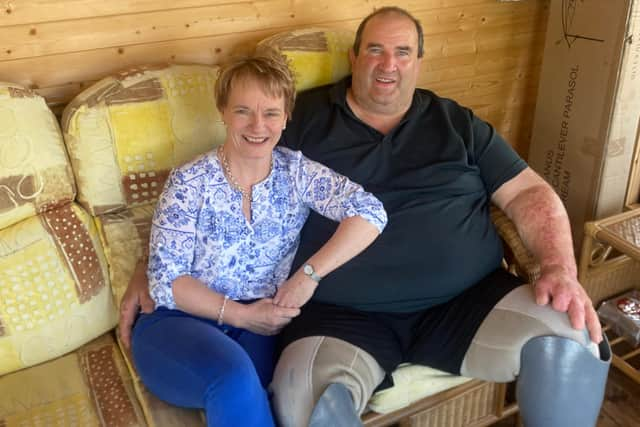

Marshall Wylie, from Cookstown, is calling on farmers and the wider public to seek medical attention for all cuts, warning that sepsis can escalate extremely fast and become deadly within a few days.
Sepsis is a serious reaction to an infection which can be life-threatening, and without urgent treatment, it can lead to tissue damage, organ failure and death. Although this condition is on the rise, awareness of it is still relatively low, which Marshall hopes to change.

While working for the Mid Ulster Council, Marshall unknowingly cut his arm on a piece of wood despite wearing the appropriate PPE. It was only when a colleague pointed it out that Marshall realised he had cut his arm, after which he immediately went to the bathroom to clean it.
“We had iodine sitting there and we put iodine on it and rubbed it in and then washed it again. And then more iodine on it, rubbed it in and then put a patch over the top of it.
“Never thought anything more of it and went away, done my work.”
Little did he know that this would be the start of something that would change his life forever. Marshall began to rapidly go downhill over the next few days with vomiting, back pain, agitation, disorientation and appearing grey in colour. These were only a few of his symptoms which progressively got worse over time. Within four days, Marshall's condition had seriously deteriorated.
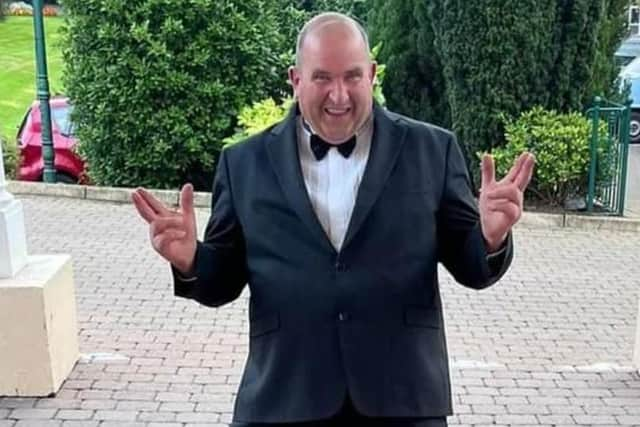
After learning about his symptoms, his wife, Karen, immediately suspected sepsis. Karen had been staying in Belfast while working overnight shifts as a nurse and was unaware of the severity of her husband's condition, aside from her son mentioning that he had not been feeling well. And, with this, Karen wasted no time in calling an ambulance after recognising the potential signs of sepsis.
Karen recalled that Marshall looked “pale” and unwell, saying he felt “really sick” and was unable to sit still, moving between sofas in visible distress.
After checking his vital signs, she realised something was seriously wrong, “I did his blood pressure, it was rock bottom. It was lower than 9, his temperature was 3 tachycardic. Pulse was racing, respirations were up. I checked your capillary refill on your nails and they were pure white. There was no refill. Your hands were cold, your feet were cold. And I said Marshall you’re sepsis.
“Of course he'd never heard of sepsis in his life, before he'd heard of blood poisoning. We didn't think the two things were related. So, I phoned 999.”
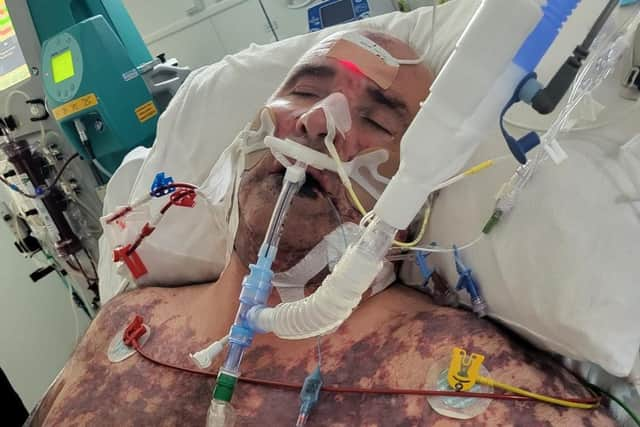
It was at this point that Marshall and his family were confronted with the stark reality that he had only a 50 per cent chance of survival, according to the doctors. And at 5.25am on August 14, 2023, just five days after sustaining the cut, Marshall flatlined and was pronounced dead.
Marshall’s condition had a huge impact on his family. During the months of uncertainty, wife and nurse Karen, was juggling many responsibilities of looking after her parents, working, and trying to keep life as normal as possible for her then 14-year-old son, Aaron.
Karen commented: “It was hard, I have to say it was really hard for us as a family. It was tough, there's no doubt about it.
“We were trying to keep his life as normal as possible, because basically, one minute we were together, next you were shipped off into the ambulance.
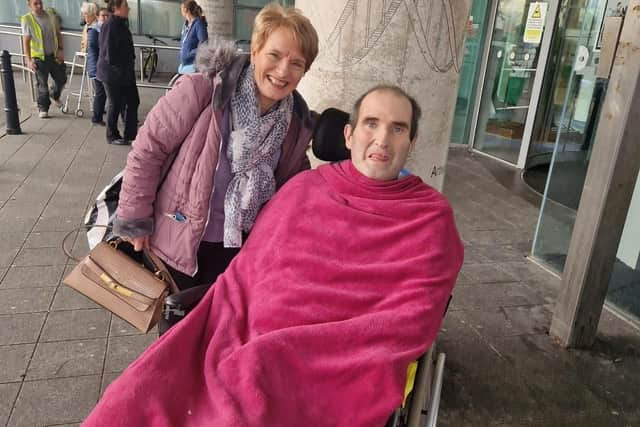
After being advised by loved ones and medical practitioners, Karen had the difficult task of telling her son of his father’s condition, “Like I thought, how do you explain to a 14 year old and explain, you know, from one minute your daddy's there and the next minute he might not make it.”
From the moment she was told her husband may not survive, Karen had to prepare for the possibility of breaking the news to her son, something no parent should ever face, but unfortunately this was something Karen was bracing herself for.
However, much to the medical team’s disbelief ‘Miracle Marshall’ came back to life after visiting his mother who sadly passed away a few years prior to this, and their four dogs.
“Next minute all I seen was this light, a beautiful bright light sitting in front of me. And next minute my mother appeared,” explained Marshall.
“Then, my mother had been buried, she died seven years prior to that.
“And my mother, she turned around, she says, you're going to be alright. You are going to be alright. It's not your time. She says, you're going to get through this. And just after that my heart started to go.”
Following his miraculous turnaround, Marshall woke up to find his body significantly weakened by the condition, describing its appearance as “like crispy chicken” and his feet as “two wooden feet”. He was also confronted with the devastating reality that he would require amputations of both legs, as well as several of his fingers.
Karen commented on his shocking appearance, “his eyes were black, black all over his tummy, like third degree burns but black, like necrotic holes.
“All his organs failed, everything failed, renal failure. He was in cardiogenic shock, initially, he got an infarct to his spleen. His spleen basically died. And so now you've got a high risk of infection because you had no spleen to fight it. And I kind of look and think of him waking up and all he could see was two black feet, black arms, black fingers, black lips.”
Despite this, Marshall pleaded with the doctor not to remove his feet, “I said to the doctor, don't, please, don't take my feet, because if I have no feet, that's my livelihood gone.
“I want to be able to get up into my tractor, into my lorries and go here, there, and everywhere and go for walks with the dog on a Sunday.”
Unfortunately, Marshall’s legs were past the point of saving and he had no other choice than to have them amputated.
Marshall spent a further 177 days fighting for his life, which has made him an incredible inspiration to others due to his resilience and positivity for life, with his faith shining through stronger now than ever before.
Pastor Mark Taylor had known Marshall since he was young and had been friendly with him. When he learned of Marshall’s condition, he shared a post on his blog asking others to keep Marshall in their prayers.
“In the first couple of days 3,000 people were praying for me, at the end of the week there were 30,000 and by the end of the month, there's over 300,000. And it wasn't just Northern Ireland.
“It was all over the world. And I had relations all over the world, sending messages to me, and their friends, and their friends, and their friends, and everybody came together. It didn't matter what religion, what anything.
“It was the farming life for me, I thought it was over, but it wasn't meant to be. The Lord, he just says, yeah, I have more plans for you.”
Marshall has one motto in life that has guided him through his treatment and recovery, and continues to encourage him as he overcomes challenges he never expected to face.
No matter the hurdles or challenges Marshall faces in life, he always follows his motto to “improvise, adapt and overcome”.
After more than nine months in hospital, Marshall finally got to come home to his dog, Max, who had been waiting for him since he left.
“Now there's one thing that I hadn't seen for nearly nine months and that was my dog, my dog sat looking up every day. At night he whined and he whinged, waiting for me to come home.”
Marshall was fitted with prosthetic limbs and, remarkably, was up and walking with crutches within three weeks, defying the expectations of his medical team. Marshall began physiotherapy with a clear deadline in mind, and he not only met it but exceeded all expectations through his determination and incredible willpower.
Embracing his new way of life, Marshall invested in an electric scooter which certainly turned heads in Cookstown, where he was seen driving down the A29 at 8mph on his way to get his dinner and some groceries.
He has also adapted new ways of working his farm machinery too, by strapping himself onto a quad bike with bungee cords and cushioning the steps on his tractor with his wife’s beloved cushions. His determination to continue farming is widely admired and has earned him well-deserved praise.
Despite the challenges of recovery and lasting scars, Marshall believes that everything happened for a reason. By spreading awareness, his story has amazingly already saved the life of a man in New Zealand, and undoubtedly will continue to save many more.
Marshall sends his thanks to the Head of Communities at The UK Sepsis Trust, Terence Canning, along with medical professionals who helped him in his recovery, friends and family who helped throughout his diagnosis and recovery, as well as the reporters who have helped to share awareness for sepsis through his story.
Concluding, Marshall encourages farmers, who often put their work first, to prioritise their own health, reminding them that without a farmer there is no farm.