
Birth of very rare Suffolk filly foal brings joy to Jimmy’s Farm
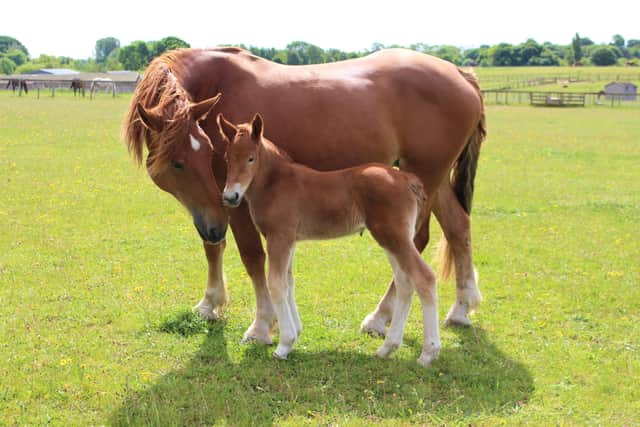
A pure-bred Suffolk filly foal has been born at Jimmy’s Farm and Wildlife Park, saving a very rare bloodline.
The farm, near Ipswich, is owned by farmer and TV presenter Jimmy Doherty and this very special arrival has been described as a “crucial boost” for the conservation of the UK’s most endangered Heavy Horse breed.
The beautiful filly foal, named Spearman Bellatrix, was born on 14 May to Suffolk mare Spearman Annie of Jimmy’s Farm - the result of a collaboration that was instigated and supported by the Suffolk Horse Society.
Spearman Bellatrix is likely to be the only pure-bred foal sired by the stallion, meaning the filly foal’s birth has saved his rare bloodline.

The Suffolk Horse Society is the breed society which maintains the Suffolk Horse Stud Book, and works to improve the breed’s prospects for the future.
According to the charity, there are less than 500 registered Suffolk Horses in the UK making them more endangered than the Giant Panda.
The breed is categorised as a priority on the Rare Breeds Survival Trust’s annual watchlist and the births of just 16 pure-bred Suffolk filly foals were registered in 2021.
The safe arrival of a filly foal is cause for particular celebration because when a breed’s population is so low, the birth of new females is vitally important to guard against inbreeding and to enable new births in the future.
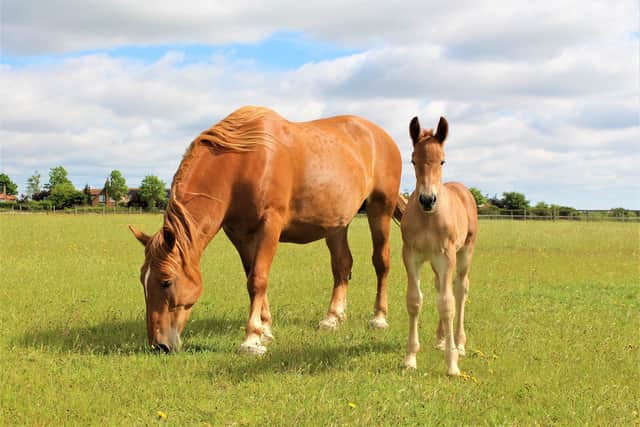
A pure-bred Suffolk colt foal was born the previous week to another Suffolk mare called Spearman Annabelle.
Jimmy Doherty, who is a member of the Suffolk Horse Society and vice-president of the Rare Breeds Survival Trust, had been housing both mares at Jimmy’s Farm and Wildlife Park.
The mares were loaned by their owner to support the Suffolk Horse Society’s breeding programme for the conservation of rare bloodlines.
Jimmy said he is “delighted” by the arrival of both foals.
“When the Suffolk Horse Society asked if we would be able to contribute to this breeding project by hosting the two mares, we were over the moon and jumped at the chance,” he commented.
“We are elated with these two beautiful foals; the result of two successful pregnancies.
“The Suffolk Horse is an irreplaceable feature of our local heritage here in Suffolk and these foals will help strengthen the population.”
Mark Donsworth, Chairman of the Suffolk Horse Society, added: “The Suffolk Horse breed as we know it today can be traced back to 1768, and there were many thousands of Suffolks throughout East Anglia before the First World War.
“But today the breed is the rarest of the UK’s pure-bred Heavy Horses, and urgent action is necessary to secure its future.
“Every pure-bred Suffolk foal born is incredibly precious but as a filly foal continuing a very rare bloodline, Spearman Bellatrix gives cause for extra celebration.”
Spearman Bellatrix was conceived at the Suffolk Punch Trust and Colony Stud - a visitors’ attraction and stud in Hollesley, Suffolk, dedicated to the Suffolk Horse - thanks to successful Artificial Insemination in June 2021, by Bruce Langley McKim of Thorpeley Stud near Market Harborough, Leicestershire.
Tracey Pettitt from the Suffolk Punch Trust and Colony Stud led the team working around the clock to check on the horses in the lead up to the births.
Tracey said: “I feel privileged to see the foals be born and honoured that Jimmy’s Farm and Wildlife Park trusted us to do the job.
“The mares are both healthy and have taken to motherhood like ducks to the water.
“This is the first time we’ve had two mares foal side by side.
“Annie and Annabelle were born on the same day and have spent every day together since, they’re practically sisters.”
The general manager of Jimmy’s Farm and Wildlife Park, Stevie Sheppard, remarked: “Just as we came second on Eurovision, I got the call that the second Suffolk Punch foal was being born.
“Although we didn’t claim the Eurovision title, we still won that night with this rare foal.”
Extremely strong, the Suffolk breed is one of the three native Heavy Horses that powered and was the back bone of UK agriculture and trade in the early 1900s.
But the modernisation of farming has meant that Suffolk horses are only rarely used for their original purpose of working the clay soil of East Anglia.
Still used in small numbers for agricultural work and timber hauling, particularly in conservation areas, the Suffolk Horse is also shown in competitions and parades, and is becoming increasingly popular for riding.
They are always chestnut in colour, traditionally spelled chesnut for the Suffolk breed.
For more information about the Suffolk Horse breed and the Suffolk Horse Society, visit https://suffolkhorsesociety.org.uk/