
Boost in wool prices is a good news story for sheep farmers
The recent increase in wool prices is to be welcomed. According to British Wool this very welcoming trend should be maintained into the future, writes Richard Halleron.
The end result for local sheep farmers will be a significant increase in the size of wool cheques paid out later in the spring.
The year-on-year increase in producers returns may well be in the region of 10% and 15%.
But, significantly, only those producers who market their fleeces through Ulster Wools/British Wool will benefit from the recent uplift in wool prices.
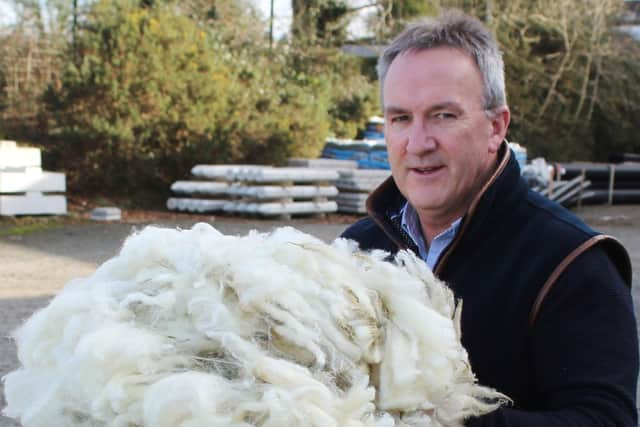

And this is a very important point. For many years British Wool – formerly the British Wool Board – has sought to market wool on a co-operative basis with one clear objective: to get the best possible return for its farmer-members.
And, on that basis, alone, it behoves every sheep producer in Northern Ireland to support the principles that underpin every aspect of the British Wool operation.
Back in the Middle Ages – and right up to Victorian times – wool merchants were among the wealthiest people in Europe. It is not by coincidence that the Chancellor of the Exchequer sits on a Woolsack.
This symbolised the central nature and great importance of the wool trade to the economy of Europe in the 14th century.
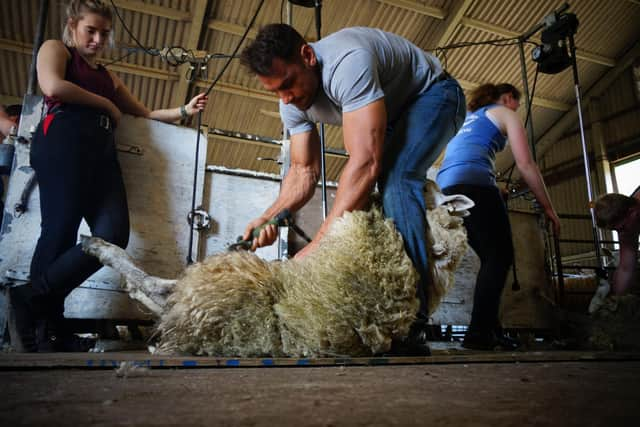
Very few people – including sheep farmers – are likely to make vast fortunes from wool today. However, there are signs that the unique properties of this wholly natural fabric are, once again, coming into vogue.
The demand for woollen carpets and garments continues to grow, all of which is tremendous news for local flock owners.
And in a world where the need to effectively recycle materials becomes a growing priority, wool stands out as a fibre that meets all of these demands.
Meanwhile sheep farmers need every to secure every source of income that is available to them. And wool must be included within this list.
It is not good enough for wool prices to simply cover the costs of shearing and no more.
Farmers must be convinced of the real value inherent within wool. For too long, many flock owners have seen only the “nuisance value” associated with it.
And this was as a direct consequence of the poor market prices that had been available to them for do many years.
But the good news is that markets can turn around in a very meaningful way within a very short space of time. Take butter as a case in point.
For years this remarkable dairy spread languished as a base commodity in countries around the world.
However, this all changed when a small number of well-known chefs started to extol the virtues of butter, from both a cookery and a general consumption perspective.
Ulster Wool returns hit a 10-year high
Meanwhile, Ulster Wool has confirmed that its member returns for the 2025 clip year will reach their highest level in ten years. Ulster Wool’s average return per kilo is 70% higher than last year, and returns have increased for all wool types.
Returns for Ulster Wool’s members have increased across all wool types, with the average payment at 68p per kilo versus 40p a year ago. Cheviot Wool is paying 85p per kilo, and many core grades of Mule, Texel, Romney, Hill and Cheviot Cross are paying 70p to 75p per kilo.
Ulster Wool is also optimistic about the outlook for the 2026 wool season. With strong price gains in recent auctions over the past few months it indicates that returns for the 2026 clip could increase by a further 25p to 30p per kilo. Several core types could potentially return more than £1 per kilo to Ulster Wool’s members.
The figures reflect strong market demand and increased competition at the auctions, where multiple buyers are actively competing. This highlights the importance of the auction system. As the only marketplace where multiple domestic and export buyers compete directly, the auction system drives the price for all Northern Ireland sheep farmers.
With around 3,000 sheep farmers working together through Ulster Wool, the strength of collective selling continues to play a central role in securing improved returns for wool.
Higher volumes not only strengthen auction competition but also reduce Ulster Wool’s operating costs per kilogram, benefiting all members.
Demand is also being driven through supply chain development and marketing initiatives.
Ulster Wool partners British Wool now works with over 180 licensees, and consumer awareness continues to grow.
Sales of fully traceable wool have increased again over the last year, with buyers paying a premium over and above auction prices.
Recent initiatives include new yarn and fabric collections, a retail collaboration with Shaun the Sheep.
Alongside improved prices, Ulster Wool continues to invest in activities that support long-term demand and value.
Several shearing and wool handling courses are scheduled for 2026, helping ensure clips are presented to the highest possible standard.
Commenting on the announcement, Ulster Wool chairman Brendan Kelly said: “This is a strong result for our members and a clear sign the market is moving in the right direction.
“Prices are up across all wool types because there is real competition at auction, and that only happens when farmers sell together through Ulster Wool.
“The auction is where prices are made. The more wool that comes through Ulster Wool, the stronger the returns will be for everyone.
“This is exactly what collective selling is designed to do, as we saw in 2021 after the Covid pandemic, working together to strengthen the market, deliver better value for wool produced in Northern Ireland, and maximise returns to our members.”
The auction process
British Wool operates a competitive auction process. The sales team hold 18 online auctions throughout the year.
Auctioneer, Richard Alderson, further explained: “After farmers wool is graded by our depot teams, it is packed into auction lots. Each auction lot typically weighs just over eight tonnes and is made up of 24 bales.
“Lots combine graded wool from multiple farms, usually over 100, to ensure the supply of a consistent quality product to the market.”
He continued: “Every bale in every lot of wool is core tested, with samples being sent to the International Wool Textile Organisation-approved testing lab in Wales.
“The test results provide critical lot-by-lot data for both British Wool and our auction customers. The key metrics which impact price are the yield, the colour, the micron and the levels of contamination from vegetable matter.”
Yields matter for all grades and for some, the colour and micron of a specific lot can have a significant impact on price.
The team uses these metrics to determine a guide price for every lot before each sale.
Richard Alderson added: “The British Wool auctions are there to maximise the value of wool and return the true market value to members.
“As auctioneers, our role is to maximise the value of the clip over the year as a whole.
“We do this by managing the supply to market to achieve the best possible price. After every sale, we determine how much of each type of wool to put up for sale in the next auction to optimise supply against demand.”
During an auction, the auctioneers essentially are deciding whether to accept the price offered or take the wool back into stock.
These decisions are informed by regular dialogue with auction customers, feedback from the wider supply chain, detailed analysis of buying patterns and analysis of the global wool market.
Alderson concluded: “Paying close attention to the New Zealand auctions is particularly important. British Wool only releases wool to auction buyers after payment has been received.
“Once collected, wool will go for scouring at one of the two UK processing plants or be shipped for export.
“Post scouring, it will be spun into yarn or felted before progressing through the manufacturing supply chain and being transformed into a wide range of end products.”
A falling wool supply
The biggest challenge currently facing the wool sector in Northern Ireland and the rest of the UK is a fall-off in supply.
British Wool chairman, Jim Robertson explained: “Wool volumes have fallen with the decline in the national flock.
“We also recognise that, in some cases, low returns over recent years have led some farmers to retain wool on farm.
“Another 1,000 tonnes would add 2p/kg to returns for all members. With demand strengthening and prices improving, it is important that as much wool as possible is brought to market through your cooperative this season.”
He continued: “To aid convenience, we have added 10 collection sites across the UK and are continuing to search for new ones for this season’s clip too.
"British Wool’s collective marketing model remains our greatest strength.
“By pooling our clip, upholding quality standards, and providing a consistent supply to global buyers, we maintain influence and bargaining power that no individual producer could achieve alone.
“As we approach shearing, I encourage all sheep farmers to deliver their wool.”
Robertson concluded: “Wool from the current season always receives a higher price than wool left on the farm.
“Collaborate where possible, and make full use of our expanded collection network.
“Together, we can reinforce wool’s reputation as a sustainable, versatile fibre and continue to drive demand and maximise returns.
“Demand growth is being driven by both UK processors and by export buyers.
“Chinese and Indian manufacturers are increasingly important in the global market. Buyers supplying these markets are now competing for your wool in the auction.
“Meanwhile, British Wool continues to invest in marketing and brand partnerships to build consumer awareness and support long-term demand for British wool.
“While the recent recovery in wool price is encouraging, it follows several challenging years, and returns for some core types are only now approaching the cost of shearing.
“Continued work on farmers’ behalf is essential to build demand and ensure wool provides a sustainable margin for all sheep farmers, particularly those with hill and mountain flocks.”