
Brexit trade deal is still a priority for farming and food
According to Danske Bank’s Head of Agribusiness Rodney Brown, farm output in Northern Ireland is likely to fall by about 3% in 2020. This compares with falls of up to 40% for the food service sector.
The Gross Value Added (GVA) figure for Northern Ireland as a whole is likely to fall by just over 10%.


Mr Brown spoke at a briefing for members of the Guild of Agricultural Journalists earlier this week.
He also confirmed that on average the borrowing figure per farm in 2018/19 stood at £43,374. The figure for the year previous was £39,724. Significantly, 47% of farms in Northern Ireland have no recorded borrowings.
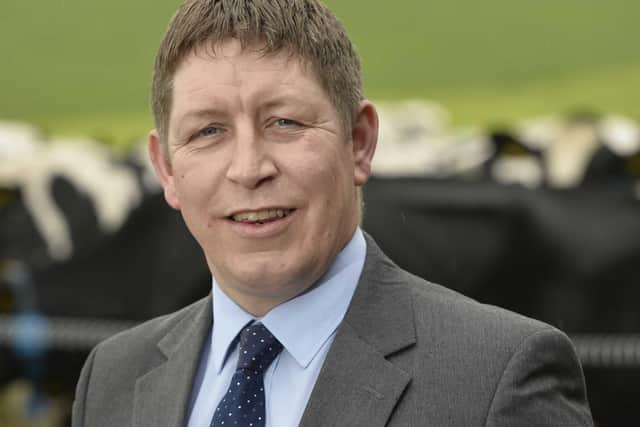
Mr Brown continued: “Up to this point, farming and food have fared well, in relative terms, throughout the Covid-19 crisis. Milk, beef, lamb and pig prices have all increased over recent months. However, incomes on cereal farms have declined slightly in 2020.
“One very positive upside to Brexit has been the growing consumer recognition of just how important a role farmers play in producing the food that we all need to survive. I sense a new respect for farmers by members of the general public.
“Now is the time when the issue of delivering greater transparency within the entire food production and retail chain must be addressed at Westminster. The Trade and Agriculture Commission, the remit of which has just been extended by three years, can play a critical role in this regard.”
The Danske Bank representative highlighted the significance of getting a Brexit trade deal sorted out before the end of this calendar year. He commented:
“We need a good Brexit deal. But it’s still important for us to factor in the possibility of London and Brussels not agreeing any sort of trade deal before the end of this year.
“Looking ahead it is imperative for our farming sectors to be competitive, both within the UK and on international markets.”
Danske Bank is currently predicting a 60% chance of a Brexit trade deal being sorted out over the coming days.
Where currency markets are concerned, the thinking is that Sterling will weaken if a trade deal is not agreed.
Conversely, it will strengthen if the UK and the EU manage to sort out their differences.
Exports from the UK become more competitive on the back of a weaker Sterling.
Rodney Brown believes that Edwin Poots has made a positive difference on behalf of agriculture, since taking up to the position of farm minister in February of this year.
But he also believes that local farming still has many structural challenges to address.
Chief among these is the issue of succession and the need to provide more opportunities for young people seeking to develop careers within the industry.
Moving this issue forward may well require the intervention of the Inland Revenue, the organisation with the power to make tax changes that would incentivise landowners to enter into long term leasing arrangements.
Looking to the future, the Danske Bank representative pointed to the need for government to provide continuing support for the beef and sheep sectors.
He said: “It’s a case of balancing the production capacity of the sectors with their ability to deliver environmental improvements.
“Beef and sheep farmers also play a key role in maintaining the sustainability of rural communities the length and breadth of Northern Ireland.”
Significantly, Mr Brown pointed to the possibility of farm support budgets coming under significant pressure from Westminster over the coming years.
He also highlighted the changes coming down the track in the way that support monies are made available in the future.
He concluded: “Many of the long term indicators for farming and food are very positive. Global population growth is still on the up. This means that more people will have to be fed.
“The right Brexit trade deal is critically important for farming and food in Northern Ireland. In the longer term, we need the appropriate policy strategies put in place, which will allow agriculture to fully grasp the opportunities that will, undoubtedly, present themselves.”