
Brussels Notebook: We remain stuck with farming policies that failed before Brexit
The rest of the tax paying public now understands why farmers are so angry with Rachel Reeves.
They too are victims of a tax hike, albeit on a different scale and with fewer long term consequences. The budget this week is being sold by the government in ways akin to those ripping people off with the old three card trick.
The reality is that it has increased the tax burden on everyone to the highest level ever, at 39 per cent. The government is presiding over an ailing economy; with zero growth prospects it has increased spending on welfare to placate its back bench critics and tried to sell this as a budget to cut the cost of living.
Reeves’ credentials as an economist are suspect, but anyone can work out that you do not tackle a cost of living crisis by reducing incomes further by increasing the tax burden.
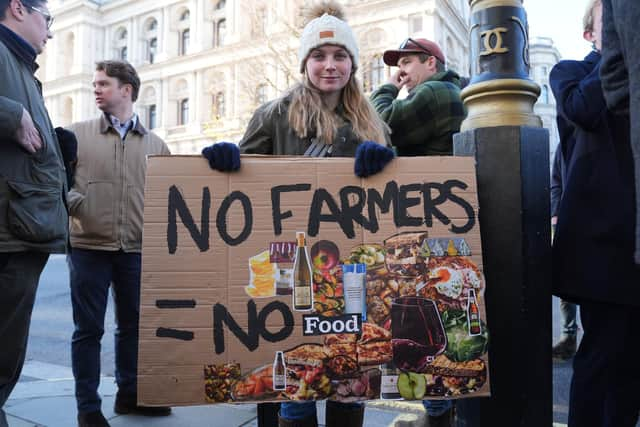

That is what she did this week, and we all have cause to be grateful that most analysts, journalists and commentators have seen through efforts to sell a bad budget as positive. Without growth and the forecast is for the UK economy to remain in the doldrums for the foreseeable future, a prudent chancellor would have been cutting spending, rather than seeking to head off a leadership challenge to a uniquely weak prime minister. In a speech where she tried to whip up whoops of admiration from her own party, it took Reeves less that 20 seconds to smash farmer hopes that she might see logic over inheritance tax and family farms. Instead, all they got was a technical adjustment to bring their IHT into line with the way others can pass assets on to a spouse. This does not change the arguments against the wrong-headed decision Reeves made last year; the problem to hand on a family farm to the next generation continues.
This is a disgrace made worse by the knowledge that farm families will be hit hard to maintain an out of control welfare bill. Adding salt to the wound was the fact that farmers who sought to protest at Westminster found themselves arrested.
Sadly this is now an all but dead issue, but one thing is certain. Come the next election farmers and others will vote for any party with a manifesto commitment to end the unfairness of inheritance tax. Hopefully that will be a manifesto commitment that is met unlike Labour trying to pretend that freezing tax thresholds does not smash a manifesto commitment not to raise taxes. Despite a massive Commons majority, the government and Reeves are in the grip of Labour back bench MPs wedded to public spending and higher taxes.
This all adds up to a situation where 16 months after a massive election victory the government has no vision and no ideas about how to be radical to boost the UK economy.
Instead it is bumping along, becoming more unpopular by the day as it tries to come to terms with the growing electoral threat from Reform, as opposed to the official Conservative opposition. There is no area where there is a greater lack of vision than for agriculture.
Five years after Brexit came into force it has delivered nothing for agriculture; there has been no reduction in regulations, no drive to deliver on the industry’s potential and, worst of all, no interest from politicians.
It is wrongly deemed to be an industry in managed decline. The future for young farmers is a case in point. Here nothing has been done to offer them any future; indeed the IHT changes damaged what future they had by inheriting a family farm.
This contrasts with the EU where generational renewal to attract young farmers is front and centre of agricultural policy priorities.
Policies are built around extra funding, better access to land and, above all, making agriculture a more attractive industry for young people to enter.
At the same time there is a new drive to make rural areas more attractive places to live, so that young people do not automatically leave.
These policies range from closing the digital divide to efforts to make rural towns more vibrant and successful.
There is no guarantee this will work, but it is at least a vision of how to make a better future for farming.
By contrast we remain stuck with farming policies that failed before Brexit, while the EU has moved on to fresh, less green thinking on agriculture.