
Businessmen call for AERA committee to transform Fisheries, Aquaculture and Water Environment Bill turning 'its potential into production, jobs, and environmental benefits'
“Northern Ireland's fish and shellfish farmers produce over 4,000 tonnes of food, worth £13million and employ more than 80 people,” Rod Cappell from Aquaculture NI has told the AERA committee.
He was addressing the AERA committee meeting at Stormont which was taking evidence for the Fisheries, Aquaculture and Water Environment Bill. No decisions were to be made.
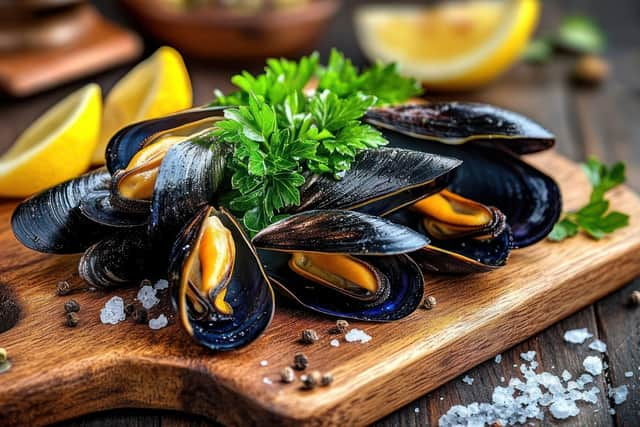

“These are slightly down on previous years, mainly because of reduced mussel tonnage,” he said.
“When we last briefed the committee in February 2025, we said that DAERA and its agencies were regulating the sector in isolation, disproportionately and without a policy to support sustainable growth.

“That remains the case.”
He also drew the committee’s attention to ‘a very worrying insight into the unacceptable delays operators face within the department’.
He added: “We hoped this once-in-a-generation bill would help address the problems by providing legislation fit for purpose. Instead, producers believe it will worsen the situation.”
He said: “The bill repeatedly seeks to manage the negative impacts of fish and aquaculture activities.
"Yet shellfish and seaweed farming have proven positive ecosystem benefits, and that should be actively encouraged.”
Also calling for a radical rethink of the bill, Bram Verwijs from Premier Seafarmers/Emerald MusselsAquaculture NI added: “I'm the fifth generation of our family seafood business, founded in 1880.
“Today we farm mussels and oysters in five countries and process over 20 million kilograms of shellfish each year, most of it being mussels.
“I manage those farming operations, including our Northern Irish operation established in 1990.
“Northern Ireland has substantial potential to produce more mussels, support coastal employment, and attract investment.
“Far too little of that potential is being realised. The benefits extend beyond food production and employment.
"Mussel farming can therefore compliment pollution reduction measures while producing food.”
He added that “based on our farming experience, annual production of 15,000 tonnes is a realistic ambition, but that is more than 10 times the recent average”.
"Until around 10 years ago, the industry could rely on a Northern Irish mussel seed supply. Since then, that supply has gone from unreliable to effectively non-existent.
“Fewer surveys are carried out, results are less transparent, and industry-led surveys are not permitted.
“As security of supply has deteriorated, farmers are left with less information and fewer opportunities to locate seed.
“Relying on seed from abroad leaves Northern Irish aquaculture exposed to more risk and uncertainty.
“Changes to fishing access, seed allocations, or export policy can prevent us from stocking our beds, or as we have experienced in 2024, from accessing accessing supplies altogether.”
He added that “floating mussel seed collectors offer a proven alternative that have been used successfully for decades, including in our own operations elsewhere”.
"They collect seed in the water column for transfer directly to mussel beds, reducing and potentially eliminating reliance on fishing wild seed beds.
"Different DAERA policymakers have told us that this is exactly the direction the industry should be heading.
“It is therefore difficult to understand and deeply frustrating that after four years of licensing discussions, there is still no clear path to commercial operations.
“Traditional supplies have disappeared, yet the alternative we are encouraged to pursue remains stuck in trials and licence applications,” he added.
“The Fisheries, Agriculture, and Water Environmental Bill does not do enough to unlock this opportunity.
“Updating licence definitions and transfer arrangements does not resolve licensing delays or create a duty to support sustainable agriculture development.
“The bill requires an inland fishery policy statement, but it has no equivalent agriculture development policy statement.”
He further asked the committee “to prepare, publish, and implement an agriculture development policy statement covering marine and freshwater aquaculture”.
"That policy statement should set measurable development objectives for each sector,” he added.
“For us, that is, prioritise a secure domestic supply of mussel seed, recognise ecosystem services, and establish a clear route from trials to commercial operations.
“Licensing must have clear decisions, timescales, adequate resources, and accountability to this committee.
“We support robust environmental assessments and proportionate regulation, we also need DAERA to take responsibility for enabling sustainable development.
"Northern Ireland has the ground, the expertise, and the businesses willing to invest.
"This bill must help turn its potential into production, jobs, and environmental benefits.”