
'EID offers opportunities to improve efficiency across farms, markets, and avatars' - Potential of electronic identification explored in DAERA committee
The full potential of using the Electronic identification of cattle ‘EID’ was explored today at the Committee for Agriculture, Environment and Rural Affairs with the Director, Animal Health and Welfare in the Department of Agriculture, Environment and Rural Affairs, Neal Garland.
Addressing the committee, he said EID is now voluntary, and introducing it is “a personal choice for farmers “.
"Currently, cattle in Northern Ireland are identified using conventional ear tags, which display a unique identification number, which is read visually,” he said.
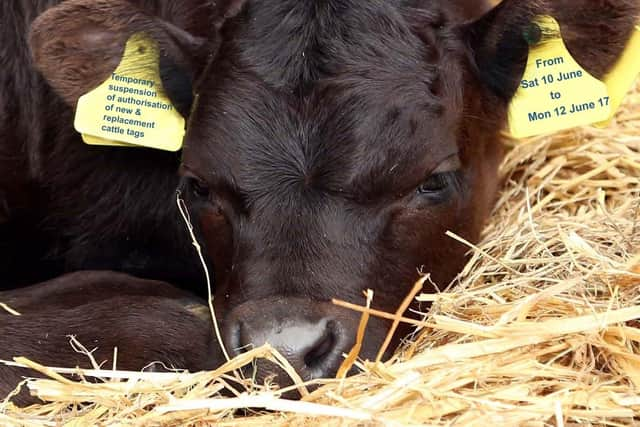

“But the EID system underpins our traceability regime and supports the recording of births, deaths, movements, and information about disease testing. ‘Identification regime is well established, functional, and understood by those who use it”.
He added: "It is widely recognized that EID offers opportunities to simplify the capture and recording of animal information by reducing errors associated by misreading visual tags, improving efficiency across farms, markets, and avatars.
"Electronic identification is simply a different way of identifying animals and recording their identification number.
“In basic terms, the ear tag contains a microchip, which stores the unique ID number.
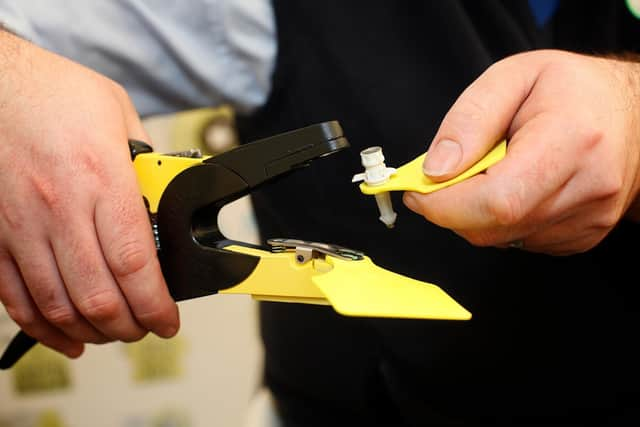
"This number can then be read automatically using compatible equipment, such as a tag reader.
"This eliminates the need for a person to read across and record the number manually, which reduces transcription errors and the need to handle the animal.
"Northern Ireland is aligned to European rules for livestock identification, which states that the use of EID is optional.
"However, where EID is used, European legislation sets out the specific technical standards which must be used with using low frequency EID devices.
"Low frequency EID has been used to identify sheep in Northern Ireland already, and the rest of the UK since 2010.
"There is also the same technical standard used already by the Republic of Ireland to identify cattle since 2022 and this is the technology that England and Wales have committed to adopting when they roll out EID on a mandatory basis for new-born cattle sometime in 2027.
"On the other hand, Scotland has indicated its intention to introduce EID from 2027 but using high frequency technology”.
Mr Garland said that “the committee will be aware that there has been a recent consultation on proposals for mandatory EID in Northern Ireland”, clarifying that “this is an entirely separate initiative”.
"To be clear, the statutory rule before you today does not make EID mandatory, it introduces no new obligations for herd keepers and does not pre-empt any future decision on the prospect of making EID for cattle mandatory,” he said.
‘We will, of course, provide a separate briefing to members on that consultation once responses have been fully considered and any subsequent ministerial decisions have been made as necessary.
"Rather, this piece of legislation makes minor technical amendments to existing domestic cattle identification regulations.
"These changes will enable keepers to choose to use EID ear tags only if they wish to do so. I want to emphasize the decision to use EID will rest entirely with the herd keeper.
"‘The department considers a voluntary approach to be appropriate at this stage for four main reasons. First, as I have stated, it provides choice and flexibility, allowing those who want to adopt the ID to do so without imposing change on the rest of industry”.