
Europe could make or break Burnham as Prime Minister
The controversial politician, Enoch Powell – the Ulster Unionist MP for South Down after turning his back on a long career as a Conservative MP – claimed all political lives ultimately end in failure.
Brexit certainly delivered that outcome for a long list of Conservative Prime Ministers. David Cameron, Theresa May, Boris Johnston and Liz Truss were all casualties of a poorly planned and implemented massive change in UK policy and direction.
It also ultimately led to the political demise of Rishi Sunak and to the massive majority the Labour government now enjoys. Into this high stakes political arena has stepped Andy Burnham, with his plan to renegotiate the relationship between London and Brussels. At this stage it is about baby political steps to make trade and free movement for some people easier.
But it has pushed a divisive policy back up the political agenda. The big decision ahead for Burnham and the Labour party is how far to go. Some voices are pressing him to commit to another referendum on EU membership in the manifesto for the next general election.
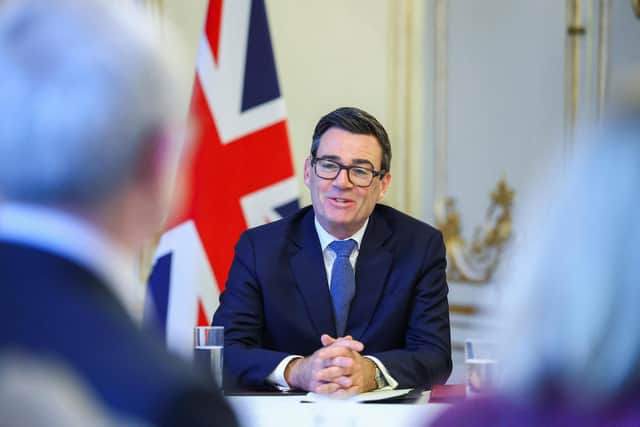

Other MPs that won seats from the Conservatives in pro-Brexit areas have cause to think this a bad idea that would open a battle front where victory is far from assured. For now the debate and changes being suggested are relatively minor, but this is not the case for agriculture and food.
They are at the centre of a planned relaxation of red tape, by permanently aligning regulations in areas such as animal and plant health. This is not a major change, as in reality the UK has not diverged from EU regulations since Brexit happened.
For Northern Ireland this raises an interesting issue. Under the UK’s Brexit deal Northern Ireland, for most things, has the best of both worlds, with single market style access to both the UK and EU.
This is a competitive advantage for the food industry.
The question now is whether giving the rest of the UK similar access to the EU market will undermine that advantage Northern Ireland has enjoyed.
There is no clear answer to that, since the detail of what will be agreed for the rest of the UK is not yet in place. On balance the changes being negotiated make commercial sense. But that has not prevented efforts to forge a better relationship with Brussels becoming a major political issue.
It is pitting Reform and the still largely pro-Brexit Conservatives against Labour, the Liberal Democrats and Scottish Nationalists.
Those that drove the Brexit process cannot afford the political price of evidence that it has failed to deliver any of the economic gains promised; equally Labour cannot risk facing them in a general election if it fails to deliver real efficiencies in trading that boost the UK economy.
Neither side is interested in the argument that the key reason Brexit failed was a lack of political nerve and economic headwinds from Covid and wars that were too strong for it ever to succeed. This raises questions around whether the EU would want the UK back as a member state and whether we would want to re-join if two of its key member states – France and Germany – are moving to the right to a degree that would threaten EU solidarity.
There are also doubts as to whether the UK would be allowed to simply re-join the EU as if we had suspended our membership rather than ripped up the rule book by leaving.
With the benefit of economic hindsight the UK’s departure was a bad deal for both, but that does not make a change back to what was once the status quo an easy process. This is a high stakes political game and if Andy Burnham gets it wrong he will become part of the Powell quote about careers ending in failure.
Given those already on that list as a result of Brexit he must be acutely aware that he has embarked on a strategy that could make or break his term as prime minister.
For farmers the game is one of lower stakes.
They will do what they have always done – deal with whatever politicians throw at them.
They did it with Brexit, they will do it with “Brexit light” and they will cope if, well in the future, Brexit gives way to a return to EU membership or a customs union.