
Fertiliser costs are at the core of the crisis in farming
The late, and very great, farmer and politician Lord (Henry) Plum once said of his fellow politicians that “talk was cheap, but it took money to buy drink”.
Sadly, given the state of the UK economy and the government’s mismanagement of its spending priorities, there is no money to tackle the crises we face today.
This was well summed up when the defence minister resigned, claiming the government lacked the will to defend the nation and protect its forces. That is as damning as it can get. In that context any help for the crisis farmers are in because of rising input costs is a non-starter. When it comes to agriculture, farmers face a double whammy. They know funding will not be squeezed from Westminster, but they also know there will be no strategy to boost UK food security in an increasingly dangerous world, where reliance on food imports can only be described as folly.
The input crisis, as it may fairly be described, began when Russia invaded Ukraine; those impacts settled, but then Donald Trump began a war with Iran without any objectives to define victory or any strategy to end the conflict.
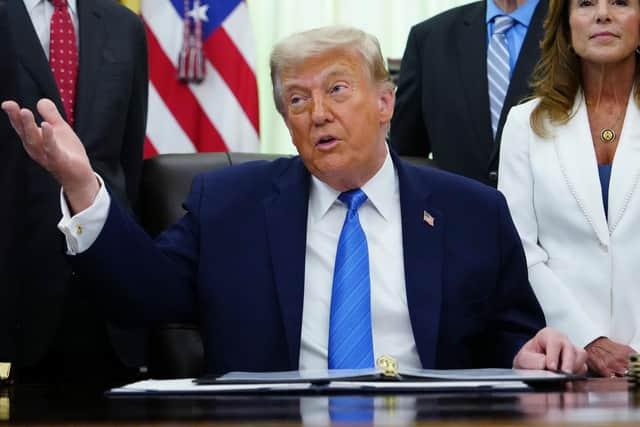

This week began with him claiming a peace deal was close, and ended with both sides back in conflict. The rest of the world is the loser as we look to a future where a long running conflict will keep energy prices and farm inputs at margin squeezing or eliminating levels.
Trump is demanding that Iran admits the victory is his, but that will never happen. Politically Trump has lost out, with record low support for the conflict in the US.
By contrast, as a despotic regime Iran's leaders, who are tougher than those there when the war began, care nothing for public opinion or political support. Fertiliser costs are at the the core of the crisis in farming. The EU is taking this seriously, but inputs and food security are not on the UK government’s radar let alone agenda for action.
This week the EU upped to around 450 million the amount in its reserves to tackle issues around fertiliser availability and affordability.
Member states have been given freedom to top up EU funds by up to 200 per cent. To use the Henry Plum analogy that really is putting money on the table to buy drink and we can only look on with envy. The European Commission says agriculture and fertiliser are “strategic assets” for the EU.
Input cost increases threaten food affordability and potentially even availability for consumers. This is why Brussels recognises this as a short and long term strategic threat.
While the EU is less dependent on the Middle East for fertiliser than other regions it cannot escape the harsh realities of a global market. Prices are being driven up and the EU cannot block fertiliser and ingredients going to meet a global demand. Instability has been the order of the day since Russia invaded Ukraine; fertiliser prices rocketed then, but settled by 2024; now they are 70 per cent plus ahead of 2024 levels, with no end in sight.
The EU has developed what it calls an action plan to tackle this and it is tempting to feel jealous that Brussels, unlike Westminster, is taking a crisis for agriculture seriously.
However its action plan needs more work, given the scale of the crisis facing the industry. Its thinking is of technical solutions that rely on not yet proven, let alone approved science. It has eased some direct tariffs on fertiliser imports, designed to protect the industry in Europe.
But it has maintained its Carbon Border Adjustment Mechanism (CBAM) designed to impose duties on imports of high carbon products. This is part of its net zero green thinking, which may be worthy but not when the pain for agriculture and consumers is so much worse than climate change impacts. This raises an interesting conundrum. Which is worse? A government here that ignores the problem and does nothing, or an EU that recognises the scale of the crisis but ducks tough trade offs between green aspirations and economic reality.
With Trump still demanding a Middle East peace deal that allows him to claim victory and Iran adamant it will never allow this to happen, this trade off between green goals and an energy and food cost crisis has to move up the agenda in both Brussels and Westminster.