
Food inflation could be in double digits by the end of the year
With the ceasefire and negotiations over the Middle East war on and off, it remains to be seen how long the pain of high input costs will last for agriculture.
Some analysts taking a gloomy view have suggested the effects will still be felt in the winter, when energy bills for consumers will become a major issue. If that is the case the UK economy will face major and costly challenges. The inflation figure for March put the rate at 3.3 per cent. While that increase was modest it only reflected the early days of the Middle East war in terms of global economic impact.
The rise however blew away hopes the economy was finally on track to get inflation towards the Bank of England two per cent target. In this debate about the rate and the timing of when it will be felt the focus has been on fuel prices. It was these that triggered direct action, particularly in Ireland.
However the big one for consumers and the rate has yet to take off. That is the price of food, which retailers say will only be felt in the months ahead as the industry comes to terms with the spike in the on farm cost of producing food and the downstream costs of processing.
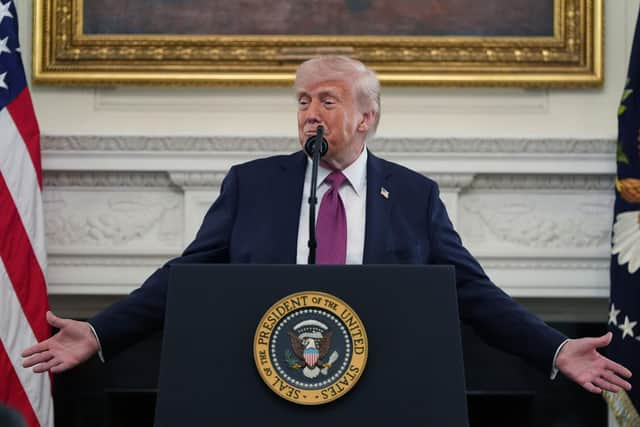

The British Retail Consortium has warned that unless the impact of the Iran war can be reversed soon food inflation could be in double digits by the end of the year. Add into that still rising energy costs and the autumn and winter will be historically difficult for consumers and the economy. Even the US, which joined with Israel to start the war with Iran, would love to be back to where we were just two months ago. The Trump administration is learning the hard lesson that for the US foreign wars are neither quick or successful, and deeply unpopular with consumers paying the cost through higher prices. In all of this the repayment by the Trump administration of billions of dollars in tariffs the Supreme Court rules illegal has passed almost unnoticed. This confirmed warnings that tariffs benefit no-one and certainly not consumers. The hope in all this has to be that things will eventually settle, in that all wars end in peace or surrender. It is clear now that with control of the Straits of Hormuz this conflict will have to be settled via negotiation.
That could be a long process, and the longer it takes the higher the cost the world will pay. When that happens we need to take a hard look at how vulnerable we are to events over which we have no control. For the UK and all of Europe the war exposed a dangerous dependence on vulnerable supply lines.
Energy and food security have not been taken seriously for decades, but that has to change.
With the benefit of hindsight the political rush to a fossil fuel free future now looks rash and dangerous.
It would have been wiser to keep exploiting the North Sea and even keep coal fired power stations available while green alternatives were brought on stream; it was equally wrong to allow nuclear power to become a political issue.
Over energy, what is done is done, but we could yet reverse the decline of food security to a state we now see the government making contingency plans to cope with UK food shortages. Politicians and governments, be they Conservative or Labour, have allowed a minority to demonise productive agriculture.
This is the case at Westminster, but it has also happened here and in Scotland. We need a sea-change in that stance.
We have allowed food production to become a by-product of green countryside policies, to the degree that some politicians have deemed it irrelevant to the policies they want to pursue.
That is an illogical stance, born of living with the luxury of plenty, by exporting perceived environmental problems and then importing cheap food.
We are not going back to big scale fertiliser production in the UK, when for a generation of farmers Richardson’s “more from” grass, dairy and beef campaigns were part of farming life, but the government can make strategic decisions to ensure we have proper reserves for when supplies are threatened.
Failing to use the Middle East war as a prompt for a big change in political attitudes to agriculture would be an even bigger error than the Trump decision to start a war with no objectives and no exit strategy.