
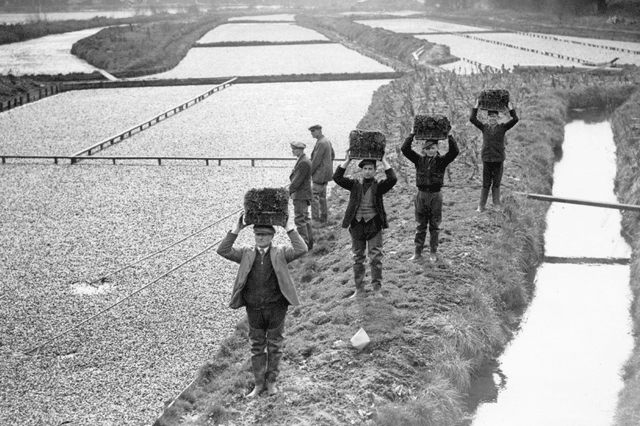


Through more than 900 extraordinary black and white images, this remarkable book reveals a Britain on the cusp of enormous change – a world that would soon be transformed forever by the Second World War.
With photographs from every British county and city in the country, from Cornwall to Orkney and from Cardiff to Londonderry, this spectacular 616-page book captures a nation poised between tradition and modernity, revealing everyday life in unprecedented detail.
Britain in the 1930s was a land of striking contrasts. Economic depression and mass unemployment devastated many industrial communities while elsewhere prosperity, suburban growth and consumer culture transformed daily life. Through these astonishing photographs, Britain in the 1930s captures a decade in which old ways of life endured even as Britain embraced the modern age.
The 1930s marked the golden age of the British seaside. Crowded beaches, bustling promenades, pleasure piers and elegant hotels welcomed millions seeking leisure and escape. Families enjoyed day trips to Brighton and Margate, while Blackpool and Morecambe became synonymous with summer holidays.
Camping, walking and boating holidays grew in popularity, while lidos, dance halls and pavilion theatres reflected a new culture of recreation and entertainment. These photographs capture moments of joy and relaxation during a decade often overshadowed by memories of economic hardship and the approach of war.
Beyond the towns and cities, much of rural Britain appeared little changed from previous centuries. Medieval market squares, village greens and ancient churches dominated the landscape, while agricultural shows, livestock markets and seasonal fairs continued to shape everyday life. Traditional customs survived across the country, from hunts and village races to ancient celebrations and country shows.
The photographs reveal a world where horses and carts still shared roads with motorcars, and where picturesque villages, market towns and centuries-old buildings remained at the heart of British identity.
A true reflection of JB Priestley's famous vision of “three Englands” – the ancient country of cathedrals and villages, the industrial Britain created by the Victorians, and the new world of suburbs, cinemas and motorcars – Britain in the 1930s presents a nation in transition.
The archive images and detailed commentary that make up this book evoke a bygone age, capturing a turning point in Britain’s national story. It illuminates a momentous decade, one that was both a window on the past and signpost to the future.
About the author Steven Brindle
Steven Brindle is an historian and conservationist from Blackburn, Lancashire. He studied History at Oxford and spent almost forty years with English Heritage in a variety of roles as a historian and Inspector of Ancient Monuments. He has published extensively on architectural and engineering history, with major works including Architecture in Britain and Ireland, 1530–1830 (2023) and London Lost Interiors (2024). Steven divides his time between London and his home in Portugal, which he shares with his husband, Nelson.
He is also regarded as one of the world’s leading authorities on Brunel and is famed for discovering and saving Brunel’s ‘lost’ iron bridge at Paddington. Major publications by Steven Brindle include Paddington Station: its History and Architecture (2004); Brunel, the Man who Built the World (2005); Windsor Castle: A Thousand Years of a Royal Palace (Royal Collection Trust, 2018).
About the photography in the book
The photographs in this extraordinary collection are from the archive of Associated Newspapers. As the Victorian era came to a close the visionary Alfred Harmsworth (Lord Northcliffe) predicted the social changes of the coming 20th century and his newspaper, which would focus on the new middle classes, quickly became the biggest selling newspaper across the globe. Successive in-house creative teams of journalists and photographers began to build up an enormous and important historic archive which has been painstakingly maintained to this day.
The book also enjoys the support of many distinguished photographers who contributed to the archive through 100 years of development. James Dixon-Scott was a photographer who wanted to record landscapes and ways of life that he felt were disappearing. Thus he travelled around Britain taking pictures of buildings and rural scenes with exceptional compositions. He was the author of numerous books featuring the counties of Britain.
Anthony Frank Kersting was a leading British architectural photographer. He was a Londoner who studied at Dulwich College where he developed his creative interests. His work featured a wide range of subjects from industrial landscapes to village life across the country. He was one of the leading architectural photographers of his generation and a fellow of the Royal Geographical Society.
Will F Taylor was known for photographing sweeping panoramic landscapes across Britain from the end of the Victorian period right through the 1930s. His work has featured in many social history collections.
Leo Herbert Felton was born near Windsor and studied at Regent Street Polytechnic before joining the Architectural Photographic Society early in the 20th century. His exceptional use of natural light gave his images a beautiful painterly quality. A significant figure in Britain’s cultural heritage, Felton was prominent in the movement for architectural conservation.
Photographers from the world-renowned archive of Getty Images have also contributed to this collection which includes photographs from the Hulton Library and the Keystone Collection.
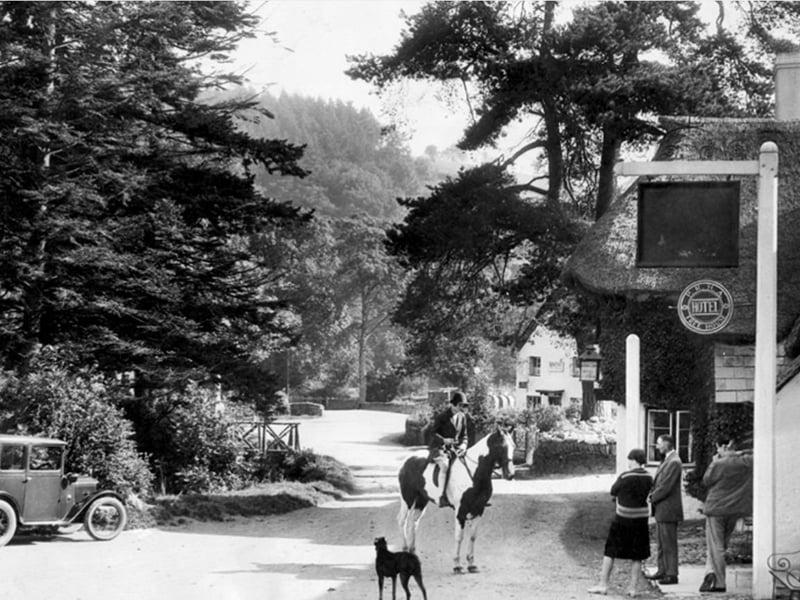
21. p15 The Village of Winsford, Somerset, May 1933.jpg
The Village of Winsford, Somerset, May 1933. Photo: Britain in the 1930s: A Window on The Past and Signpost to the future