
From ‘red gold’ to rubble - how a strawberry farmer in Gaza lost everything

For the past 21 months, the world has watched with horror at the human cost of the Israel-Gaza war.
Over 58,000 people have been killed and around 140,000 injured. Nearly half a million people face starvation and over 70,000 under-fives are suffering with acute malnutrition.
Gaza’s agricultural sector has also been decimated. According to the UN’s Food and Agricultural Organization, 95 per cent of Gaza’s cropland has been rendered unusable.
Over 80 per cent of cropland has sustained damage and nearly three quarters of all greenhouses have been destroyed. More than three quarters of all land in Gaza is now inaccessible to farmers, and less than five per cent can be used for planting much needed crops.
The scale of the devastation cannot be understated. Before the beginning of the war, agriculture accounted for around 10 per cent of Gaza’s economy, with more than half a million people relying on growing crops, herding animals, or fishing to support their families.
The situation in northern Gaza is particularly dire, where just 15 out of more than 3,000 hectares of farmland is able to be planted on. Just over six per cent of all farmland in northern Gaza, while damaged, remains accessible.
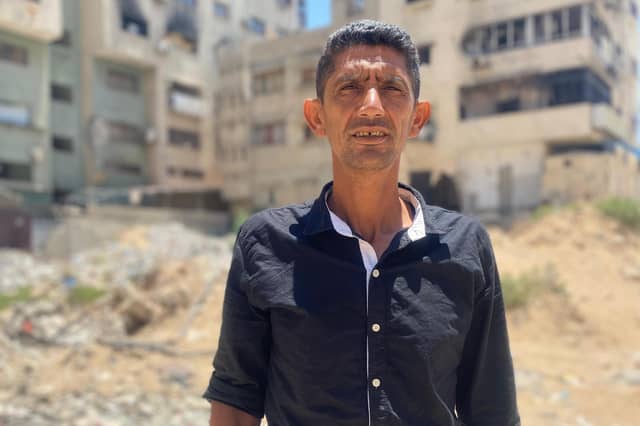
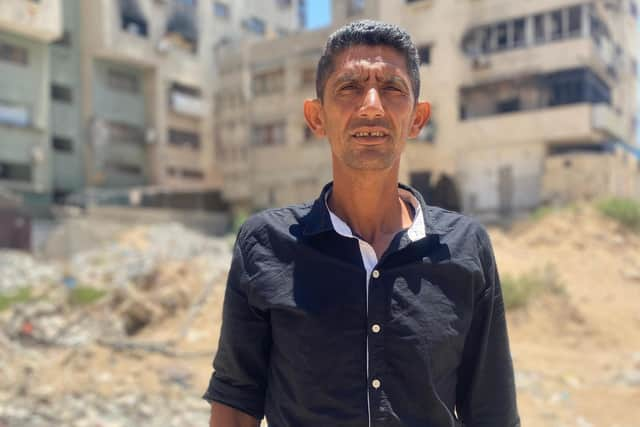
Farming is all 47-year-old Yousef (not his real name) has ever known. He has always grown vegetables and fruit on farmland in Beit Lahia in northern Gaza to sell to support his family of eight.
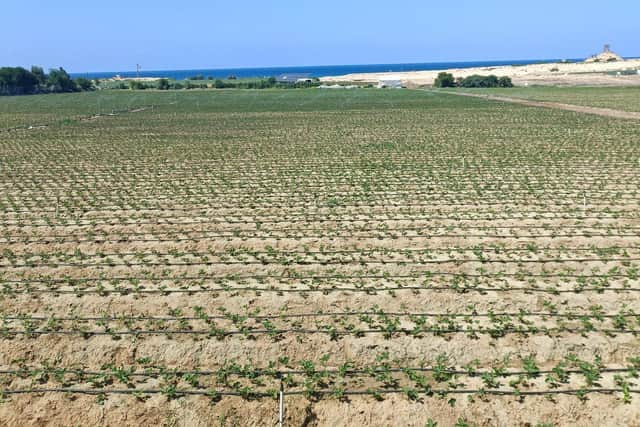
Yousef devoted twenty years of his life to investing in and developing his farm. Before the war, he grew strawberries on nearly 30 acres of farmland, supported by irrigation networks, water tanks, water pumps and greenhouses. In Gaza, strawberries are commonly referred to as ‘red gold’ – a symbol of the crops’ economic value as well as of the land’s natural richness. When strawberry season ends, Yousef grew watermelons and vegetables.
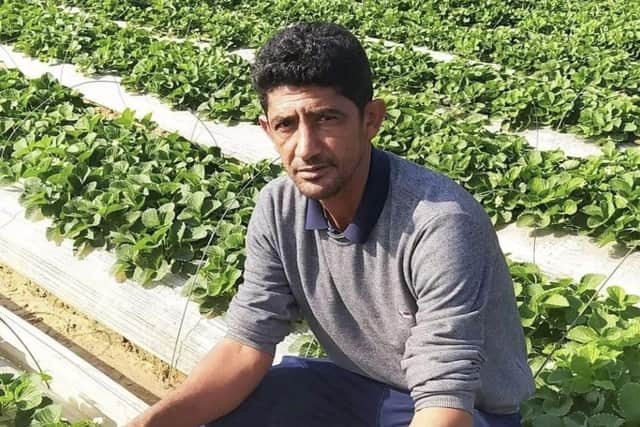
But the war turned life as Yousef knew it completely on its head. His farm was directly hit by bombing in November 2023 when he had planted his strawberries and again in March 2024 when he had planted aubergines; burning his crops, turning farming equipment into scrap and tearing apart and burying beneath the rubble water pumps, water tanks, and the irrigation network that supported his crops to thrive.
“What was lost wasn’t just steel; it was years of hard work, memories, and my children's future,” said Yousef.
Like nearly every person in Gaza, Yousef’s family have also been forced to repeatedly flee bombardment in search of shelter.
“There is no real safe place. We were displaced from one area to another, staying with relatives or in schools, only to return to find the land even more destroyed,” Yousef said.
In addition to the mental and physical toll having to flee time and time again has taken on Yousef’s family, his forced displacement made it increasingly difficult to tend to his farmland.
Each time Yousef was displaced, he moved further and further away from his land and the continued bombardment prevented him from reaching it for extended periods of time. Unable to be tended, plant diseases spread and insects attacked, causing his remaining crops to wither, reducing what little crops left could be saved.
“Farming isn't just a job. It requires a permanent presence and displacement has shattered that ," Yousef said.
During the ceasefire earlier in the year, Yousef found himself having to start over from scratch. “Returning was difficult. I felt the earth crying, I couldn't leave it,” he recalled.
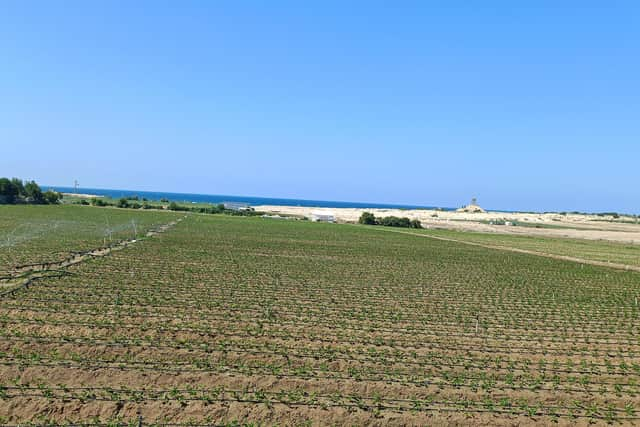
During the ceasefire, Christian Aid’s local partner in Gaza, Agricultural Development Association – PARC, provided Yousef with seeds and farming tools to try and help him produce new crops on his land. With his machinery and water tanks destroyed, Yousef planted tomato seedlings with just simple hand tools. However, since the ceasefire collapsed in March, he has not been able to return to his land.
As a result of the war, Yousef has become almost entirely dependent on humanitarian aid to support his family.
However, as he explained, this aid is not enough for his family.
“Sometimes we have to ration food to feed everyone. There are no supplies and no income. The situation is getting more difficult by the day,” Yousef said.
“If there wasn't aid, we wouldn't have been able to survive, but even so, the aid is not permanent, nor is it sufficient,” he added.
Yousef said there is little hope for the future without the repair and rebuilding of Gaza’s farms.
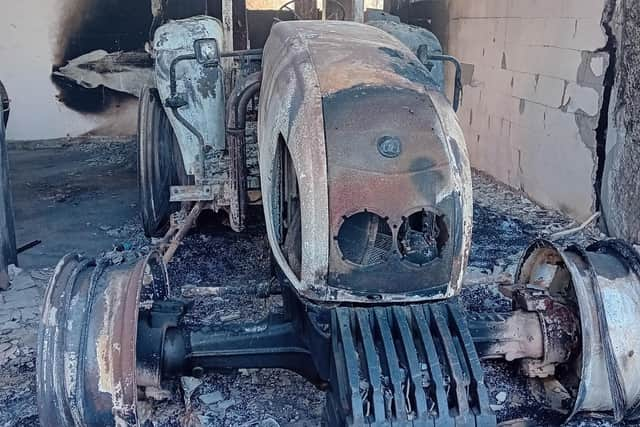
“Without agricultural reconstruction, there is no future, the land is what feeds us and it is what sustains us. If we abandon the land, it will die twice: once by bombing, once by neglect, but as long as we have breath, we will plant.”
Rosamond Bennett, Chief Executive of Christian Aid Ireland, said: “The war is destroying much more than farmland. It is destroying the means for sustaining life in Gaza.
“The conflict has robbed Yousef of the ability to earn a living and feed his family, all the while famine warnings sound and food prices continue to skyrocket. With almost all of Gaza’s cropland and farming infrastructure damaged or destroyed, it is all but impossible to grow enough food locally. The suffering, death and destruction in Gaza must end.
“We need an immediate ceasefire and lasting peace.”
To support Christian Aid’s work visit: https://caid.ie/MEAppeal