
Integrating dairy calf to beef systems in Northern Ireland
ABP is confirming the company’s continuing commitment to integrated dairy calf to beef systems in Northern Ireland.
Significantly, the project is helping to deliver a sustainable future for the farmers involved.
This includes the milk producers receiving the semen, used to breed the calves required, the subsequent calf rearers and beef finishers.
ABP is currently bringing 15,000 calves through this system per annum with the potential to develop it further being more than significant.
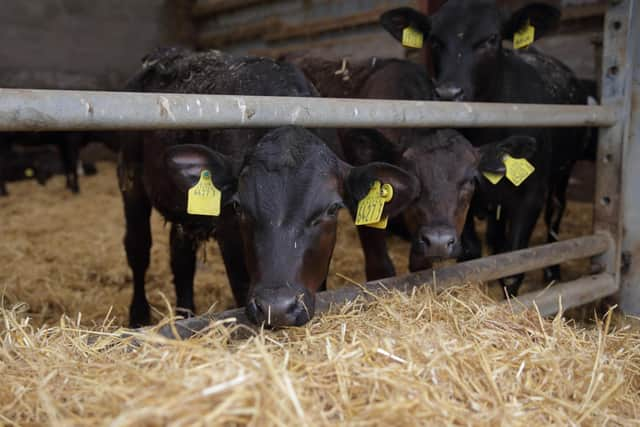

The calves are predominantly Aberdeen-Angus sired with a growing number of cross-bred Wagyu included. The scheme also facilitates the much smaller number of Friesian-bred calves coming off dairy farms in Northern Ireland at the present time.
Meanwhile, the management at ABP recognises the challenge posed by the ongoing threat of bovine tuberculosis (bTB) on the farms of those milk producers supplying the calves for the dairy beef project.
In light of this, it is hoped that the veterinary service within the Department of Agriculture, Environment and Rural Farms will allow calves from dairy farms ‘closed’ with bTB to be moved to bespoke rearing units, where all relevant disease testing can take palce.
All of these issues were discussed in detail an ABP-hosted visit for members of the Guild of Agricultural Journalist (Northern Section) to the Co Antrim calf rearing unit of James and Rachel Davison.
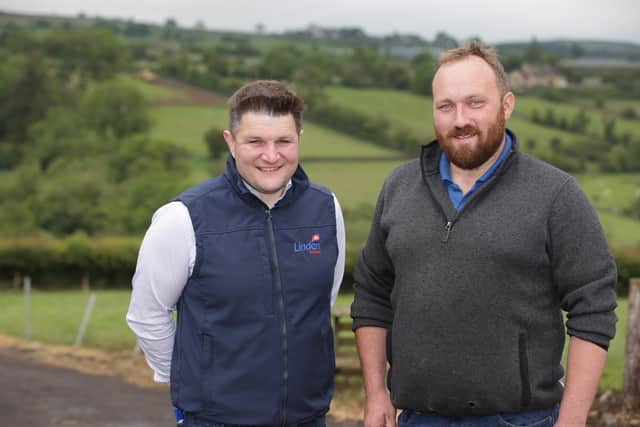
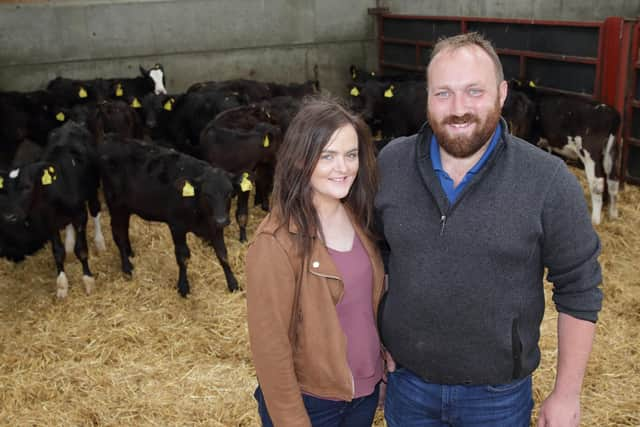
The couple farm close to the village of Glenarm.
They contract rear 2,500 calves per annum with facilities o farm to take the calves through the milk phase and beyond weaning.
Their farm business also included two broiler houses, a flock of EasyCare sheep and a small beef finishing enterprise.
James is a participant in ABP PRISM 2030, a £1.5m farmer-led programme aimed at helping beef and lamb producers cut their environmental impact.
PRISM 2030 is the Programme for the Improvement in Sustainability of red meat. It is aimed at helping ABP’s beef and sheep producers reduce their environmental impact and provide reassurances to retailers, policy makers and consumers about the sustainability of Northern Irish beef and lamb.
More than 300 farmer suppliers across the UK are involved in PRISM 2030 – including over 50 Northern Ireland beef and sheep farmers.
Each farm has undergone a detailed carbon footprint assessment using the Agrecalc tool, followed by tailored recommendations from The Andersons Centre and Professor Jude Capper of Harper Adams University.
All participating farmers in Northern Ireland have made improvements from rotational grazing and multi-species swards to cutting fertiliser use and improving soil health as well as investment in renewable energy and more efficient housing.
All have also achieved a reduction in the age at slaughter in line with DAERA’s beef carbon reduction scheme.