
Irish Agricultural Museum donates key device to UN’s New Food and Agriculture Museum in Rome

A historical soil testing device from the Irish Agricultural Museum, Wexford, has been donated for permanent display at a new museum opening in Rome, Italy, this week.
The Food and Agriculture Museum and Network (FAO MuNe) is being launched to coincide with the 80th anniversary of the United Nations Food and Agriculture Organization (FAO) and World Food Day.
The museum is a permanent, interactive space dedicated to global food systems, cultural traditions, and sustainable agriculture. It is also designed as a hub for education, collaboration, and dialogue on the future of food and farming.
Ireland’s history makes this donation from the Irish Agricultural Museum particularly meaningful. Following devastating famines in the 19th century, Irish agriculture faced decades of poor soil health due to overuse and a lack of crop rotation.
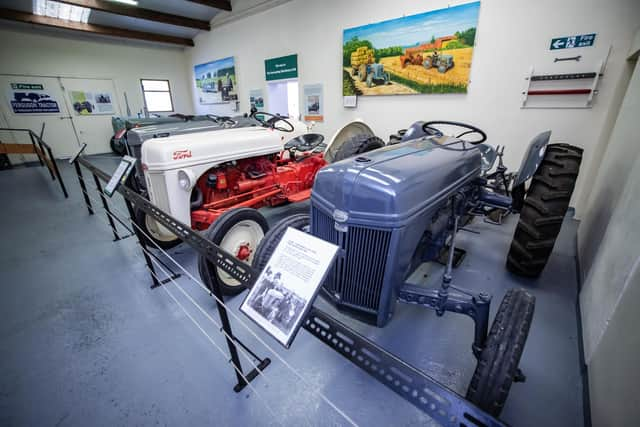

In response, the Irish State prioritised soil science in the mid-20th century.
Following the handing over of Johnstown Castle to the State by descendants of the FitzGerald family in 1945, the National Soils Laboratory was then established in the Castle. This led to nationwide soil mapping and nutrient testing being carried out from the 1940s.
During the 1960s, researchers used soil testing devices to collect samples from farms across Ireland.
This free service for farmers provided essential knowledge that transformed Irish agriculture, improving soil quality, increasing crop yields, and laying the foundations for Ireland’s emergence as a leading exporter of high-quality food.

Today, soil testing devices allow researchers and farmers to assess nutrient levels and soil health, which are cornerstones of resilient food production and food security.
Soil testing devices are simple but vital manual tools. This one donated is made of steel and was designed in the 1960s by Johnstown Castle technician Pat Hayes with soil researcher Dr Austin O’Sullivan, who later founded the Irish Agricultural Museum.
Their modified version was more efficient at collecting uniform soil samples and was soon adopted across Ireland.
Matt Wheeler, general manager and curator of the Irish Agricultural Museum at Johnstown Castle, which is cared for by the Irish Heritage Trust, an independent non-profit organisation, said: “We are proud that the Irish Agricultural Museum has contributed an item of historical importance to the FAO MuNe.
“This soil testing device stands as a symbol of Ireland’s scientific innovation and its commitment to sustainable farming.
“It tells the story of Ireland’s journey from famine to scientific innovation in agriculture.
“In addition, it represents the vital role soil plays in sustaining farming and food production for communities worldwide.”
He added: “For us in Johnstown Castle, it is an honour to see Ireland’s agricultural heritage represented on such an international stage. We are grateful to the Department of Agriculture, Food and the Marine for its support and for approaching our museum about this important donation.”
The work begun at Johnstown Castle continues today under Teagasc, the Agriculture and Food Development Authority, which builds on this legacy of soil science and research.
Healthy soils remain the foundation of Ireland’s thriving agri-food industry and its reputation for sustainable, high-quality food production.