
It takes two to make a peace deal and Iran is in zero rush
There can be no prizes for guessing the issues that will dominate debate when farmers meet at Balmoral Show.
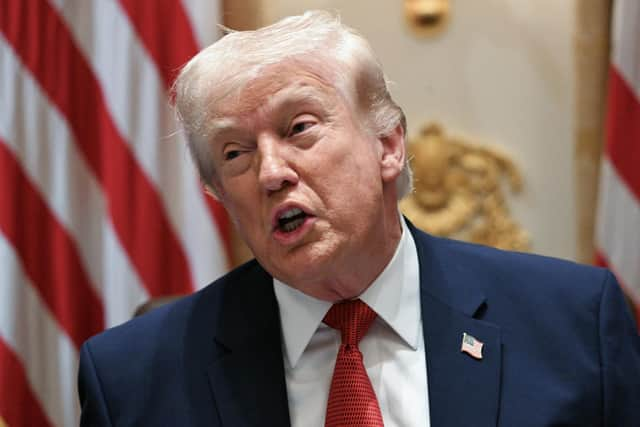
Those will be costs, the availability of inputs and how much of the cost rises on farms it will be possible to pass on to processors and ultimately consumers. Right on cue there is some prospect the backdrop of the past few months might change to something more positive. Donald Trump has suggested the war in Iran may be coming to an end. This however comes with a number of caveats. It takes two to make a peace deal and Iran is seemingly in less of a hurry to reach a deal than Trump. This is because as a dictatorship it cares little about public opinion, while Trump has seen his popularity plunge, with 60 per cent plus of voters now believing he is doing a bad job. There is almost no support for a foreign war he promised not to take the US into during his term as president. The reason for this stance is simple. Trump has personally cited the rising cost of petrol, diesel and fertiliser and the impact that is having on every consumer and voter. There is also a growing sense that despite its massive military power the war in Iraq has proved this is not enough to secure victory. Even with all those caveats people, not least farmers, want this conflict settled so that global trade can return to something approaching the normality of a few months ago. Writing this on Thursday night that looks possible, if not guaranteed. However that could change in an instant if Trump again ejects the proverbial toys from the pram, because someone has said or done something to prick his notoriously thin skin when it comes to ego and misplaced self-belief. He had no objectives in starting this war, so cannot be judged on what it did or did not achieve. But he has made the situation in the Middle East worse, not better; he has damaged the global economy and the US in particular. He has driven a wedge into relations between the US and its trading partners, particularly in Europe.
By aligning so closely with Israel he has made it more difficult for the US to be seen as an honest broker in the debate about alliances in the Middle East to ensure any peace deal can be medium let alone long term. In short he has wreaked economic havoc at home and abroad pursuing an ill-judged conflict. We may, however, all hope that it is not pointed out too publicly to dent his fragile ego before he enters some form of deal that will help the world back to a more stable and sensible economic situation. If, with any luck, we are moving to those more stable times, it is important the lessons of the last few weeks are not forgotten. The UK government, post the local elections in England, is heading into unstable times and we cannot depend on agriculture securing much, if any, focus from politicians. That is unfortunate, because the UK needs to follow the European example of taking steps to improve agriculture’s ability to cope with shocks from global events.
The EU is rightly looking at risk management tools as part of the CAP to help insulate farmers from the financial consequences of unreliable weather and input prices. More fundamentally it is taking steps to move food security back up the agenda to where it was back in the time of Covid disruption. The exposure of agriculture to a shortage of fertiliser, despite manufacturing facilities in Europe, is also part of a wider review of the security of farm production and the food supply for consumers.

This is something we should be doing in the UK, but if that is a bridge too far we should be using a new, closer relationship with the EU to piggy-back off decisions in Europe. Above all we need to see a change in priorities. Come Balmoral the message from DAERA and its minister will be the usual one about green priorities and sustainable agriculture. That is seen as a political priority and it is one that reflects the increasingly urban focus of some parties at Stormont.
But peace in the Middle East or not we are living in a much more uncertain world in terms of food and energy security.
These are the issues politicians need to be focussing on with real determination and imagination and not the easy, low hanging fruit of making green visions more important than food production.
For the voters that put them there the priorities now are food security, quality and availability.