
It’s time for everyone to look out for the farmers’ friend of the bird world
With fewer than 30 breeding pairs of barn owls estimated to be left in Northern Ireland and only three known active nest sites, Ulster Wildlife is appealing to the public to help with locating new nest sites to safeguard the future of this endangered bird.
The charity’s Senior Conservation Officer Katy Bell explained: “Barn owls are very elusive, nocturnal birds and difficult to spot, so we need the public’s help to help them thrive.
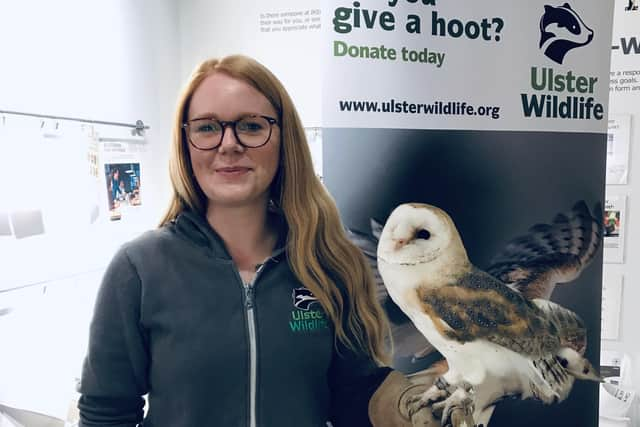

“Historically, they use the same nest sites, so it is vital we locate these to ensure the correct conservation measures are put in place and to help us build a better understanding of these rare birds.
“We know there are more nest sites out there and we want to reassure people that the welfare of the barn owl is our top priority.”
Speaking to Farming Life she provided more details on the history of barn owls in Northern Ireland and the ongoing efforts to preserve the elusive bird.
“Interestingly, most people would associate the ‘twit twoooo’ with owls, but that call is associated with the tawny owl which we don’t have here in Ireland,” she explains.
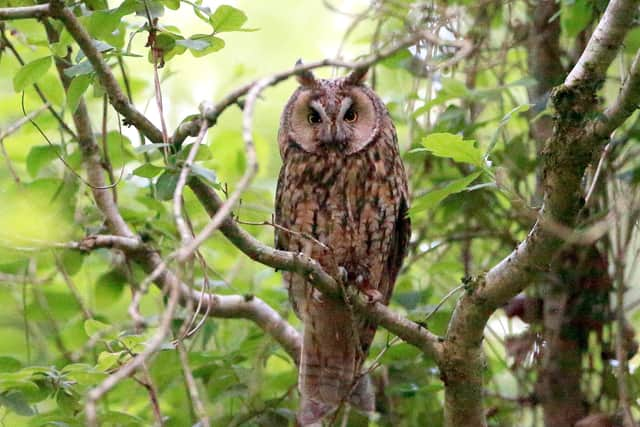
“Barn owls give a shrill screech, which has earned them the nickname ‘screech owl’. Long-eared owls call for males is a repeated ‘hoo hoo hoo’ and for a female it is a higher-pitched ‘hoo’, a call between a male and female long-eared owl is a cat-like ‘ree-yow’.”
While the short-eared owls is a winter visitor to our shores both barn owls and long-eared owls are both established here.
Katy remarks: “Our two resident owls are barn owls and long-eared owls. The long-eared owl is much more common and they nest in woodland.
“Barn owls have three main food sources which are wood mice, pygmy shrews and young rats. And its because of barn owls feasting on these sources and keeping the rodent population down and acting as a natural pest control that barn owls have become known, down through the years, as the ‘farmers’ friend’.”
And yes, owls do nest in barns.
Katy states: “They do nest in barns, as the name suggests, but they were around a long time before people and barns existed, so they also nest in old trees, for example an old hollow that can be found in old mature trees.
“But nowadays they can be found in barns as well as old buildings. It is known in southern Ireland owls establishing themselves in old buildings and they also like chimneys and castles.
“And more recently, with growing conservation efforts to preserving owls across the country they can now be found in nest boxes which have been put up.”
Katy says more needs to be done to help identify nest sites so that Ulster Wildlife and its volunteers can conserve the remaining numbers of barn owls in Northern Ireland.
She says: “Unfortunately we actually don’t know what the rough estimate of barn owls pairs is in Northern Ireland and it is one of the reasons why we are appealing for people across the country to get in touch with Ulster Wildlife with any sightings and possible nest sites.
“They are a bird which very hard to monitor. Barn owls in England, Scotland and Wales fly at dusk and dawn. But our Irish barn owls for some reason mainly fly in the dark, which makes it even harder for us to find them.
“The current estimate is that there are less than 30 pairs in Northern Ireland which is a very low number. Ulster Wildlife only knows of three active nest sites here in Northern Ireland. We really need to know where these barn owl sites are to allow us to monitor them.”
Northern Ireland will never be able to support a huge population of barn owls says Katy.
“Northern Ireland simply can’t support a very large number of barn owls. For one reason, they can’t fly in the rain, they are perfectly designed to be silent hunters and that unfortunately means that they aren’t waterproof, which is of course quite disadvantageous in our climate here in Northern Ireland.
“In addition to that we do not have a lot of arable farmland and that would be their main habitat. There isn’t the food supply for them.”
“However, there are many things that can be done to improve habitats for them and it is still vital that we conserve the numbers that we do have and stop any decline. We can improve habitats for barn owls, for example providing rough margins in fields and winter stubble which are all exceptionally good for barn owls. And improving wild bird cover is something that we would encourage. All of these improvements will help increase the barn owl population here in Northern Ireland.”
There are some concerns about revealing nest site details to Ulster Wildlife. There was an old history of stealing nest eggs. But these concerns Katy is keen to allay.
She says: “From speaking to farmers there seems to be an apprehension about reporting nests to Ulster Wildlife and that is of course understandable.
“It’s important that farmers appreciate that we need to monitor these birds in order for us to protect nest sites, once a nest site is established it needs to be protected.
“All advice and equipment that is needed to monitor the site will be provided by Ulster Wildlife, and we want to help farmers.
“Most importantly, we will never disclose a nest site, any reported to us will be done so under strictly confidentiality.
“Farmers will know where these sites might be as they are so close to nature and work the land on a daily basis.”
wBarn owls nest from early spring through to late summer in abandoned farm buildings, tree cavities and nest boxes.
Barn owls are legally protected and can be sensitive to disturbance, so if you find a nest site, leave it alone and get in touch with Ulster Wildlife.
Anyone with information should contact Katy Bell at Ulster Wildlife on 07816 065 736 or email [email protected].
All information provided is strictly confidential, and nest site locations will never be disclosed to the public.
For more information about barn owls and other ways you can help them, visit ulsterwildlife.org/barn-owls