
Little prospect of farming feeling at ease with the rising cost crisis
Just when you thought it was safe to go back into the water...cue the music...is an iconic moment in Jaws.
There is little prospect of farming feeling at ease with what is happening to costs and the struggle to raise prices – but like the shark’s return in Jaws the problem has now been given an added twist. El Nino weather patterns are caused by the heating of Pacific Ocean.
The patterns have been recognised since the 1600s and happen every two to seven years.
This will be an El Nino year and the impact will be at the severe end of the scale.
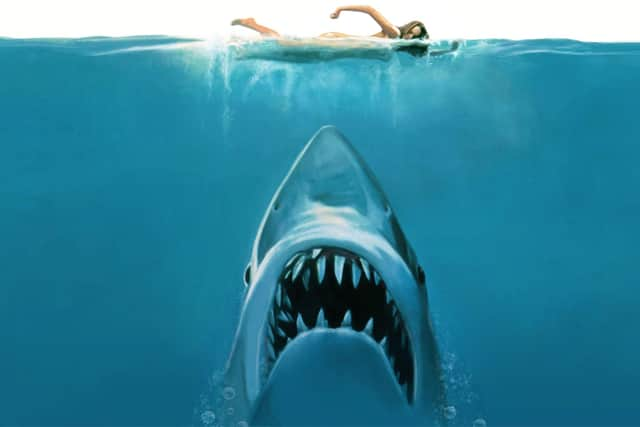

Those effects include a mix of severe droughts for some and severe rainfall for others, mainly in Central and South America. The biggest impacts of El Nino are on agriculture in countries like Brazil and Argentina.
The impact is also felt in Australia and New Zealand.
What the countries have in common is that they are all key global agricultural economies.
There are already warnings the impacts will further drive up food prices, on top of increases from war in the Middle East.
This is a war Donald Trump needs to solve for domestic political reasons, but Iran is in no hurry to pull him out of the hole he dug for himself and the rest of the world.
Even when agreement is reached – and the Iranians will not allow Trump to claim it as a victory – it will take a long time to get back to the normality of a few months ago.
This points to a difficult autumn for farmers and consumers. Wars since Ukraine have demonstrated that global agriculture is now more dependent on long supply claims.
Ukraine led to a spike in costs for farmers and Iran has done the same. Ukraine took out Russia as a supplier because of sanctions, while Iran has closed off the only realistic alternative.
El Nino will hit yields in countries that are key global agricultural suppliers.
That may drive up consumer prices, which might help farmers here, provided consumers can afford the higher prices.
But like the Middle East over fertiliser ingredients, South America, particularly Brazil, is the biggest supplier of soya protein to Europe.
It depends on these for the livestock industry and despite efforts over the years the EU has not found a way to greater self-reliance.
If the El Nino impacts are as severe as predicted this could be a big hit for European livestock farmers. Weather patterns are something we can neither control or influence.
All we can do is find ways, via alternative supply sources, to manage the impacts.
The problem, with the world’s trade patterns up in the air, alternative suppliers are not freely available.
Sanctions on Russia over the past four years have taken out an enormous Plan B source for Europe and that is not going to change, given the lack of any real drive for a peace deal between Moscow and Ukraine. This all takes us back to an issue the EU has taken on board at the highest political levels – the need to ensure we do not allow the actions of others to threaten food security.
That light bulb has yet to even glimmer in the UK, with the government focussed on how it can bring down the cost of living. Its welfare coffers to do so are empty and it is ignoring the threat poor food security poses to society.
The EU is less dependent on imports, but it is taking steps to deem food a strategic asset to be protected.
This cannot happen overnight, but it is a huge justification for the billions of euro spent on the CAP to deliver food production and not just green outcomes. Politics needs to be about hard truths; Labour, in government, is falling victim to a focus on welfare at the expense of economic growth, borrowing more and more to do so. It needs to tell people this cannot continue.
It also needs to make clear that we are learning the hard way that our food security is vulnerable to global economic shocks.
Tackling this is more important than yet more politics that run counter to allowing farmers to be efficient food producers.
Regretting those current policies in front of empty supermarkets shelves is not a wise approach, but it is the direction of travel we are on and it is one we will eventually deem a lose, lose outcome.