
Maize area set to reach a record level in 2026
The acreage of maize planted this year in Northern Ireland could set an area record for the crop, writes Richard Halleron.
“We could be looking at around 9,000ac,” confirmed Maizetech’s Robert Duncan.
“Demand for the crop continues to grow. It is increasingly recognised as a high quality forage in dairy and beef farms. But underpinning all of this is the use of maize as a high energy souce for anaerobic digestion systems.”
A number of specific factors have combined to increase the attractiveness of maize on tillage farms.

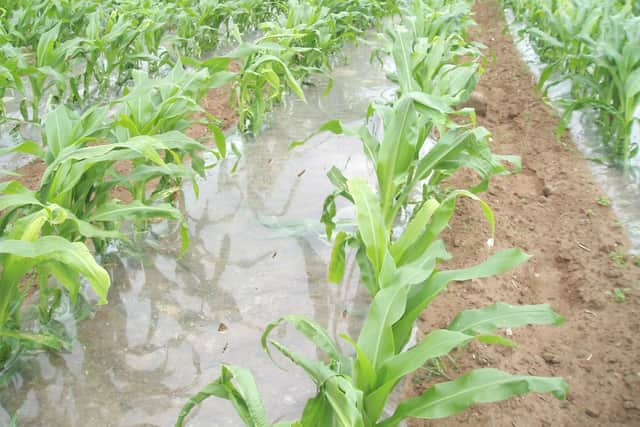
These include a very challenging spring planting season in tandem with poor prices for both feed and malting barley.
Robert Duncan again: “Maize is increasingly viewed as a tremendous break crop within an arable rotation. Growers are finding that wheat crops drilled after forage maize can deliver up to an extra ½t of grain per acre.
“Maize grown under contract for dairy and beef farmers can be an extremely profitable enterprise on arable farms”
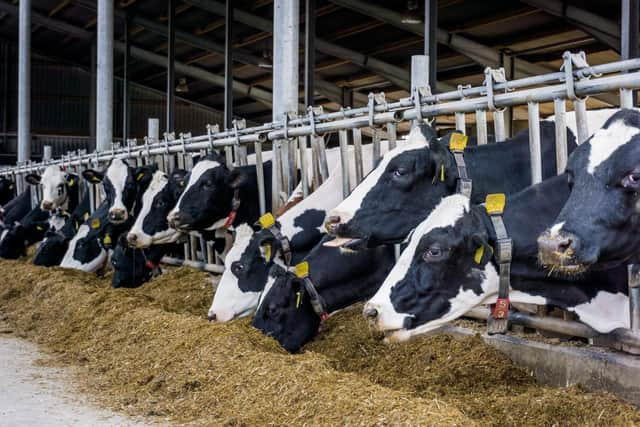
He continued:“Dairy herd size continues to grow throughout Northern Ireland to the extent that securing a grazing platform large enough is becoming practically impossible.
“In these circumstances, the option of housing cows becomes the only feasible alternative. And in these circumstances, feeding forage maize comes into its own.
“And the same trends are now very apparent within the beef sector, where demand for high quality forages continues to grow.”
Significantly, the Maizetech representative does not believe the sky rocketing prices of fertiliser will put farmers off growing maize in 2026.
“In fact, the polar opposite is the case,” he stressed.
“Maize crops can utilise very large q quantities of organic manures and slurries.
“Applying 5,000 gallons of slurry per acre on to maize ground prior to ploughing is equivalent to 200kg of a standard compound used to grow the likes of spring barley.”
Weather permitting, the first of this year’s forage maize crops will be sown out under plastic in about a fortnight’s time.
New maize varieties
Advances made in breeding new varieties, suited to Northern Ireland’s more temperate climate, is making all of this possible.
Throw-in the added impact of climate change and the true potential of maize could soon be realised by local farmers.
Over the coming years, it’s quite feasible that crops of forage maize, planted in late April and harvested in late September, could soon be a realistic prospect in this part of the world.
What we would then have is a crop silage option that can deliver up to 18t of fresh weight per acre with exceptional dry matter and starch values.
Advances in maize agronomy are also kicking-in to help make this happen. New compostable films are now available, which boost crop growth rates, particularly at those all-important, early stages of development.
But perhaps the greatest game changer, where maize is concerned, is the use of liquid nitrogen fertilisers at the 10-leaf stage. This is an approach to plant nutrition that ensures the maximal uptake of nitrogen and other nutrients.
Another advantage of maize is the fact that crops act as a tremendous outlet for slurry and farmyard manures during the late spring period.
Moreover, disease control is very straightforward: in reality, there are no diseases that attack maize crops when grown at these latitudes.
So it all adds-up to win: win scenario for local farmers.
Admittedly, not every dairy or beef producer is set up to grow crops of maize. But arable farmers are.
The option of growing maize on a contract option become immediately obvious in this context
The need to expand Northern Ireland’s cropping sector is more than obvious.
We have already seen the seen the success of the Protein Aid scheme in helping to boost the production of crops like beans over recent years.
So could the growing of greater maize acreages help boost this momentum still further?
The tipping point for maize will come when crops can be harvested on a consistent basis before the end of September.
At that stage, gone would be the days of taking heavy equipment on to land when ground conditions are more than challenging.
An early autumn harvest would also allow arable farmers to follow-on directly with a crop of winter wheat, barley, oats or oilseed rape (OSR).
In turn, this would mean that land would be in active use 12 months of the year.
Feeding values on the up
Starch values of up to 40% were secured by forage maize crops grown in on the island of Ireland last year: these were record values.
Dry matter figures of around 35% have also been achieved in many instances: delivering Metabolisable Energy (ME) values well in excess of 12.0.
Driving all of this has been the fact that many maize growers in 2025 were able to harvest a combination of green crop and fully mature cobs.
This has been brought about by a combination of two factors: the almost perfect growing conditions that maize crops enjoyed last year and the continuing improvement in crop varieties that are specifically suited to Irish conditions.
Robert Duncan commented: “Last year saw significant numbers of local farmers growing maize for the first time.
“Now they are feeding the forages to their animals and seeing, at first hand, the improvements in livestock performance that forage maize can deliver.
“The vast majority of farmers who trial maize subsequently stay with it.”
He continued: “Most maize crops were harvested at an early stage in the season last year. This meant that ground disturbance was kept to an absolute minimum.
“As a consequence many arable farmers had the opportunity of direct drilling a subsequent winter barley or wheat crop, without the need to plough or harrow the ground beforehand.
“These winter cereal crops have now germinated and look extremely well.
“Maize is a very deep rooting crop and does a lot to improve soils structure quality.
“Large quantities of slurry and farmyard manure would have almost certainly been put out on maize ground earlier in the spring.
“Significantly, arable farmers are finding that residual potash and phosphate still in the soil after the maize harvest has been completed is available to their newly established cereal crops.
“It all adds up to a win:win scenario.”
According to Robert Duncan, forage maize is now regarded as an integral part of the crop rotations follows on arable farms.
“But more than that, it is the crop option that is delivering the highest level of profit.
“And this fact alone may well drive further interest, where the growing of the crop is concerned,” he said.
“Meanwhile, dairy and beef farmers are increasingly recognising the value of maize as a high vale feed source.”
A forage specialist’s perspective
Forage specialist Dave Davies points to a combination of earlier maturation and harvesting dates delivering a number of additional benefits for maize growers in Northern Ireland .
He commented: “The objective is to secure crops combining 32% dry matter and an equivalent starch figure. Consider the availability of other silages on the farm before harvesting maize.
“If these are known to be of sufficient quantity and quality, then the option of increasing the chop height of forage maize can be considered. This will act to increase the digestibility and starch content of the forage.
“In locations where crops are grown without the use of plastic, under sowing with grass can be considered.
“However, on those occasions when a September cutting date can be achieved, the opportunity of establishing a crop of Italian rye-grass directly after harvest can be availed of.”
Dave Davies is firmly of the view maize plants with a single,fully-matured cob will deliver the best cropping outcomes.
He further commented: “But this very rarely works out to be the case. The vast majority of maize plants will produce a second cob.
“Significantly, modern maize varieties will remain green while the cob is ripening.
“It’s important that growers should walk through their crops over the coming days and inspect a selection of cobs.
“The reality is that the cobs will be extremely close to full maturity. Yet the maize plants are still inherently green.
Once crops start to die, the risks of aerobic spoilage impacting within a clamp increase significantly.
“In addition, green leaf has more digestibility of fibre while also having slightly higher protein levels and a greater nutritive value.
“So, in reality, the days of waiting for frost to impact a crop of growing maize are over.”
As is the reality with all other crops, the position of maize within a rotation is importation.
Dave Davies further excplained: “But where maize is concerned there is a physical limitation factor that kicks in,” Davies added.
“And this is due to the limited number of fields the crop can be grown in on most farms. Disease risks will build up if maize is grown successively on the same site. The risk of mycotoxins also increases accordingly.
“And, in addition, the issue of trace element nutrition becomes an increasingly important management factor within this scenario. After the major crop nutrition drivers of nitrogen, potash and phosphate are accounted for, boron and sulphur availability are often the first challenges to rear their heads under such circumstances.”
Ensiling forage maize crops
According to Dave Davies, maize grains should be at the soft cheese stage at point of ensiling.
If grains are too hard, the degradability of the starch within them is generally less. This is why is it is important that crops are cut at the right stage. Getting this decision right requires growers walking crops regularly in the run up to harvest.
The forage specialist concluded: “Maize is one of the very few crops where maximum yield and quality are very much in synch.
“The processing of cobs is very important. The objective is to have each grain split into at least four parts. All grains must be cracked.
“This reflects the fact that rations pass through the rumen of a modern dairy cow very quickly.”
The forage specialists strongly advises that the first load of cut maize coming into the silo should be inspected, where the cracking of grains are concerned
“If this is not the case, then it’s simply a matter of asking the contractor to tighten the corn cracker on the harvester.”