
New dairy beef enterprise producing results on a Glens of Antrim farm
The dairy calf to beef sector in Northern Ireland is an important and growing industry and many members of CAFRE’s Suckler Cow Business Development Groups (BDGs) have started to rear dairy bred calves to sell either as strong stores, finish as bull beef at 15-16 months of age or steer beef at 22-24 months.
Recent data produced by the Livestock and Meat Commission showed that 41 per cent of the 2019 prime beef cattle produced in Northern Ireland originated from the dairy herd. It is likely that this figure will continue to increase over the next number of years in Northern Ireland.
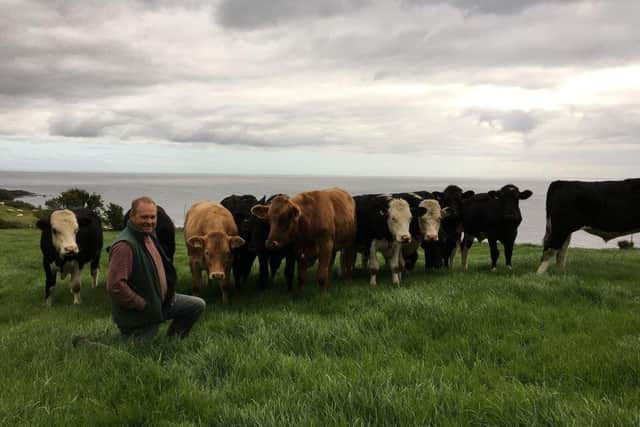

Stephen Flanagan, a Beef and Sheep Adviser at the College of Agriculture, Food and Rural Enterprise (CAFRE) said: “Ivan McMullan is one such beef farmer who has added this new enterprise to his existing farm business.
“Ivan’s farm overlooks Carnlough in the scenic Glens of Antrim. The farm currently supports 40 spring calving suckler cows with calves finished as beef and a flock of 250 ewes.
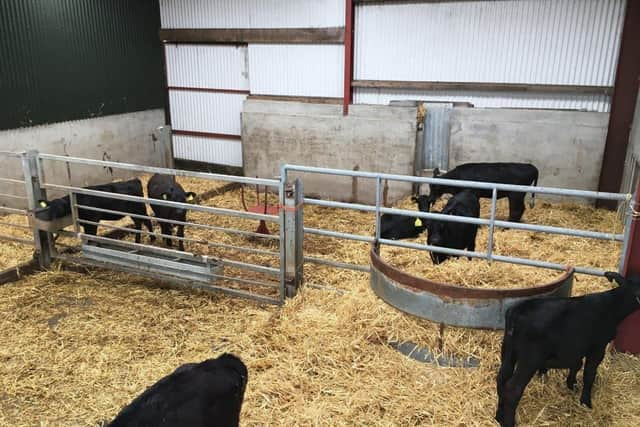
“Previously, Ivan also had an autumn calving suckler herd but it was proving too expensive to run so the cows were sold off to make room for the new dairy beef enterprise. Ivan purchased 40 dairy beef bull calves privately from local dairy farmers at 3-6 weeks old and they are now in their first summer grazing, in a paddock system.
“During a recent telephone interview I asked Ivan what the key things that he looked out for when purchasing calves from local dairy farms and what his protocol is during the first few days when calves arrive on farm.
“He answered: ‘I look for healthy calves which are not showing signs of scour, eye infections or swollen navels. I also try to find out if the calf got plenty of colostrum at birth. I also prefer to buy direct from farmers that I know as this will enable me to obtain a better idea of the calves history, vaccinations, colostrum and I try to purchase only teat suckling calves as bucket fed calves will struggle to convert to the teat system.’”
Stephen Flanagan also outlines the protocols that should be followed when calves arrive on the farm.
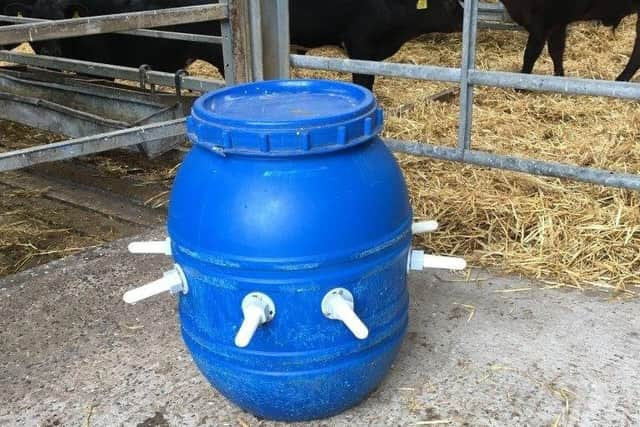
“Calves are batched into groups of five or seven depending on age and suckling speed to keep the group performance consistent. They are fed powdered milk from homemade feeders comprised of plastic barrels with eight teats – which seems to work well. Calves receive 2.5 litres milk per feed twice a day for the first three to four days. This quantity is then increased to three litres per feed twice a day. Twice daily milk feeds will be reduced to once a day when the calves are eating 1 kg concentrate.
“Calves are introduced to an 18 per cent coarse ration concentrate on an ad-lib basis immediately they arrive on farm and will be weaned when eating 2kg per day at approximately eight to ten weeks of age.
“Concentrate feeding has continued at grass at 1kg/day and then completely stopped after one month. Performance of the calves has been good, so far, with a daily gain of between 0.8 to 1.0kg/day from purchase to turnout on April 17. Ivan is also pleased with their performance at grass and will be weighing them again shortly.
“The key drivers of profitability in all beef systems are stocking rate and carcass output, therefore producers must identify production systems specific to their farm that maximise stocking rate and make best use of facilities available.
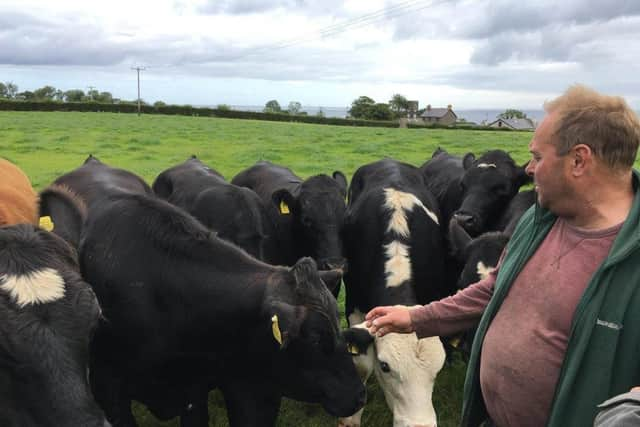
“From Ivan’s benchmarking reports the whole farm stocking rate in recent years is between 1.6 and 2.0 Ce/Ha which is above average and is impressive as the farm is fragmented and land type runs from good quality cutting fields to rundale hill.
“One of the benefits Ivan has seen from this new enterprise is that these young lighter stock can graze areas that the main herd of suckler cows could not utilise effectively. Some fields are small and not near the main yard or handling facilities so are not suitable for a group of 40 cows and calves plus a bull. These bought in calves have pushed the stocking rate further and thus whole farm output and profitability.
“We have heard the expression ‘cash is king’ and rightly so, especially in the business of farming. Farmers are generally asset rich and cash poor. Ivan’s main sales periods are August to December for fat lambs and breeding stock and December to April for finished cattle. Ivan’s aim is to finish the dairy-bred calves at two years of age and sell them between May and September which will help cash flow in the months when limited numbers of stock are sold.
“The land type on this farm does not allow heavy cattle to be finished outdoors in summer if weather turns wet so Ivan has plans to invest in new dual purpose housing which will accommodate ewes at lambing time and the young dairy bred calves. The new house will leave room to house the finishing stock during periods of wet weather in summer.
“With the continued interest in dairy beef, CAFRE has introduced a new Dairy Calf to Beef Knowledge Transfer Project entitled ‘Management of dairy bred beef calves to maximise lifetime performance’ and will run for the next two to three years. For further information of this project or dairy beef in general please contact your local CAFRE adviser.”