
New GWCT report finds no evidence of pheasants affecting insect abundance

A new scientific review commissioned by Natural England and undertaken by the Game & Wildlife Conservation Trust (GWCT) suggests pheasant releasing is having no significant impact on insect populations in the wider countryside.
Negative effects were only detected at sites where gamebirds congregated in higher densities such as in release pens and around feeders and studies showed that well-managed releasing can minimise these local impacts.
GWCT senior scientist Dr Rufus Sage who authored the report, said: “Pheasant releasing is often blamed for causing insect declines, but we have found no evidence for this. The studies showed that, even where up to 20 birds per hectare were present across large areas, there was no detectable effect on invertebrate abundance, species richness or diversity.”
One of the research projects reviewed by the report sampled nearly 40,000 invertebrates, representing 308 species, across six large Sites of Special Scientific Interest (SSSI) grassland sites (50–200 ha each). Released birds were present on these grasslands at average densities of 5–20 birds per hectare in autumn and winter, falling to around 1 bird per hectare or less in spring and summer.
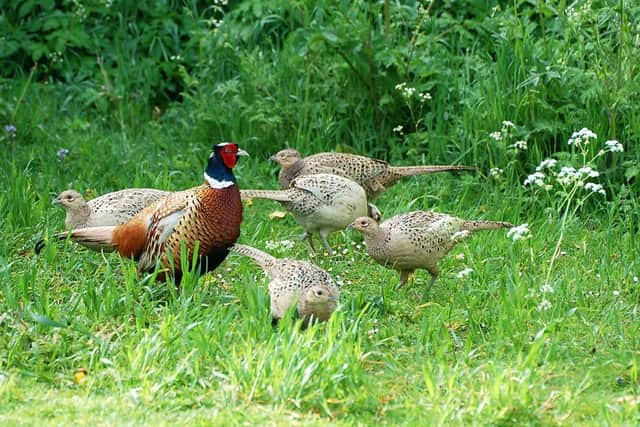

Another study compared 17 paired woodlands (with and without release pens), sampling both woodland edges and adjacent fields, before and after pheasant release. It combined pitfall trapping, vegetation surveys, and pheasant counts.
The report also reviewed studies of pheasant diet. Adult released gamebirds had diets dominated by plants, particularly grain and leafy vegetation. On arable farmland, invertebrates typically made up less than 3% of the adult food intake. Higher proportions (around 5-20%) occurred in spring and early summer when more insects had emerged and fewer birds remained on the ground, reducing the impact on invertebrate abundance. All the evidence pointed to pheasants being accidental rather than deliberate predators of invertebrates.
During late summer and autumn when gamebird densities are higher, adherence to GWCT guidance, on careful distribution of feeders and limits on the number of pheasants per hectare of release pen, can further reduce the risk of damage to insect populations.
With these mitigation measures in place, studies show there is a likelihood of a biodiversity net gain resulting from releasing on a landscape scale across farmland and woodland landscapes. Woodland rides, hedgerows, game crops, field margins and structurally diverse woodland edges, all maintained for gamebirds, are well documented to support insects, farmland birds and other wildlife.
Dr Rufus Sage concluded: “The science suggests effects linked to releasing drop off quickly with distance from the release pen and are largely absent once you get a few hundred metres away from areas where birds are concentrated. If GWCT’s releasing guidelines are followed, it can deliver a net positive effect on the large scale needed for nature recovery. Many habitats managed for gamebirds would not exist without releasing and provide proven benefits for invertebrates and wider wildlife.”
You can read a summary of the report here https://www.gwct.org.uk/game/research/species/pheasant/the-impact-of-gamebird-releasing-on-invertebrate-populations/