
Redshank breeding success despite a tough season for wading birds

The breeding population of redshank – a threatened native wading bird species – is continuing to thrive in the Avon Valley in Hampshire thanks to the dedicated conservation work of the Game and Wildlife Conservation Trust and local wildlife managers.
In the past ten years, numbers have increased from 20 to 35 breeding pairs across the whole Avon Valley. During the 2025 season 11 redshank nests were monitored across two key sites, nine of these successfully hatched chicks.
In general, 2025 appears to have been a challenging year for breeding waders, such as lapwing and curlew. This is likely been impacted by weather, food availability and predation pressure. For example, this was clear in our lapwing fallow plot surveys this year, where chick survival was particularly low.
Redshank are an amber-listed species in the UK because they have declined nationally by 42% over the last 25 years. However, the Avon Valley remains a stronghold for breeding redshank where it is a priority species for the Countryside Stewardship. The nearest population of redshank is in the New Forest, where only seven breeding territories were identified in 2019 (according to the HOS survey).
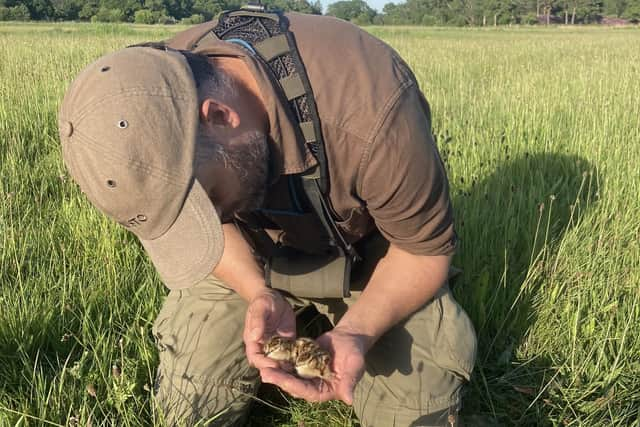

Throughout the LIFE Waders for Real project in the Avon Valley, which ran from 2015 to 2019, numbers of redshank increased by 75% as a result of habitat improvements, predator exclusion and predator management.
The Lower Avon Valley Farmer Cluster was established in January 2020. The group comprises 16 farmers, but the interest in the group goes much wider than this and includes many landowners and keepers, covering 5,819 hectares in and around the Avon Valley, stretching across Hampshire, Dorset and Wiltshire.
In 2021 we conducted a pilot study to assess the feasibility of catching adult redshank and fitting them with GPS-tags and colour rings to explore habitat use and movements during the breeding season, as well as territory size, site fidelity and fledgling success.
This ongoing research continues to feed directly into conservation measures across the water meadows in the Avon Valley. The information and knowledge gained is also made available to farmer cluster and encourages more joined-up conservation measures across sites and the region.
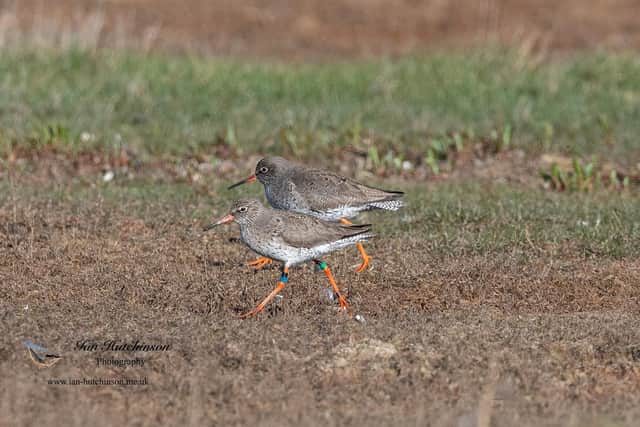
Lizzie Grayshon, Wetlands Ecologist with the GWCT, said: “Through our research over the last five years we have developed a much better understanding of redshank, how far they move from the breeding sites, whether chicks come back here to breed as adults or go to new sites.
“We know of one chick that hatched here four years ago and then went to Keyhaven where that bird has been breeding for the past two years. Another chick has gone on to breed down at the North Solent National Nature Reserve by the Beaulieu River, and several have come back to the valley to breed.
“Understanding what sites they chose and how far they travel, as well as seeing established pairs return to the Avon Valley and observing where they chose to breed, enables us plan what conservation measures we can help farmers in the cluster with.”
Rupert Brewer, game and wildlife manager at the Bisterne Estate, said: “Having the GWCT’s research and knowledge on how to best help the breeding waders here at Bisterne is extremely useful and allows us to best target our efforts to improve their breeding success and help the population grow.
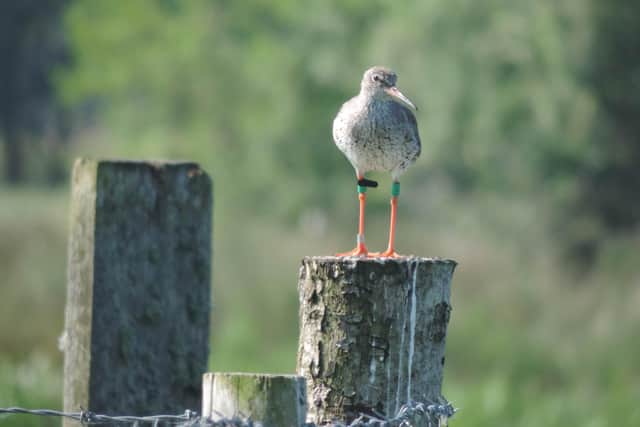
“It’s easy to see the increase in redshank on the water meadows I help manage. There is one field where they are everywhere in May when the chicks are hatching – the noise is deafening.
“It’s such a joy, especially since this wasn’t a species we were particularly aware of at the start of the project, but it is now one of our favourite ones.”
As a result of his long-term conservation efforts and work to improve wetland areas and habit for waders at Bisterne, Rupert Brewer is a finalist in two categories of the Schöffel Countryside Awards, which recognise those who are improving the health of the British countryside and delivering for nature.
Run in partnership with GWCT, the inaugural awards ceremony will be held at Trafalgar Square in London on 3 November.
Redshank facts
As the name suggests, redshank is a wading bird with distinctive red legs (‘shanks’). It is both a native breeder and winter visitor from Iceland and Scandinavia.
Redshank pairs mainly nest in lowland wet grassland and salt march habitats. They are particularly noisy when setting up territories and once the chicks hatch, but can go very quiet while incubating eggs.
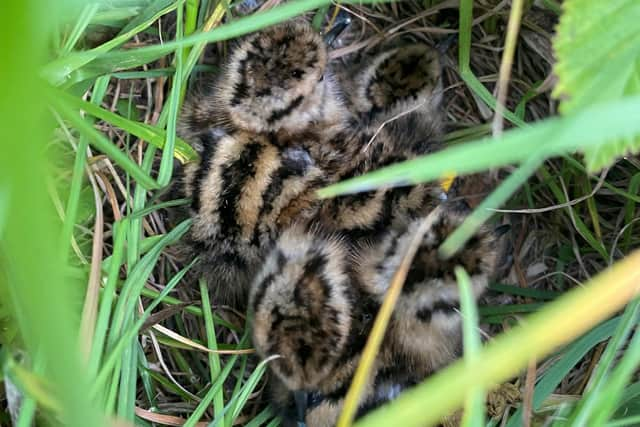
Once the chicks have hatched, they forage for themselves straight away, with parents only directing them to good food sources and protect them from predators. Redshank chick are extremely good at hiding and camouflaging themselves in vegetation.
Once widespread across the UK, BTO monitoring shows their distribution is becoming increasingly fragmented as numbers have fallen rapidly in response to changing agricultural practices.
As a ground nesting bird, they are vulnerable to predators, but their cryptic nesting strategy - nests are well hidden within vegetation and the chicks are very good at hiding – offers some protection in optimal habitat. They can also benefit from predator management and temporary electric fencing around key nesting areas.