
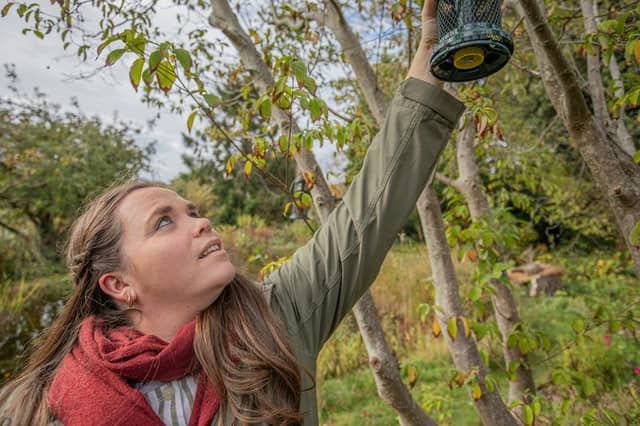


Small amounts of mealworms, fat balls, or suet can be offered year-round.
In April, the RSPB revised its advice on garden bird feeding after its conservation scientists completed a comprehensive review of the popular practice. More than half of all households with a garden regularly put out food for the birds.
The review was prompted by worrying declines in finch species – most notably Greenfinches, who’ve lost more than 65% of their population since the 1990s – due to a deadly disease, trichomonosis. The research aimed to determine how big a part garden bird-feeding might play in the spread of this disease, which affects the throat of a bird, making it hard to swallow food.
The updated guidance from the RSPB is to feed seasonally, pausing putting out seeds and nuts – which are the preferred food of finches – from May 1st to October 31st and to feed safely, cleaning feeders thoroughly at least weekly.
Trichomonosis is spread by birds consuming contaminated food and water, especially in summer and autumn when the risk of disease transmission is higher. The risk is also greater at feeding spots where numerous birds gather, and when using flat surfaces such as a bird table, where contaminated food can build up.
Whilst the threat of disease is lessened in the winter, hygiene is still paramount in protecting birds from disease. Feeders like the RSPB’s Ultimate Easy-Clean seed bird feeder have been designed to be easily taken apart for cleaning.
After a summer of heatwaves and droughts and the effect they’ve had on our gardens, the need for winter feeding is more vital than ever this year. For more advice on the RSPB’s feeding advice, or wildlife gardening, visit: https://www.rspb.org.uk/whats-happening/news/how-to-help-garden-birds.
5. RSPB WINTER BIRDS 5.jpg
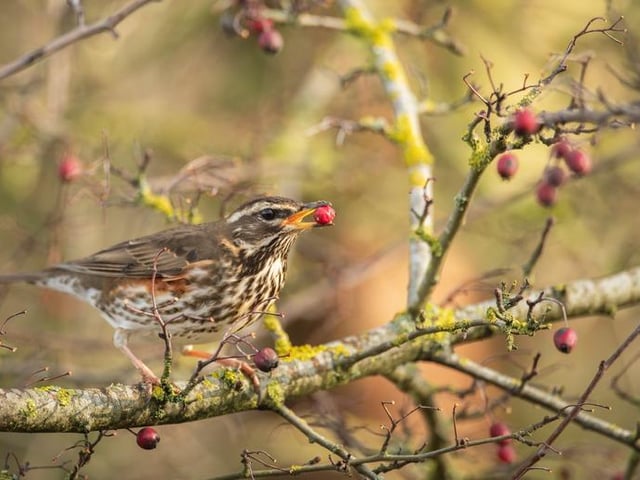
Redwing Turdus iliacus, individual perched feeding on berries, Northamptonshire Photo: RSPB