
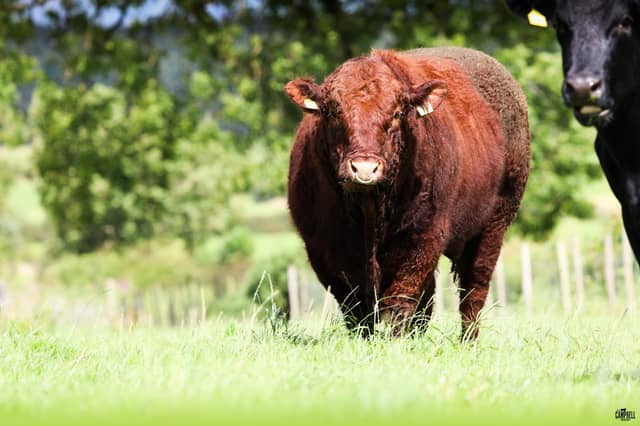

This key strategic change in the dairy industry drove suckler farmer Anne V. Morrison MBE, alongside her husband of sixty years, Jack and eldest son David, from Armoy, County Antrim to modify their suckler system. Previously, they regularly sold Belgian/British Blue stock bulls to local dairy farms but with a limited market, the Morrison family have refocussed, selecting the easy calving, fertile, Salers bull as the terminal sire of choice in their fattening suckler unit.
Jack and Anne also have another son Brian who is a photographer based in Belfast and their daughter Heather is a music teacher in the local state grammar school. Anne was recognised in 2008 with a Member of the Order of the British Empire (MBE) for her services to agriculture in Northern Ireland, she was an integral part of Ballymoney Show for twenty years, a past president of the British Blue Cattle Society, former Society Council member, and an active member and office-bearer in the NI Blue Cattle club.
It comes as no surprise then, that although the terminal sire has been replaced at Mullaghduff, the family have retained their beloved Blues, both pure and cross, as the foundation of their suckler herd.
The family’s first pedigree venture was the Mullaghduff pedigree herd of Herefords founded over sixty years ago with bulls sold to the dairy and suckler markets however the Chatham Pedigree Belgian Blue herd was established after the UK joined the Common Market in 1973. The family considered other continental breeds, but the Belgian /British Blue won out, starting a lifelong love affair for the breed famed for their docility, short gestation length and high carcass quality which were traits that were easily marketed in Northern Ireland.
Today the main enterprise is a commercial blue cross suckler herd using three Salers bulls selected for their myostatin free status, tested via DNA, indicating ease of calving. Anne said, “after using Salers bulls for the last two years we can confirm their fertility and easy calving ability, the calves are also very hardy and have a ‘will to live’, they require less vaccines and have reduced our vets bills considerably”. Scanning of the 47 spring calving cows this year revealed the pregnancy rates were well above the National average, at more than 95%
The first Salers bull was purchased online at the inaugural Spring sale hosted by the Northern Ireland Area 4, Salers Club, at Dungannon in March 2022. Carrick View Paddy Welshman achieved the breed top price and joint market top price for breeders G. A. & G. T. McCall, Collone, Armagh, and was crowned Champion by judge N. Hunt, Templeboy, County Sligo. An October-2020 born son of Orient, out of the imported dam Sligo Phoebe, he currently runs with twenty cows. Two further bulls are run over the 60-strong herd, a second Orient son purchased privately from the McCall family, Carrick View Sonny, born in March-2022 out of a homebred dam, Carrick View Liz, runs with twenty cow and six heifers and a young 18-month-old Spiddal Pat son out of a Manor Lane Krypton sired dam, from B. & P. O’Kane, Lower Bolie, Greysteel, County Derry, runs with 15 heifers. The family also purchased a fourth Salers bull, September-2019, Drumlegagh Oscar from AI Services Northern Ireland, this Drumlegagh Lancelot son was bred by J. & E. A. Elliott, Newtonstewart, County Tyrone. He ran with the cows for one year, Anne said, “this bull caught the eye of a local breeder looking for a Salers bull, reluctantly we sold him on, but we achieved the same money as our purchase price”. There is also a pure British Blue bull to keep a small number of pure cows, he is Auchenlay Orion from the Paterson family, Upper Auchenlay, Dunblane.
Set within the Causeway coast, the farm at Armoy stretches to approximately 200 acres, most of which is classed as Less Favoured Area (LFA). 140 acres of the ground is owned, and a further 60 acres are rented from an elderly relative, under the conacre system, an 11-month land rental agreement that is unique to Northern Ireland. The Morrisons have farmed in North Antrim since moving from the Scottish Lowlands during the 17th century Plantation of Ulster, the organised colonisation (plantation) of Ulster by people from Great Britain during the reign of King James VI and I.
Although the Basic Farm Payment remains an important proportion of income to the business, gradually more sustainable schemes are being introduced. One such scheme is the Beef Carbon Reduction Scheme (BCR), which was launched by the Department of Agriculture, Environment and Rural Affairs (DEARA) at the start of the year. It encourages farm businesses to reduce the slaughter age of clean finished beef cattle to improve the efficiency of the local beef sector and reduce livestock greenhouse gas emissions. Since its introduction, the Morrison’s have benefited from this Scheme which was phased in from January – March 2024 and payment will be made in 2025. The payment rate in January 2024 was £20 per eligible animal, in February 2024 £40 and in March 2024, £60. From April 2024 onwards the payment rate will be £75 per eligible animal.
The Morrison’s family business is all about keeping input costs low and therefore twenty-five acres of winter barley and thirty-five acres of spring barley are grown for their own feed ration which is mixed with a blend of Maize and Soya to achieve around 14% protein. One hundred acres of grass are cut for pit silage and a further twenty to thirty acres of silage is baled by local contractors. Soil analysis is conducted regularly with 1cwt of Urea applied in the spring and lime spread as and when required. Silage and grazing grounds are topped up with a compound fertiliser periodically, but amounts are dependent on necessity and price.
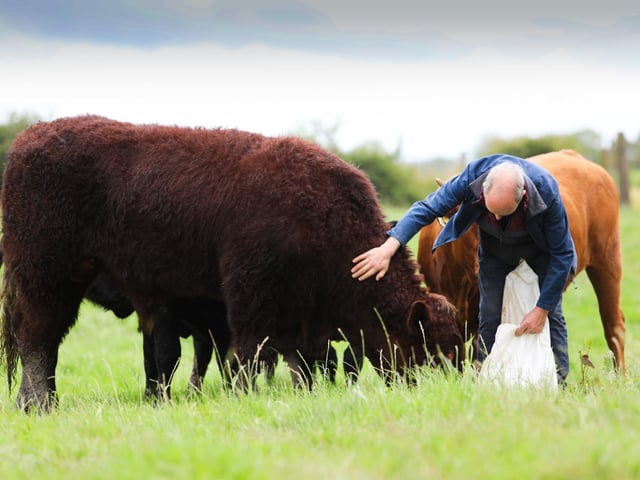
All the cattle on farm receive a daily ration of around 1.5kg per day of homegrown barley mixed with molasses and Macmin cattle grazing minerals constituting 17.35% Calcium, 12.51% Magnesium, 8.30% Sodium and 2.00% Phosphorous. This daily feed ensures the cattle are always in ‘tip-top’ condition, are never without vital minerals, and ensures they are quiet, used to human contact, and can be moved easily when needed.
Age at slaughter is an important factor in this finishing enterprise, not only does it contribute to the profitability of the system, it’s also a key environmental metric in carbon footprinting, so calves are creep fed from August onwards and finished more intensively at a later stage. The aim is to finish the cattle between 18 - 24 months, achieve a deadweight of around 350-400kg depending on sex and age, and grade out between a U3 and R3. Fat cattle are processed at Dunbia, Dungannon and a local arrangement between a neighbouring dairy farm allows the Morrison’s to share transportation costs.
The Giant’s Causeway is almost the next stop after the farm and since peace was restored in the area, tourism has greatly improved. As a result, the family diversified adding a self-catering cottage and small caravan park with camping ground called Charlie’s Hideaway Camping and Caravaning, to complement the farm business. Son David also has a growing business of his own, servicing farmers with crop spraying, seed and semen sales and he manufactures and sells a bovine oral distraction tool called Easy BossE patented in Australia by vet Don Finlay. The device reduces fear and stress in an animal when being treated, groomed and tagged etc. and increases the safety for both the animal and the stockman, stimulating the animal’s chewing behaviour and calming them, so they are much more docile in the crush. As a bonus oral medicine in liquid form can also be administered to the cattle using this device.
The farm diversification was borne from a combination of opportunity and challenge. Anne said, “at any given time, farming is very challenging, there are increasing demands on labour and time, and costs are continuing to rise,” she added, “Brexit brought uncertainty, covid brought disruption and the war in Ukraine has had a huge impact, the latest challenge is bluetongue closing the movement of stock from the mainland into Northern Ireland”.
Farmers presented with these challenges are being forced to adapt to the times in which they do business. Beyond the diversification, the major adaptation for the Morrison family that has had the greatest impact, was the purchase of Salers as terminal sires. Anne said, “Salers have introduced hybrid vigour, which we greatly needed. They calve down pretty much unassisted and get back in calf quickly. Overall, they are easier managed and easier kept which is increasingly important for us as a family.”
The combination of all these factors brought about by the introduction of Salers, equates to a more enjoyable business and ultimately a more efficient and profitable business, that consequently ticks the ‘highly fashionable and trending’ box – sustainability!
Salers Breeders Special Sale
On Friday 27th November at Ballymena Livestock Mart, a small group of Salers breeders are putting forward a selection of Salers cattle. This will include Salers bulls, Salers maiden heifers, incalf heifers and some cows with calves at foot. The cattle are from Ashcroft, Ballykeel, Lisnamaul & Mileview herds. The special sale will take place at 2pm after the main Friday sale and will also be linked with Marteye.
4 Breed Calf Show – Salers Club
On Saturday 28th November at Ballymena Livestock Mart, there will be a calf show from the Blue, Blonde, Simmental and Salers pedigree cattle breeds. With over 70 calves entered, this is an ideal opportunity to see best of the future of each breed. There are 19 Salers calves entered and the Salers Judge on the day will be Mr Ernie Gregg from the Ballybollen herd.
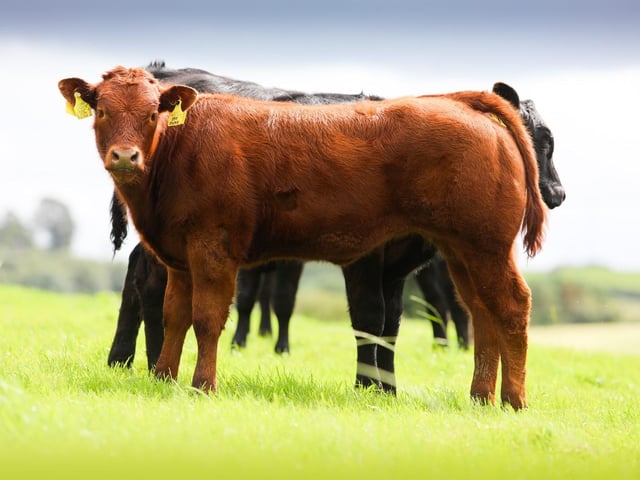
2. A typical Salers x Blue calf
A typical Salers x Blue calf Photo: Isla Campbell Photography
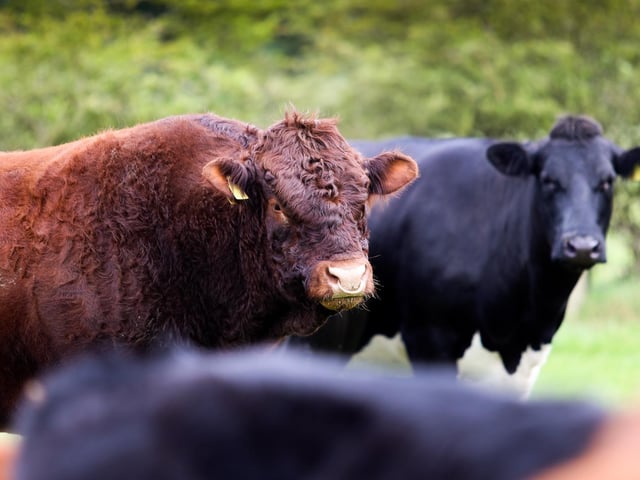
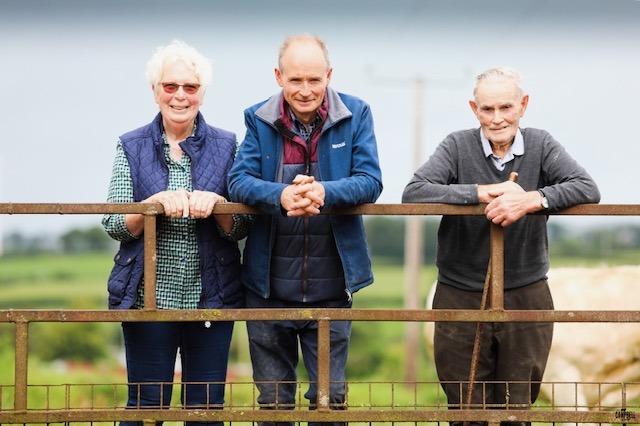
4. The Morrison family
The Morrison family. (Isla Campbell Photography) Photo: Isla Campbell Photography