
Soaring costs hit NI farmers hard
The Ulster Farmers’ Union (UFU) has confirmed that, as is already the case across other sectors of agriculture, beef and sheep producers are being hit hard by soaring production costs.
Lobbying is continuing with processors, retailers, government officials, local politicians and industry, to try to alleviate the pressure on farm families as the need for extra costs to filter up the supply chain intensifies.
UFU beef and lamb chair Pat McKay said: “Our beef and sheep farmers are extremely on edge about the way things are going with crippling production costs reaching levels never seen before – it’s completely unsustainable. Everyone is uptight about whether or not they’ll still be in business by the end of the season. Farm families are under immense pressure.”
Since spring 2021, CAN fertiliser has increased by approximately £700/ton, beef finishing rations by £80/ton and breeding sheep rations by £100/ton. Red diesel has also risen by £0.54/L.
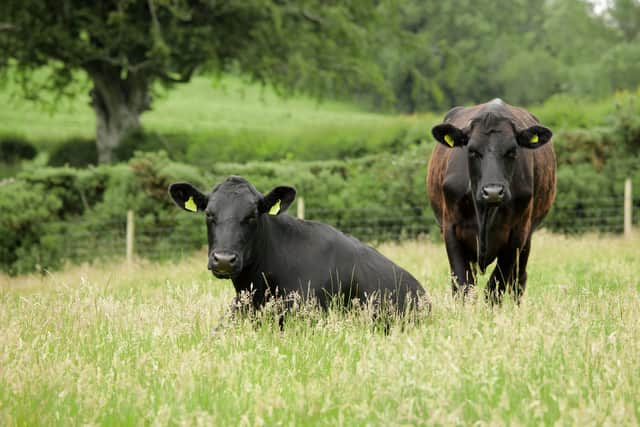

“It’s not only the cost of fertiliser and ruminant feed, which apparently is going to take another jump soon, other inputs such as lime, bale plastic, grass seed and minerals have increased recently too.
“Beef and sheep farmers are getting it from all angles and it’s severely impacting their profit margins. What we need is for the market to provide a stronger beef and lamb price if our farmers are to have any chance of keeping their head above water,” said Mr McKay.
While beef gained a positive uplift recently, it is minor in comparison to the production costs farmers are enduring. Meanwhile, prices for lighter and plainer types of store cattle and drop calves are decreasing and spring lamb quotes are back 50-70p/kg on last year, with calculations showing that the expense of producing lamb was more than the return.
“It has been an extremely uncertain spring to date and it’s effecting the confidence of our primary suckler and dairy beef calf rearers. They need certainty to plan for the future.
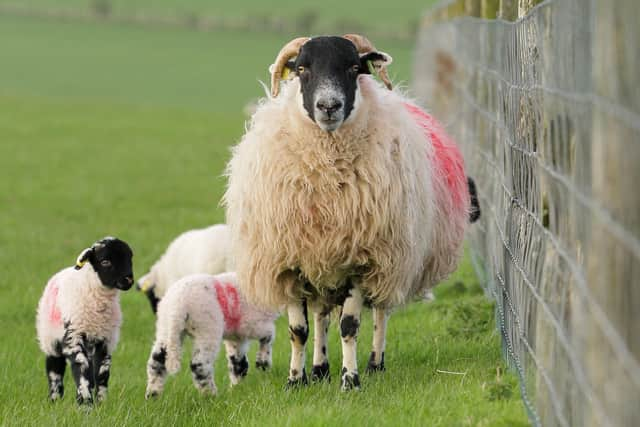
“The only way to sustain our world leading beef and sheep sectors is for the rest of the supply chain to show their support for farmers. We need our retailers, wholesale suppliers and processors to share some of the increased costs, helping us to get through this very difficult period. Farmers cannot absorb all the expense alone nor should they have to as primary producers.”
UFU hill farming chair Nigel McLaughlin said:“The war in Ukraine has led to a sharper and more widespread increase in farm input prices in 2022 than had been anticipated at the end of 2021. For upland and hill sheep producers, it remains to be seen as to what extent the increase of output prices will compensate for the rise in production costs. Spring is a very costly time of year for livestock farmers. In the Republic of Ireland, the average family farm income on sheep farms is forecast to decline by 20 percent this year which is very worrying.
“To help farmers manage their financial situation, CAFRE have designed a “what if” calculator to show the impact increasing input costs would have on resulting margins. If farmers have a CAFRE advisor, they should contact them about this tool to help with management decisions for the months that lie ahead.”
The decision by the UFU to highlight the plight of beef and sheep producers comes on foot of news that many farmers have decided to cut back significantly on fertiliser purchases this year or not to buy any at all.
Such a reality, if this remains the case, will have a direct and very negative impact on the amount of grazed grass and silage that is produced in Northern Ireland over the coming months.
Speaking at a recent press event, Ulster Bank chief agricultural advisor Cormac McKervey confirmed that a failure to grow enough grass now could leave farmers short of silage next winter.
He added: “Given the strict limitations on commercial credit right now, I thought that we would have had greater numbers of farmers contacting the bank, seeking finance to secure their 2022 fertiliser supplies.
“This hasn’t happened up to now, which leads me to conclude that some producers might have taken the decision to cut back significantly on the actual amounts of fertiliser they acquire in 2022.”
However, McKervey firmly believes that such an approach represent a false economy.
He said:“Any shortfalls in silage availability next winter will have to be made up for through the purchase of very expensive concentrate feeds.”
According to McKervey, farmers should not be using their overdrafts to purchase fertiliser at the present time.
“A better option is to sort out a loan arrangement with the bank, which can be paid back over a six-month period or settled in full when the 2022 single payment monies arrive.”
There is also a growing concern that a perceived lack of winter fodder across Northern Ireland later in the year could lead to a crash in suckled calf prices at that time.
Another factor that could contribute to a severe cooling of livestock prices would be the possibility of concentrate feeds being rationed later in the year. Such a possibility was being actively discussed a couple of weeks ago.