
The availability of gene edited crops is within touching distance
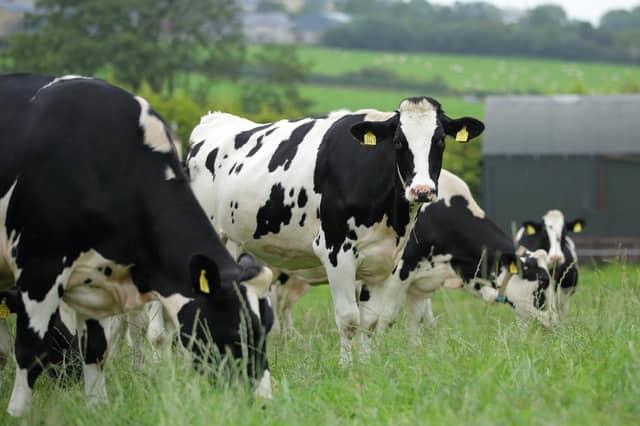

Researchers from the University of Nottingham will be part of a team researching the bespoke development of gene-edited cereals, writes Richard Halleron.
The grouping has been awarded £2.2 million to trial a precision-bred wheat variety, which could lead to the development of more sustainable farming systems.
Researchers from Nottingham’s School of Biosciences are part of the PROBITY project – A Platform to Rate Organisms Bred for Improved Traits and Yield.
They will be working under the aegis of the British On-Farm Innovation Network (BOFIN).
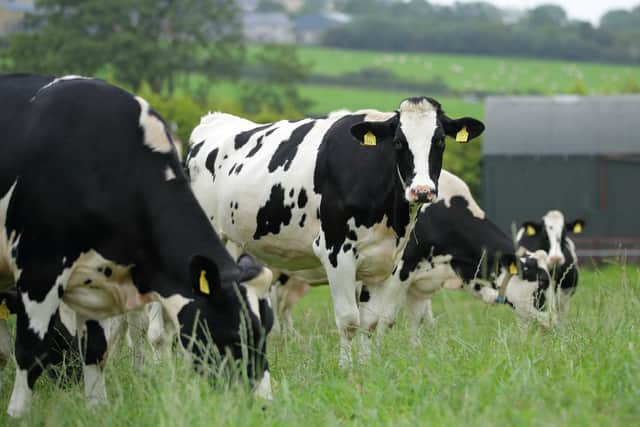
The new initiative brings together farmers, scientists and food manufacturers to trial the production and processing of precision-bred crops to accelerate understanding of their value to sustainable food and farming.
Dr Stacia Stetkiewicz from the University of Nottingham will lead a team assessing the use and potential of precision-bred crops.
They will engage with the farming community to explore barriers to their adoption, and pave the way for future innovation.
A series of interviews, workshops, surveys, and online forum data will provide a snapshot of current opinions, stumbling blocks, and opportunities, and help to identify key policy and research priorities for the future of precision-bred crops in the UK to build resilience to climate change. Precision-bred crops can be created through gene editing, a widely used technology that enables scientists to make changes to plant DNA, like those that occur naturally, but introduced in a precise, targeted manner.
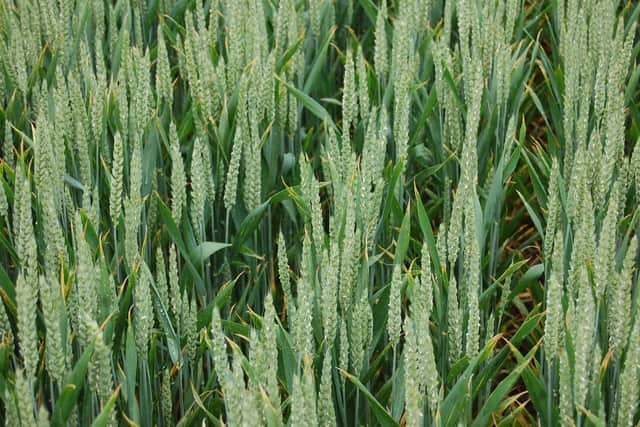
Gene editing speeds up the process of breeding more productive, nutritional and sustainable crop varieties. There are three cereal varieties in the project: a wheat with superior baking, toasting and processing properties; a barley making high lipid, high energy forage aimed at lowering livestock methane emissions and a wheat with a bigger bolder grain size promising a step change in productivity. Dr Stetkiewicz commented: “The agricultural industry is under pressure to increase the yield and nutritional density of food crops while also mitigating and responding to climate change.
“Innovative approaches such as precision breeding will be key to achieving this.” Tom Allen-Stevens, Oxfordshire farmer and founder of BOFIN said: “This is an incredibly important project for farming and food production in this country.
“We need to produce more, nutritious food with fewer resources and with less impact on the environment.
“Scientists have been developing new crop varieties that could help us rise to that challenge.
“This project will bring those varieties from the laboratory to farmers’ fields where we can fully assess their potential, explore barriers to their adoption and pave the way for future innovation.”
Meanwhile, the Irish seed sector is also pointing to the potential benefits that gene editing can deliver.
Barry O’Reilly, Head of Division for crop policy, evaluation and certification at the Department of Agriculture Food and the Marine, spoke at the 2024 Irish Seed Trade Organisation (ISTA) variety trials’ open day – held in Co Cork.
Courtesy of his presentation he confirmed the important work being carried out by the seed industry and DAFM in ensuring that the highest quality seed of these new and improved varieties are made available to Irish farmers.
O’Reilly also pointed to the very probable introduction of European Union legislation, which would allow for the introduction of gene editing and other new genomic techniques, the use of which would significantly speed-up the breeding of new plant varieties.
A European Union perspective
In addition, the European Union (EU) looks set to recognise and endorse the use of new plant breeding technologies.
It is significant that recent weeks have seen a number of leading representatives within Ireland seed trade calling for such steps to be taken by Brussels.
For example, the UK currently leads the way in the field of gene editing: the EU has yet to endorse the use of this technology. However, all of this is about to change.
The EU Commission has proposed the establishment of two plant categories that can be obtained by new genomic techniques (NGT).
These are: plants comparable to naturally occurring or conventional species, and NGT plants with more complex modifications.
Both categories will be subject to different requirements to reach the market, taking into account their different characteristics and risk profiles.
The plants from the first category will need to be notified.
The plants from the second category will go through the more extensive process of the genetically modified organism (GMO) directive.
In addition, Brussels will give incentives to steer the development of plants towards more sustainability, while also ensuring the transparency about all NGT plants on the EU market through the clear labelling of seeds.
The Commission will also ensure the robust monitoring of the economic, environmental and social impact of NGT products.
According to Brussels, farmers and breeders need access to state of the art innovation.
New technologies can help boost resilience for both agriculture and forested land and protect harvests from the effects of climate change, biodiversity loss and environmental degradation.
NGTs are innovative tools that help increase the sustainability and resilience of our food system.
They allow the development of improved plant varieties that are climate resilient, pest resistant, that require less fertilisers and pesticides and can ensure higher yields.
This approach will help cut the use and risk of chemical pesticides in half, and reducing the EU’s dependency on agricultural imports.
Brussels is also mindful that Europe’s seed sector is the largest exporter of plant genetic material in the world, accounting for 20% of international sales.
This market has an estimated value of €7-10 billion.
According to the European Commission, it is important that the legislation is up to speed with the evolution of science.
Its new NGT-related proposals will update and simplify current rules, some of which are more than 50-years old.
Gene editing and animal production
A number of leading opinion formers, aligned to the ‘Science for Sustainable Future’ think tank have set out their top policy recommendations for the next UK government
Livestock scientist, Professor Helen Sang OBE, believes the Precision Breeding Act, which received Royal Assent in March 2023, was a major milestone towards freeing up the safe use of gene editing technologies in plant and animal breeding
She added: “This brings our rules more into line with other countries such as Canada, USA, Japan and Australia.
“These techniques can help accelerate the development of higher-yielding, more climate resilient crops requiring fewer inputs, and farmed animals with genetic resistance to previously intractable disease problems.
"With a virulent strain of PRRS wiping out pig herds in Spain, African Swine Fever on the march north through Europe, and bird flu virus detected in both dairy cattle and their milk in the US, the importance of enabling all possible solutions, including precision breeding, cannot be over-stated.
"However, until more detailed implementing rules are in place for both plants and animals, the Precision Breeding Act as it stands serves no functional purpose.
“It is extremely disappointing that the outgoing administration was not able to bring forward the necessary secondary legislation before the election was called, and this must be an absolute top priority for the new Government.”
Graham Brookes is an agricultural economist.
He wants the new UK government to bring forward a science and evidenced-based land use framework.
Mr Brooks explained: “A land use framework was repeatedly promised by the previous Government, but remains another item of unfinished business.
“Indeed, the post Brexit re-set for UK agriculture should have begun with a coherent land use strategy, as knee-jerk policy changes of imposing a 25% cap on the amount of land allocated to certain SFI options have demonstrated.
“A more science-based land use framework must certainly be prioritised by the new administration.”
Meanwhile, plant scientist, Professor Tina Barsby OBE, is calling the delivery of agricultural research and innovation in the UK to be fully reviewed.
She further explained: “Expressed per head of population, or in relation to GDP, the UK leads the world in terms of high-citation academic publications in agriculture, according to a recent study.
“High-citation papers are recognised as those most likely to support innovation and deliver impact.
“But UK leadership in academic science is not translating into agricultural productivity growth, in which the UK continues to lag behind most other developed agricultural economies.
“Nor has it positioned Britain as a major destination for private sector investment in agricultural innovation compared, for example, to Britain's healthcare or medical life science sectors.”
Potato breeding set to benefit from gene editing techniques
Gene editing, under the auspices of a new research project, looks set to fast track the impact of potato breeding programmes.
TuberGene will be funded as part of a United Kingdom Research and Innovation (UKRI) National Engineering Biology Programme.
The project aims to harness the power of gene editing to address pressing challenges and secure a sustainable future for the UK potato industry. It will be led by a company called B-hive Innovations
With new UK legislation allowing the commercial development of gene edited crops, the project presents an opportunity to transform the potato sector.
The essence of the work follows the example already set by the likes of Rothamsted Reserach.
Scientists will focus on two key goals: reducing bruising-related discoloration and making potatoes quicker to cook.
These improvements aim to enhance potato quality, cut down on food waste, and meet the evolving needs of consumers.
Lincoln-based R&D company, B-hive Innovations, comprises a team of agritech and biotech specialists, bringing innovative processes to the fresh produce supply chain.
The scientific team delivering the TubetrGene project will also include reporesentratives from: Branston Ltd, the James Hutton Institute and James Hutton Ltd.
Dr. Andy Gill, general manager of B-hive Innovations, commented: “The UK potato industry is facing significant challenges, and it's crucial that we find innovative solutions to ensure its long-term viability.”
He added: “This project represents a major step forward in our efforts to address issues such as bruising-related losses and changing consumer preferences."
Dr. Rob Hancock, research scientist at the James Hutton Institute, agrees: “Gene editing and other precision breeding technologies offer unprecedented opportunities to rapidly enhance the traits of potatoes, meeting the need to quickly respond to the changing preferences of consumers,” he explained.
“By targeting specific genes responsible for traits like bruising susceptibility and cooking times, we can create varieties that meet the needs of both growers and consumers.”
A key part of the project involves sequencing the genome of the Maris Piper potato.
This foundational work will pave the way for future targeted gene editing to enhance other desirable traits.