
The pursuit of cheap food has left the UK very badly exposed
The press carried reports this week that the government would soon advise people to stockpile some basic foodstuffs.
This is because of the threat to the food industry from a potential Russian cyber attack. My immediate reaction was a vision of Covid days when people fought over toilet paper.
This reflects the reality that people interpret precautionary advice as a reason to panic buy and so create as much chaos and anger as would result from a Russian cyber attack. Cynicism then kicked in with a feeling that this is part of a strategy by the government to ramp up the defence threat to the UK.
This makes it easier to justify spending cuts to fill the £5 billion hole in the defence budget agreed by Keir Starmer and handed on to his successor. Beyond that the reality is that short term stockpiling is a case of seeking to tackle a haemorrhage with a sticking plaster.
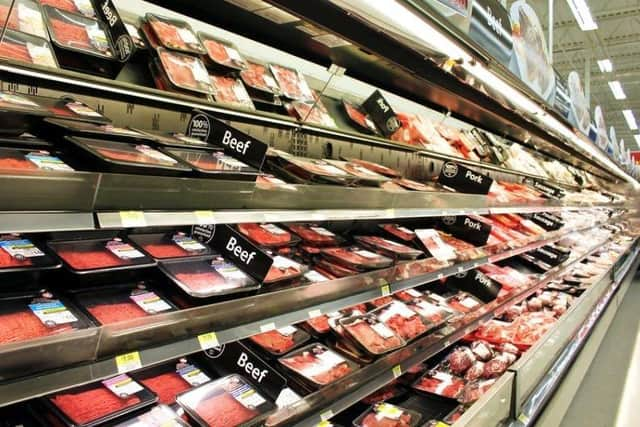

The food chain’s exposure to outside threats is only partly about the threat to poorly protected computer systems.
The real issue is that the pursuit by successive governments – Labour and Conservative – of a cheap food, import reliant approach has left the UK badly exposed.
Many of these imports come from our nearest neighbour, the EU. But if the threat from Russia is for real it will be aimed at all of Ukraine-supporting Europe. It is not just the UK that would be in Moscow’s sights.
Under these conditions, given that we are no longer an EU member state, imports from Europe could be hit if its food industry is exposed to actions by Russia. The real response to this threat should be a root and branch government assessment of how lax we have allowed our food security to become over many decades.
This is getting worse despite the threat level rising. Policy makers are fond of SWOT analyses – strengths, weaknesses, opportunities and threats. Despite all governments have done to agriculture to undermine the importance of food production, in favour of poorly thought out environmental targets, the UK farming industry remains a major asset. Its skills and capabilities are enormous, if only politicians had the wit and imagination to see that instead of driving us down a Covid toilet rolls mark two road. Farmers are capable of producing what is needed to banish any risks from food security. All they need are the correct signals from politicians to deliver, but those are not even on the agenda. That has been the case at Westminster for years, but the political malaise around food production is now as bad in the Executive here as it is in London. As people battle at supermarkets to stockpile food, in response to government advice, they would do well to reflect that there is another solution. That is to protect ourselves against any risk to the food supply chain by ensuring we make full use of the potential the industry has to deliver true national food security. That is a logical response to a threat getting worse by the day as Russia flexes its muscles even more. But sadly politicians and the governments they are part of prefer unimaginative solutions. This is not an issue that will be easily resolved. Another is the war in the Middle East and the impact it has had on energy and fertiliser costs. We thought this might ease, but the ceasefire between the United States and Iran has become that in name only.
This points to continuing difficulties for farmers, although supplies did get out of the Middle East during the brief window of normality.
That will not return until Trump accepts that Iran is not going to back down and that he is now locked into an intractable war that is deeply unpopular in the US to the degree that it is seriously damaging his political base and electoral prospects.
The pressure on fertiliser prices is creating a quandary for the EU which is under pressure to end green tariffs that make imported fertiliser components even more expensive. This is similar in many ways to the battle here around the lack of a national food security plan. Instead we have endless stop-gap solutions that cannot work.
The common factor is that political decisions are very definitely not being driven by logic, but by conflicts driven by Moscow and a reckless and self-serving US president who is no ally of the UK or Europe.