
UK-EU negotiation mandates published
Last week both the UK and the EU published their negotiating mandates ahead of discussions which formally opened in Brussels on 2 March.
Whilst the EU is talking about a very ambitious Free Trade Agreement with no tariffs and no quotas across all goods including agricultural and fisheries products, this privileged access is conditional on robust provisions ensuring a level-playing field and requiring the UK to sign up to future EU regulation when it comes to areas such as state aid and the environment.
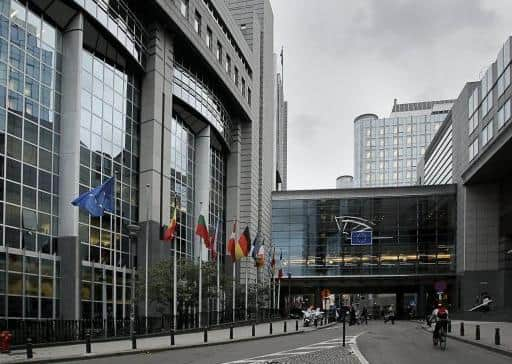

The UK on the other hand is not seeking “special status” but instead the type of agreement which the EU has already struck in recent years with Canada. Their proposal draws on previous EU agreements such as the Comprehensive Economic Trade Agreement, the EU/Japan Economic Partnership Agreement and the EU/South Korea Free Trade Agreement and represents the UK’s clear position that it will retain control of its own rules and laws. The negotiating rounds will involve 11 individual negotiating groups which will run in parallel covering areas such as goods, transport and fisheries in an attempt to ensure negotiations move at pace ahead of the December 2020 deadline. The BAB office will be following the negotiations closely to see how the talks develop and what impact a future trade deal could have on the UK agricultural sector.
Commission ready to launch its first ever climate law
On Wednesday the European Commission published its proposal for an EU Climate Law, which aims to enshrine in law the objective of climate neutrality by 2050 in order to contribute to the effort of keeping global temperature increase below 2°C above pre-industrial levels.
The law will be part of the European Green Deal, which was launched in December as a large part of the new commission’s workplan.
As part of the initiative, all EU policies across all sectors will be required to contribute to the climate-neutrality objective.
The commission has said in a roadmap published at the beginning of this year that it will present an impact assessed plan to increase the EU’s greenhouse gas emission reductions targets for 2030 to at least 50 percent, and ideally 55 percent, of 1990 levels.