
Ulster features in new book from An Post Irish Book Award nominee
We live in an age of extinction. In the last 500 years or so, the world has lost roughly 181 species of bird, as well as 171 amphibians and 113 mammals. Up to half a million species of insect are thought to have gone extinct in just the last 150 years.
Ireland hasn’t been spared the tidal wave of extinction that has followed in the wake of human progress, and we are still counting the damage. It is thought that this island has lost over 100 species since the arrival of man. Most can still be found elsewhere. Not so the magnificent great auk, the only flightless bird we had.
This penguin-like seabird, as tall as a toddler and with a bill sharp and strong enough to slice through a fowler’s jacket, once swam the waters around the Ulster coast, and may even have bred on some of offshore islands. Rathlin Island, off the coast of Co Antrim, might well have been one of them. Indeed, great auk remains have even been found in kitchen middens in Antrim and Donegal, implying that this flightless bird was once fair game for coastal communities of Ulster. Hunting, as it turns out, would be the auk’s demise. By the middle of the nineteenth century, the species was extinct altogether, killed to the last bird for their feathers, skins and collectible eggs.
Another creature of the sea now largely lost to us is the sturgeon, a huge prehistoric fish that can grow as long as a great white shark. Sir Cahir O’Doherty, the Lord of Inishowen, offered a magnificent sturgeon as a peace offering to the governor of Derry in 1608. When this failed, full-scale rebellion erupted. The governor should have been satisfied with the sturgeon, whose flesh was once prized by royalty. Another Irish sturgeon, caught in 1966, might even have ended up on the table of the Queen of England. Sadly, sturgeons would soon become effectively extinct in Irish waters, overfished and no longer welcome in rivers that were congested and polluted by man. In 2017, a specimen was caught in Lough Neagh, the first landed in Irish waters in thirty years. Could this herald a return for our lost river giant? Only time will tell.

Thankfully, creatures that were once lost are once again making a comeback in the wilds of Ulster. A notable example is the great spotted woodpecker. By the dawn of the nineteenth century, the drumming of this remarkable bird was likely heard no more, a victim of extensive forest clearances that had swept Ireland in previous centuries. Then, in 2006, a most unexpected and welcome success story occurred when great spotted woodpeckers were confirmed breeding in Co Down – the first successful breeding in Ireland in the modern era. This new population, now established in Ulster, likely originated in Scotland, where the growing woodpecker population forced them to expand to pastures new. And so, a bird lost to us for generations can now be heard drumming in the forests of Ulster once more.
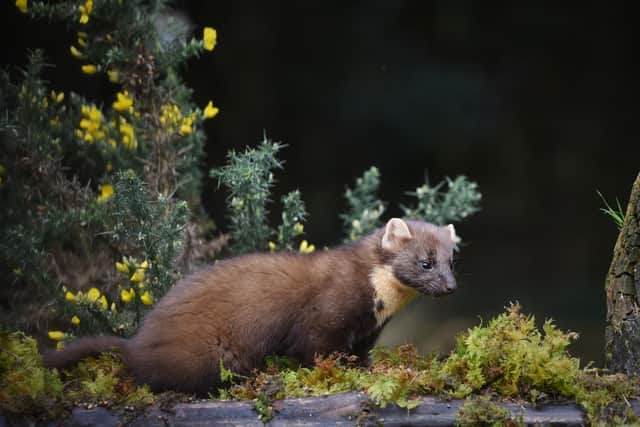
Another species that has made a remarkable comeback in recent years is the pine marten. One of the most stunning native mammals we have, this arboreal predator was persecuted almost to extinction, hunted for its pelts and then poisoned and shot as vermin. The cessation of this hostility, coupled with the growth of forestry, has helped them expand once more. In ulster, the species has spread out from its traditional holdout in Co Fermanagh and can now be found across the six counties of Northern Ireland once more. Indeed, between 2017 and 2022, the pine marten almost doubled its range across Northern Ireland.
It is to stories like these that we must turn for hope for a future in which man and nature can coexist and, with a little compromise, hopefully flourish together in modern Ireland. There remains much to be done; some would even call it an uphill road. One hundred and twenty-four of our insect species are now at risk of extinction according to the National Biodiversity Data Centre. The plight of some of our rarest breeding birds (including the curlew) and native mammals (such as the pine marten) are now well known. But nature is nothing if not resilient – across Ireland, dedicated people are working tirelessly to conserve the wildlife we have. It’s not too late. The future is still for us to write.
For details click The Living and the Dead: Tales of Loss and Rebirth from Irish Nature